
Vandaag of morgen in huis

Kwaliteit gegarandeerd

Welkomstaanbiedingen ontgrendelen: GRATIS bezorging | Tot 80% korting | Gratis 30 dagen JoyPlus-proefperiode
Download de app
A konjac jelly might look simple at first glance: a soft fruit dessert in a squeezy pouch, often low in calories. Yet products vary widely in ingredients, sweeteners, portion size and nutritional values. If you only look at the front of the packaging, you could end up buying a snack that doesn’t quite fit a keto, vegan or low-carb diet.
Watch out for these three common pitfalls:
For a sugar-free jelly, keto snack or low-carb snack, the nutritional information table matters more than the marketing text. Look at:
Erythritol is often used in low-calorie jelly. Maltitol can have a different effect on the nutritional calculation and may have a laxative effect if consumed in excess. That is sometimes stated explicitly on the packaging of certain sugar-free sweets. If you follow a strict keto diet, it’s a good idea to check the carb calculation per portion yourself rather than relying solely on the word “keto”.
A konjac snack usually contains water, konjac powder and a gelling agent such as carrageenan. Fruit juice concentrate, flavourings, acids, minerals and sweeteners may also be added.
Always check the label for specific preferences:
Product information can vary by flavour or pack size. Use the online description as a first filter, but base your final choice on the label of the pack you receive.
Konjac jelly has a soft, springy texture. That makes this fruit jelly handy for work, school, travel or a quick break, but how you eat it deserves attention. Orihiro, for example, advises squeezing the jelly out of the pouch and chewing it thoroughly. Take small amounts and always follow the usage instructions on the product.
Also check:
An unopened product is usually stored in a cool, dry place away from direct sunlight. Once opened, the pouch often needs to be refrigerated and used within one to two days, according to the product information.
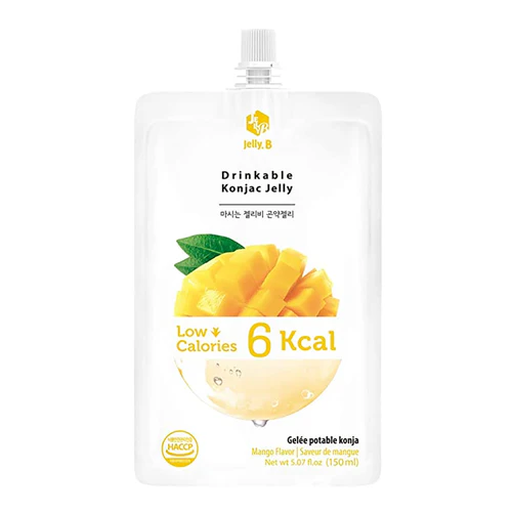
Why this fits the profile: A straightforward single serving with mango flavour, ideal for anyone trying an Asian snack speciality for the first time without committing to a multipack.
The product information states 3 kcal and 0 g sugar per 100 ml. Do check the stated erythritol value and the label on the packaging.
150 ml per pouch, mango flavour, halal certified and, according to the product information, gluten-free.
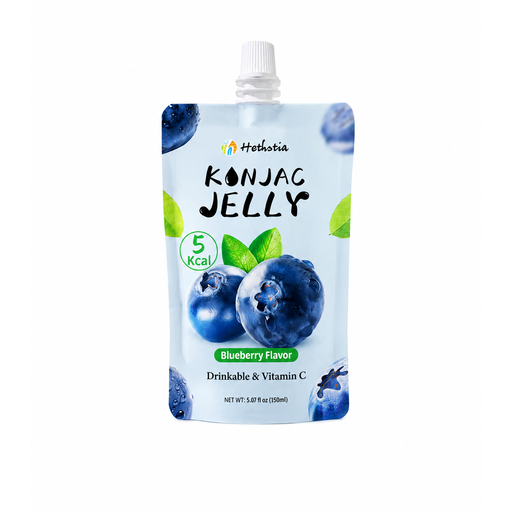
Why this fits the profile: Ideal for those who want a fruity flavour and also value clear dietary features and a practical individual pack.
The product page lists the nutritional values per pouch: 5 kcal, 0 g fat and 1 g sugar. Check the actual packaging for the final details.
155 g per pouch, blueberry flavour, with erythritol and, according to the product description, vegan and gluten-free.
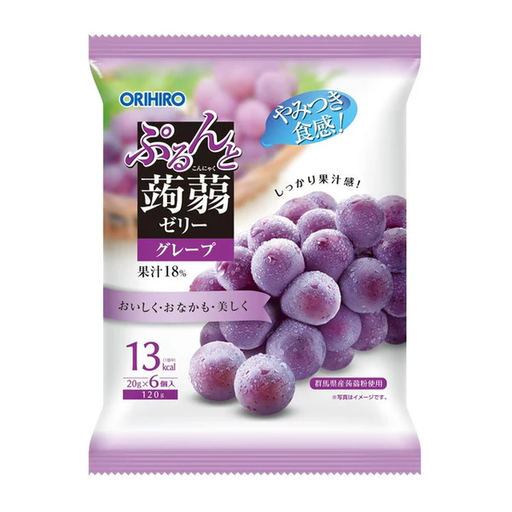
Why this fits the profile: The six individually wrapped jellies are practical for lunchboxes, commuting, travel or multiple snack occasions.
The portions are individually wrapped, so you don’t have to open a large pack each time. The product information does list sugar and erythritol; this is therefore not the same as sugar-free.
Six portions totalling 120 g, grape flavour and, according to the product information, 7 kcal per 100 g.
We’ve put together a full, up-to-date list of products that fully meet these strict selection criteria and comply with current European safety regulations.
No. Some varieties contain sugar, fruit juice or syrups. ORIHIRO Grape Konjac Jelly, for example, lists sugar in the ingredients. Other varieties use erythritol and state 0 g sugar. So always check both the ingredients and the nutritional values.
That depends on the product and the portion. A jelly that is low in calories and has 0 g sugar may still contain carbohydrates or sweeteners. Calculate the values based on the label and your own dietary goals. The term “keto-friendly” on a product page is no substitute for that check.
This varies by product. For several Hethstia varieties, it states that the opened pouch should be refrigerated and consumed within two days. For the Hethstia Blueberry variety, one day is stated. Store an opened jelly in the fridge and always follow the instructions on the packaging.
