
Vandaag of morgen in huis

Kwaliteit gegarandeerd

Welkomstaanbiedingen ontgrendelen: GRATIS bezorging | Tot 80% korting | Gratis 30 dagen JoyPlus-proefperiode
Download de app
At first glance, konjac jelly seems straightforward: a fruity jelly in a small pouch or cup. Yet products vary considerably in sugar content, serving size, ingredients, texture and usage safety. Anyone who focuses only on flavour or packaging may end up with a product that does not suit a vegan diet, contains a significant amount of sugar or is inconvenient to take on the go.
As a Joybuy Product Recommendation Officer, I filter product information based on verifiable criteria. Below, you’ll learn what to look for in konjac jelly, which marketing claims deserve closer scrutiny and which options suit different dietary and usage needs.
Konjac powder creates the characteristic soft, elastic texture. On its own, however, it says nothing about the amount of sugar or calories. For example, according to the product information, Shimonita Konjac Jelly Salt Pine Flavor contains sugar and approximately 15.7 kcal per piece. Shimonita Grape Flavor lists sugar, glucose syrup and 106 kcal per 100 grams.
Always compare the nutritional values per 100 grams and per serving. A 120- or 130-gram pouch can differ significantly in calories and carbohydrates from a small individual portion.
Some varieties explicitly state that they are vegan, halal or gluten-free. Other products use sweeteners such as erythritol, sucralose, acesulfame-K or steviol glycosides. This does not automatically make a product suitable for every personal dietary preference.
Also check terms such as “collagen”. According to the product description, the Delief varieties use plant-based collagen from carrots. The same term may refer to something different in other products. Always review the complete ingredients list rather than relying solely on the front of the packaging.
Several Japanese konjac jelly products carry a clear usage warning: push the jelly out of the packaging, take small bites and chew thoroughly. Do not suck or swallow the jelly directly from the pouch. This is particularly important for children and when eating on the go.
Always follow the instructions on the packaging. Convenient packaging is no reason to disregard the recommended way of eating the product.
For a low-calorie snack, products with a low energy value are easy to identify in the nutrition table. The Delief Mango variety lists 4 kcal per 100 grams, while the Delief Lychee variety also lists 4 kcal. The vegan Green Grape variety lists 5 kcal per 100 grams.
Also pay attention to carbohydrates and sugars. “Sugar-free” should be verified against the nutrition table. According to the product information, Jelly B Mango contains 3 kcal per 100 ml and 0 grams of sugar, with erythritol listed separately.
If you are looking for a vegan konjac jelly, halal snack or gluten-free option, it is worth comparing three points side by side:
A peach-flavoured product may also contain apple, for example. According to its ingredients list, Orihiro Prunto Peach contains peach and apple juice and identifies both as allergens.
A multipack is convenient for keeping a supply on hand, but it is not always more economical if you only want to try a snack occasionally. The six-piece Orihiro Peach pack contains individual 20-gram portions. The 130-gram × 8 Orihiro pack is better suited to anyone who wants to store multiple servings.
When assessing special offers, check the total quantity, number of pouches and best-before date. Some imported products state a production date rather than a minimum durability date. If in doubt, check the packaging or ask the seller for the exact date.
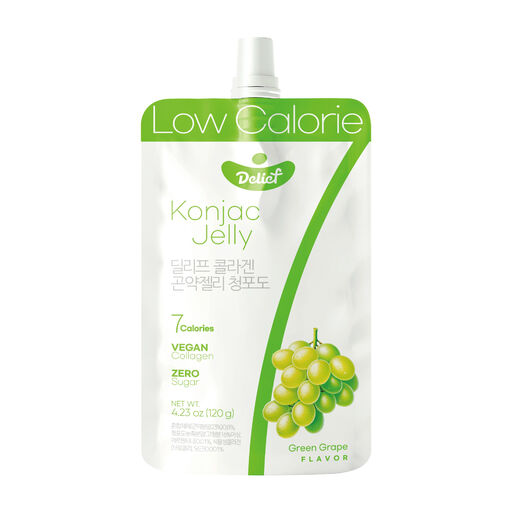
Why This Fits Their Persona: An accessible choice for first-time konjac jelly buyers looking for a green grape flavour.
The product information states that it is vegan, contains no allergens, has 0 grams of sugar and provides 5 kcal per 100 grams. Check the current packaging upon delivery.
120-gram pack; erythritol and sucralose listed as sweeteners; 0 grams of fat per 100 grams.
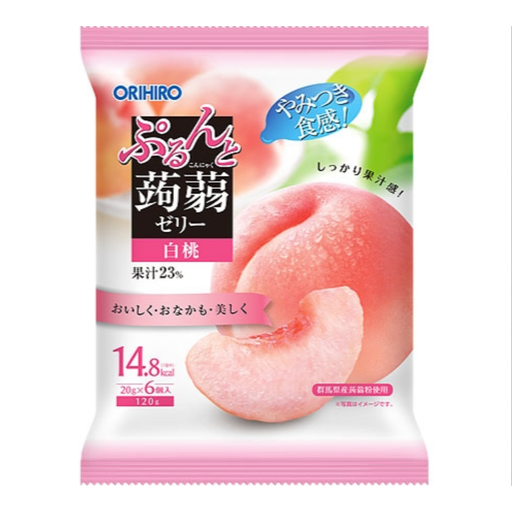
Why This Fits Their Persona: Suits shoppers looking for a Japanese konjac jelly in small individual portions with a peach flavour.
The 20-gram portions make serving sizes easy to manage. The packaging also warns users to push out the jelly and chew it thoroughly.
23% fruit juice according to the product description; 14.8 kcal per 20-gram serving; six individually wrapped pieces.
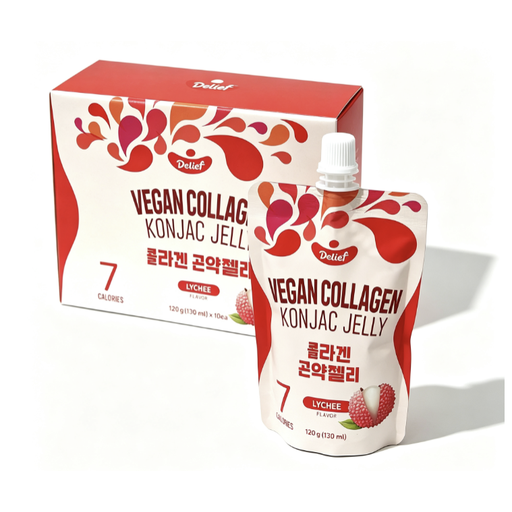
Why This Fits Their Persona: Ideal for households or offices that want to keep multiple vegan lychee-flavoured servings on hand.
The listing states that it is vegan, halal and allergen-free. The nutritional information lists 4 kcal and 0 grams of sugar per 100 grams; verify these claims on the label of the delivered product.
Ten 120-gram packs; South Korean origin according to the product information; suitable for dry storage.
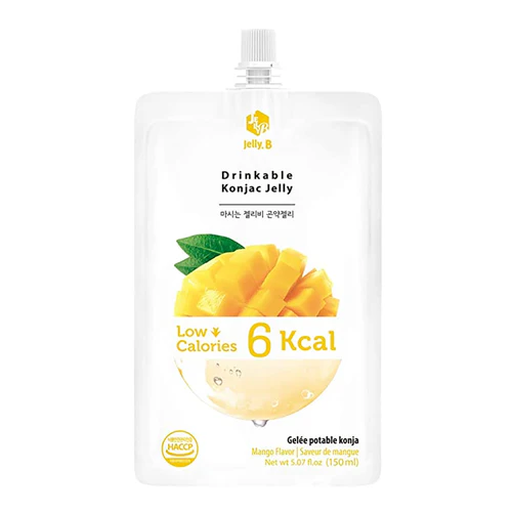
Why This Fits Their Persona: A practical mango option for shoppers specifically seeking a snack listed as halal and gluten-free.
The listing identifies halal and gluten-free separately. The pouch contains erythritol and lists 3 kcal per 100 ml and 0 grams of sugar.
150 ml capacity; mango flavour; store at room temperature according to the stated storage instructions.
A fruit jelly snack offers more choice than just mango, peach and green grape. The selection also includes lychee, apple, pineapple and regular grape. When comparing grape konjac jelly, pay attention to the difference between a sugar-free vegan variety and a Japanese version containing sugar and grape juice.
Delief Mango 120g lists 4 kcal per 100 grams and a plant-based collagen alternative made from carrots. Orihiro Grape 130g × 8 lists 47 kcal per pouch, 10% grape juice and a warning not to swallow the jelly whole. A multipack can be practical for a larger household; for occasional use, a single pack is often easier to assess.
Use this quick checklist before you buy konjac snacks:
Browse a current selection of products and compare flavours, pack sizes and dietary characteristics before ordering.
No. The energy value depends on the sugar, syrups and fruit juice used in the recipe. Some varieties in this selection list 3 to 5 kcal per 100 grams, while Shimonita Grape contains 106 kcal per 100 grams according to the product information. Always check the nutrition table.
That varies by product. The Delief Green Grape and Lychee varieties are identified as vegan in the product information. This claim should not automatically be assumed for other products. Check the ingredients and current packaging before purchasing.
Push the jelly out of the pouch or packaging, take small bites and chew thoroughly. Do not swallow the jelly whole, and make sure children follow the usage instructions. Store opened products according to the label; some varieties need to be refrigerated after opening and eaten within a short period.
