
Vandaag of morgen in huis

Kwaliteit gegarandeerd

Welkomstaanbiedingen ontgrendelen: GRATIS bezorging | Tot 80% korting | Gratis 30 dagen JoyPlus-proefperiode
Download de app
A konjac jelly might look simple at first glance: a soft fruit jelly in a pouch or cup. But these snacks vary widely in sugar content, sweeteners, portion size, texture and packaging. If you only pay attention to a flavour name like konjac jelly mango or konjac jelly lychee, you could end up choosing a product that doesn't suit your diet or the occasion you have in mind.
Watch out for three common pitfalls:
Compare the nutritional values per 100 ml or 100 grams. That stops a small portion from looking more favourable than a larger one. Jelly B Konjac Jelly Mango states per 100 ml 3 kcal, 0 grams of sugar and 0 grams of fat. The ingredients list includes erythritol, sucralose and acesulfame-K.
Hethstia Konjac Jelly Lychee states per 100 grams 7 kcal, 0 grams of sugar and 1 gram of carbohydrates. For Hethstia Apple and Mango, the label shows 3 kcal and 0 grams of sugar per 100 grams. So the exact per-portion value can differ from the per-100-gram value.
A regular fruit jelly often contains significantly more sugar. Yuki & Love Litchi Flavoured Jellies, for example, states 96 kcal and 21 grams of sugar per 100 grams. COZZO Fruit Jelly Sticks shows 104 kcal and 26 grams of sugar per 100 grams according to the product information. These products are therefore not the same as a sugar-free jelly snack, even if they have a fruity flavour.
If you eat a vegan or gluten-free diet, it's worth looking beyond the front of the pack. Check:
Jelly B Mango is listed as halal and gluten-free. Delief Vegan Collagen Konjac Jelly Lychee is listed as vegan and halal, with 4 kcal and 0 grams of sugar per 100 grams. Delief Peach also contains a plant-based "collagen" made from carrot. So the term "collagen" here doesn't automatically mean animal-derived ingredients.
Also note the difference between jelly and mochi. Seiki Ramune Mochi contains glutinous rice flour, sugar and possible traces of wheat and milk. It's a sweet, chewy snack, but it's not a konjac jelly and it's not automatically gluten-free.
For a jelly snack on the go, individual pouches are practical. Hethstia jellies are available in pouches of around 150 to 155 grams and can be eaten straight from the pack according to the product description. Once opened, the product should be kept refrigerated as per the instructions and used within the stated time.
A multipack is a good option if you regularly want to take a jelly with you. The Delief Peach pack contains 10 × 120 grams. COZZO Fruit Jelly Sticks contains 12 individually wrapped sticks of 20 grams. These smaller portions can be handy for a lunchbox or for sharing, but the nutritional values are different from a low-calorie konjac jelly.
Texture can vary between brands. Konjac jelly is usually soft and elastic. Take small bites and follow the instructions on the pack, especially if you're giving the snack to children. Before eating, also check that the packaging is undamaged and look at the best-before information.
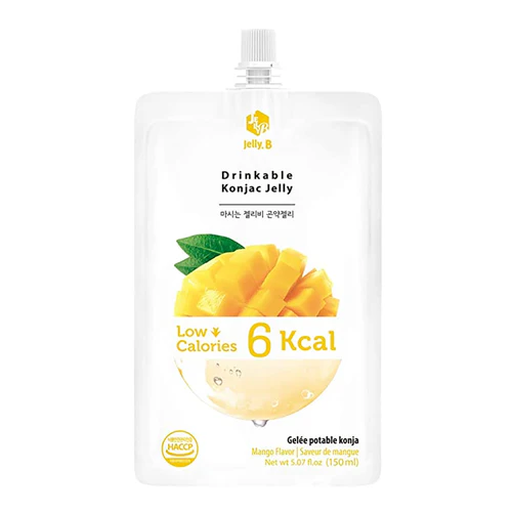
Why this fits the profile: A single pouch makes it easy to try konjac jelly for the first time. The mango flavour and 150 ml portion are straightforward for a first purchase.
The product information states 3 kcal and 0 grams of sugar per 100 ml. This means you can compare the nutritional value directly with regular fruit jellies.
150 ml per pouch; listed as halal and gluten-free according to the product information; mango flavour.
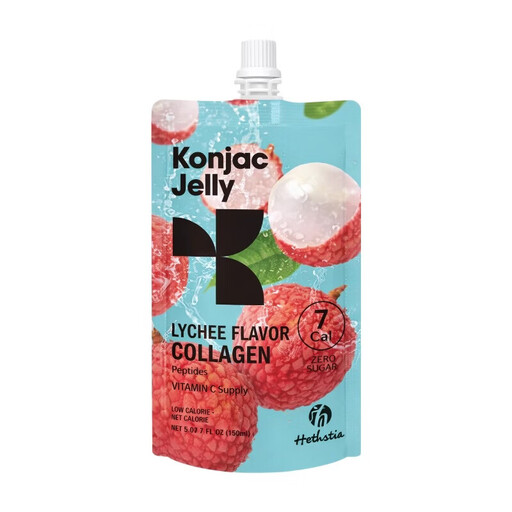
Why this fits the profile: Ideal if you want a fruity flavour but also care about nutritional values, portability and a clear ingredients list.
The stated nutritional values show 7 kcal and 0 grams of sugar per 100 grams. The pouch is individually wrapped, so storing and carrying it is simple.
155 grams; lychee flavour; listed as gluten-free, fat-free and with no stated allergens according to the product information.
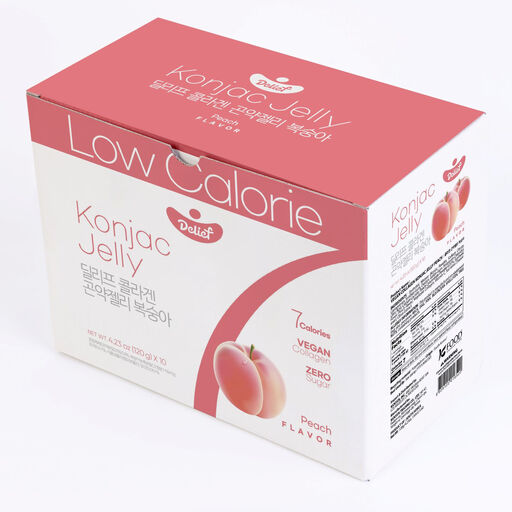
Why this fits the profile: The box of ten portions suits people who regularly take a vegan jelly to work, college or on days out.
The packaging makes the portion size clear: 10 × 120 grams. According to the product information, the snack contains 5 kcal per 100 grams and no stated sugar content in the nutritional table.
10 individual portions; peach flavour; listed as vegan according to the product information.
For a low-calorie snack with a soft texture, the konjac varieties mentioned above make more sense than mochi or sugary fruit sticks. If you're mainly after a sweet treat, you might prefer Yuki & Love Litchi Flavoured Jellies or COZZO Fruit Jelly Sticks, but bear in mind the higher sugar and calorie content.
For fans of konjac jelly peach, Shimonita Konjac Kobo Peach and Delief Peach are possible options. Shimonita states 17 kcal per 100 grams and contains sugar and isomerised syrup according to the ingredients list. So don't just look at the "sugar" line in the table – check the ingredients too.
If you eat a vegan diet, you could look at the Delief Lychee or Peach varieties. For a gluten-free snack, Jelly B Mango and Hethstia Lychee are labelled as gluten-free according to the product information. Always check the current packaging with each order, as labels and formulations can change.
We've put together a full, up-to-date list of products that fully meet these strict selection criteria and comply with current European safety regulations.
That depends on the product. Hethstia, Jelly B and some Delief varieties state 0 grams of sugar per 100 grams. Other Asian jelly products do contain sugar, glucose-fructose syrup or syrup. So always check the ingredients list and nutritional information table.
Unopened products can usually be stored in a cool, dry place away from direct sunlight, according to the product information. Once opened, some varieties need to be refrigerated and used within the stated time. Always follow the instructions on the pack.
Yes, individual pouches are practical for work, school, travel or a walk. Pay attention to the temperature and storage advice, and only take an undamaged pack with you. For keeping a stock at home, a multipack such as Delief Peach 10 × 120 grams is more convenient.
