
Vandaag of morgen in huis

Kwaliteit gegarandeerd

Welkomstaanbiedingen ontgrendelen: GRATIS bezorging | Tot 80% korting | Gratis 30 dagen JoyPlus-proefperiode
Download de app
If you search for konjac jelly, you will quickly come across colourful pouches, Japanese mini portions and fruity jelly snacks. The packaging often promises a light, sugar-free or vegan snack. However, these terms alone are not always enough to help you make a good choice. The main differences lie in the ingredients list, nutritional values, portion size and how the jelly should be eaten.
If you want to buy konjac jelly, it is therefore worth looking beyond the flavour on the front of the pack. Below, you can find out which pitfalls are common and which product specifications are worth comparing in practical terms.
A vegan product can still contain a lot of sugar. This is the case, for example, with traditional jelly sweets containing glucose-fructose syrup and sugar. According to the product information, Autodrop Vegan Cadillacs are vegan and contain natural colourings and flavourings, but provide 338 kcal and 62 grams of sugar per 100 grams.
Fruittella Vegan Dummies are also vegan sweets, but according to the ingredients information they contain sugar and glucose syrup. Always check the nutrition table. Vegan, vegetarian and sugar-free are different properties.
A product with peach, mango or lychee flavour does not automatically contain a lot of fruit juice. Orihiro Prunto Konjac Jelly Peach, for example, states that it contains 23% fruit juice, from peach and apple. Other fruit jelly snacks list only a small percentage of juice or concentrate.
According to the product description for COZZO Fruit Jelly Sticks, the mango, lychee, apple and grape varieties each contain between 0.50% and 1% fruit juice. The remainder includes water, sugar, thickening agents, acidity regulators and flavourings. This does not necessarily make the product unsuitable, but it does make it different from a snack with a higher fruit juice content.
Konjac jelly often has an elastic, smooth texture. This makes the packaging and usage instructions important. Orihiro states that you should open the mini jelly along the perforated line, push the jelly out and chew it in several bites. Do not suck it directly from the opening or swallow it whole.
Children should be supervised. In addition, always check the current packaging, allergen information and usage instructions before putting a product in a lunchbox.
A large bag may seem better value, but an individual portion is easier to take with you and control. Orihiro Prunto Peach contains 6 portions of 20 grams, totalling 120 grams. The Hethstia and Delief products are available as a pouch or multipack of approximately 120 to 155 grams.
Pay attention to the difference between:
For work, travel or a lunchbox, individual portions are often more practical. With some pouches, you also need to refrigerate the product after opening and consume it within the stated period.
A low-calorie jelly snack can vary considerably from one brand to another. The supplied product information includes the following values:
In sugar-free jelly, sugar is often replaced with sweeteners such as erythritol, sucralose or other permitted sweeteners. So read the full ingredients list. “Sugar-free” does not mean that the product contains no sweet taste, carbohydrates or sweeteners.
Compare the gelling agent used, the fruit content and the sweeteners present. Konjac powder is often combined with carrageenan, pectin or other thickening agents. Also check the allergen declaration. Orihiro lists peach and apple as allergens; according to the product information, Delief Lychee contains no allergens.
When choosing a vegan konjac jelly, also look out for terms such as collagen. According to the Delief product description, this refers to a plant-based, root-derived collagen-like ingredient. Hethstia Mango lists “collagen peptides”. If you buy strictly vegan products, it is sensible to check the current packaging and vegan labelling, as product information can change.
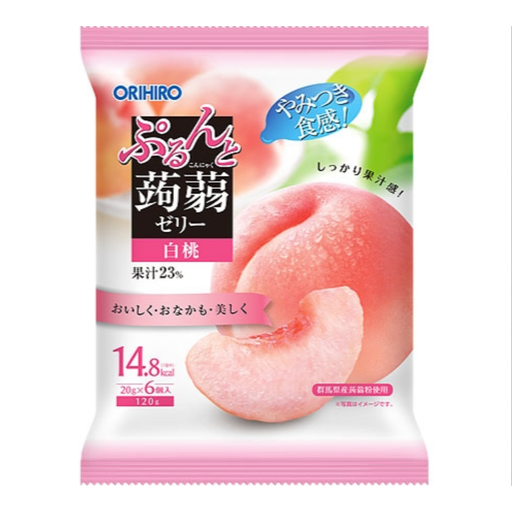
Why it suits this profile: The pack contains six individual 20-gram portions. This makes it easy to try Japanese jelly without immediately buying a large supply.
The portion size is clearly stated. The product also lists 23% fruit juice, making the fruit flavour easier to assess than by looking at the front of the pack alone.
6 mini jellies, 14.8 kcal per portion according to the product information, with peach and apple juice.
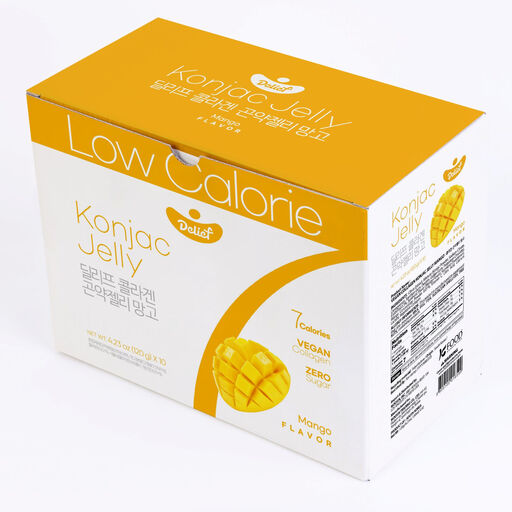
Why it suits this profile: This ready-to-eat mango jelly is aimed at shoppers looking for a vegan option with a very low energy value in a convenient pouch format.
The product information explicitly states 5 kcal and 0 grams of sugar per 100 grams. However, check the current ingredients list and vegan labelling when the product is delivered.
Mango flavour, 120 grams, squeeze pouch and, according to the product information, 5 kcal per 100 grams.
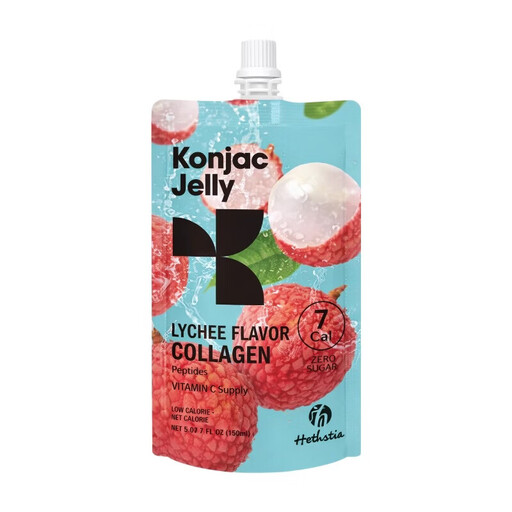
Why it suits this profile: The individual pouch is easy to take to the office, school, on the go or for a day outdoors. The lychee flavour offers an alternative to peach and mango.
The product is sold as an individual pouch, so you are not left with a large opened bag. According to the product information, the jelly should be kept refrigerated after opening.
155 grams per pouch, with 7 kcal per 100 grams and 0 grams of sugar according to the product information.
We have put together a complete, up-to-date list of products that fully meet these strict selection criteria and the applicable European safety regulations.
No. Check the ingredients and the official vegan labelling. Some products use plant-based thickening agents, while others contain unclear terms or ingredients. A product name containing “vegan” is a useful indication, but the current packaging remains the definitive source.
Not always. According to the product information, Orihiro Prunto Peach contains sugar and sweeteners. Delief and several Hethstia varieties state 0 grams of sugar per 100 grams. So check both “of which sugars” and the full ingredients list.
Store the unopened pouch according to the label, usually in a cool, dry place. After opening, some varieties need to be refrigerated and eaten within one or two days. Do not use a pouch if the packaging is damaged, and always follow the specific instructions on the product.
