
Vandaag of morgen in huis

Kwaliteit gegarandeerd

Welkomstaanbiedingen ontgrendelen: GRATIS bezorging | Tot 80% korting | Gratis 30 dagen JoyPlus-proefperiode
Download de app
A sachet of konjac jelly might look simple at first glance: a soft, fruit-flavoured jelly, often in a convenient pouch. But products vary widely in ingredients, sugar content, portion size and storage instructions. If you only look for words like “light”, “vegan” or “sugar-free”, you could end up choosing a product that doesn’t suit your dietary preferences or when you plan to eat it.
This buying guide helps you compare konjac jelly on the points that really matter. That way, you can more easily find a low-calorie snack, a vegan konjac jelly, a gluten-free snack or a fruit jelly snack for on the go.
Always check the nutritional information table and the ingredients list. Some varieties contain sugar, fruit juice concentrate or sweeteners such as erythritol, sucralose and acesulfame K. A product may be low in calories, but still have a different sweetening combination than you might expect.
For example, Jelly B Konjac Jelly Blueberry 150ml states 10 kcal and 2 grams of sugar per serving, according to the product information. Other varieties, such as Jelly B Konjac Jelly Lychee 150ml, state 0 grams of sugar per 100 ml. So don’t just compare the front of the packet.
“Peach”, “mango” or “blueberry” could refer to fruit juice concentrate, flavouring or a combination of both. Check where the fruit appears in the ingredients list and whether natural or artificial flavouring is used. This helps you separate marketing language from product information.
Konjac jelly is often eaten straight from a squeezy pouch. That makes it ideal as a konjac jelly on the go for work, school, travel or a post-workout snack. The soft, elastic texture should be eaten slowly. Don’t swallow a piece of jelly in one go. Take extra care with young children, elderly people and anyone who has difficulty swallowing, and always follow the warnings on the packaging.
Compare the values per 100 grams or 100 mland per pouch. A 120g sachet is not the same as a 155g pack. Examples from the range:
These values come from the supplied product information. Always check the label when you receive the product, as recipes, packaging and nutritional values can change.
If you eat a vegan diet, you need to look beyond the word “konjac”. Some products contain ingredients of animal origin or list collagen peptides. Hethstia varieties with collagen peptides are therefore not automatically suitable for a vegan diet.
Delief products list plant-based collagen from carrot as an ingredient. According to the product information, this is a plant-based ingredient, but if you have allergies, always check the current packaging. A product labelled “no allergens” does not mean you can skip checking the full ingredients list.
Most pouches are easy to take with you unopened and should be stored in a cool, dry place. After opening, the instructions vary by product. Several Hethstia products state that they should be kept refrigerated and consumed within two days; Hethstia Konjac Jelly Blueberry 155g states within one day. Jelly B products advise keeping the pouch tightly closed and storing it in a cool, dry place away from direct sunlight.
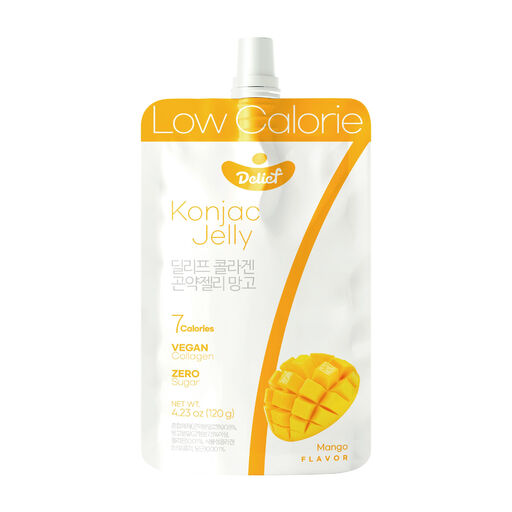
Why this fits the profile: An individual portion with mango flavour and a low stated energy value. The product information states 4 kcal and 0 grams of sugar per 100 grams.
The ingredients and nutritional values are clearly stated. You don’t have to rely solely on the terms “mango” or “vegan”.
120 grams per pack; product information states plant-based collagen from carrot and 0 grams of sugar per 100 grams.
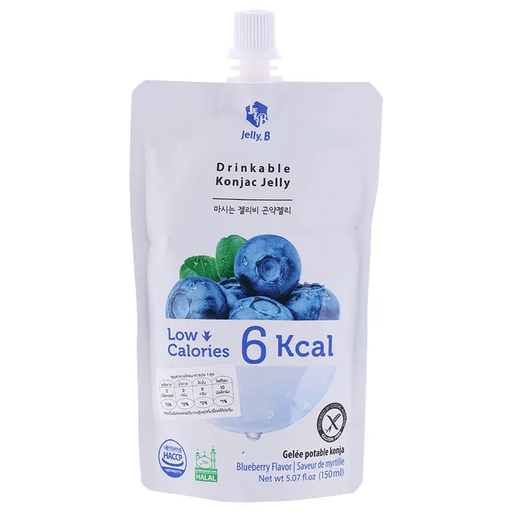
Why this fits the profile: A Korean jelly in a portable pouch with a recognisable blueberry flavour. The product information states halal certification and 10 kcal per serving.
The nutritional information makes it clear that this is not a sugar-free variety: it states 2 grams of sugar per serving.
150 ml pouch; according to the product description, made in Korea and intended to be served chilled.
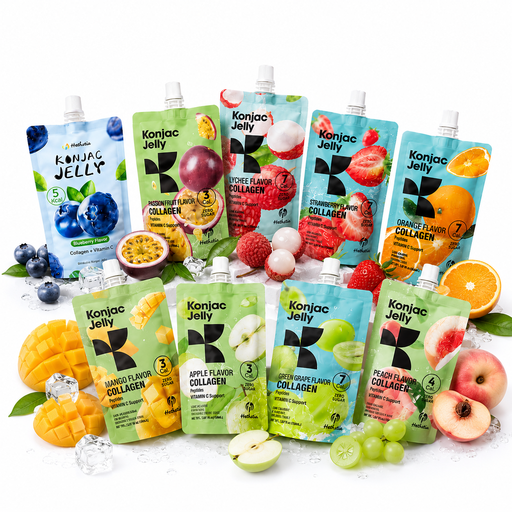
Why this fits the profile: A set of eight portions is practical when you regularly take a pouch to work, school or on the go, and you want to try several flavours.
The pack size is clear: eight sachets of 155 grams. Do check the flavour selection and ingredients on the current label beforehand.
8 × 155 grams; ideal for keeping a stock at home and using on multiple occasions.
We’ve put together a full, up-to-date list of products that fully meet these strict selection criteria and comply with current European safety regulations.
Use this checklist before you order:
Konjac jelly can work as a light snack if you are watching your calories or sugar intake. However, the nutritional value varies by brand and flavour. Some varieties contain sugar, while others are formulated with erythritol or other sweeteners. Always check the label rather than relying on the marketing text.
Unopened pouches are usually best stored in a cool, dry place away from direct sunlight. After opening, some varieties need to be refrigerated and consumed within one or two days. The exact time frame is stated on the packaging or product page.
An individual squeezy pouch of around 120 to 155 grams is practical for work, school, travel or a short break. In warm weather, choose a variety that tastes better chilled and take a cool bag with you if you’ll be keeping the product for a longer period while out and about.
