
Vandaag of morgen in huis

Kwaliteit gegarandeerd

Welkomstaanbiedingen ontgrendelen: GRATIS bezorging | Tot 80% korting | Gratis 30 dagen JoyPlus-proefperiode
Download de app
A konjac jelly might look simple at first glance: fruity jelly in a handy pouch. Yet products vary greatly in sugar content, sweeteners, portion size and texture. If you only look out for words like “light”, “vegan” or “fruit”, you could end up buying a product that doesn’t suit your eating habits.
In this buying guide from the Joybuy Product Recommendation Officer, you’ll discover what to look for when choosing konjac jelly, which features you can verify, and which options suit different situations.
A sugar-free jelly can contain sweeteners such as erythritol, sucralose, steviol glycosides or acesulfame-K. That’s not the same as having no sweet taste at all. So always check both the ingredients list and the nutritional values per 100g.
The word “fruit” can also be misleading. Some products contain fruit concentrate or flavourings in small amounts. For example, the Shimonita Konjac Jelly Mango lists sugar, glucose syrup, mango and konjac in its product information. According to the product description, this variant contains 100 kcal per 100g. That makes it unsuitable for anyone specifically trying to avoid sugar.
Nutritional values are often given per 100g, while a pouch might contain 150g or 155g. So you need to calculate for the actual portion. A product with 7 kcal per 100g will contain roughly 10.5 kcal per 150g, if the stated value is correct.
Also pay attention to the difference between a single pouch and a multipack. The Keumkang Jelly B Lychee is sold as 150 ml × 10, whereas some other products are sold individually.
A jelly pouch is practical for work, school, travel or a walk. However, the soft texture needs to be eaten slowly. Don’t swallow the jelly in one go. Supervision and following the warnings on the pack are especially important with children.
Once opened, some products need to be kept refrigerated and consumed within a short time. Always check the label on the specific pack for this.
For a low-calorie snack, the following values are relevant:
The Hethstia Konjac Jelly Lychee states 7 kcal and 0g sugar per 100g according to the product information. The Keumkang Jelly B Konjac Jelly Lychee states 3 kcal and 0g sugar per 100g. These values are product- and label-specific; check the actual pack on delivery.
If you’re looking for a keto konjac jelly, it’s wise not just to look for “keto-friendly” in the marketing text. Compare the total carbohydrates per portion with your own dietary goals.
“Vegan” in this category can refer to a plant-based composition, but always check the full ingredients list. The DELIEF Vegan Collagen Konjac Jelly Mango uses a plant-based collagen-like peptide derived from carrot, according to the label. That’s not the same as animal collagen.
Also watch out for cross-contamination. A product may state it contains no allergens, yet be produced in an environment where milk, egg, fish, nuts or peanuts are handled. The DELIEF Vegan Collagen Konjac Jelly Mango includes this production facility information.
Konjac snacks are available as small individual pieces, as squeeze pouches or in multipacks. Choose based on how you’ll use them:
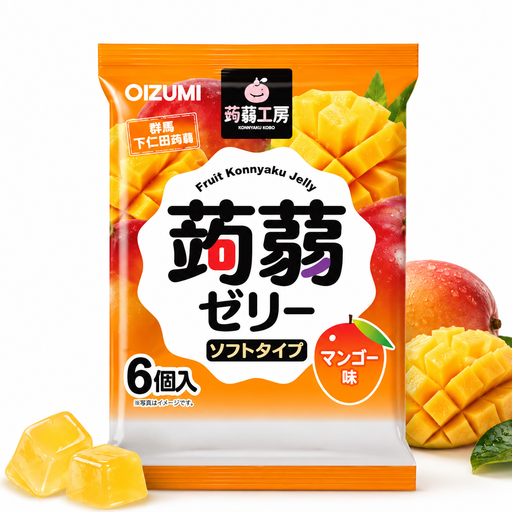
Why this fits the profile: An easy entry point for anyone wanting to try a Japanese mango-flavoured snack without committing to a multipack.
The product information clearly states 100 kcal per 100g and 0g fat. However, do check that the sugar and glucose syrup fit with your dietary choices.
106g, mango flavour, Japanese origin according to the product description and 0g fat.
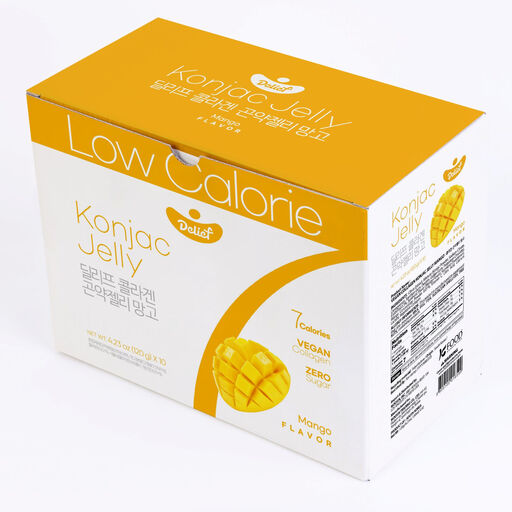
Why this fits the profile: A multipack for anyone who regularly wants to take a plant-based mango jelly to the office, to study or on the go.
The product page states 5 kcal per pouch and 0g sugar. Check the allergen information, as the facility handles milk, egg, fish, shellfish, nuts and peanuts.
10 × 120g, mango flavour, plant-based collagen-like peptide according to the label and vitamin C listed in the ingredients.
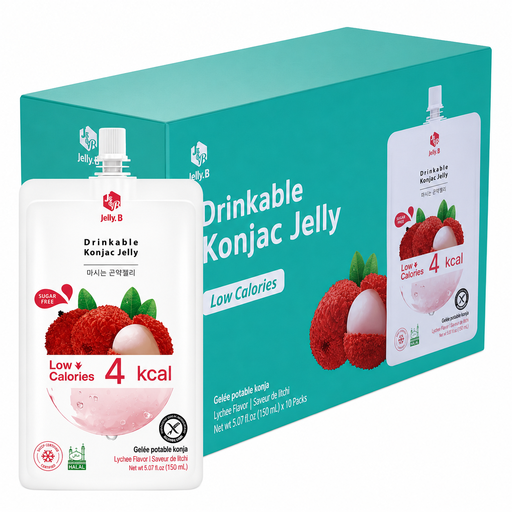
Why this fits the profile: A bulk pack for anyone who regularly needs a portion-sized snack during workdays, travel or other busy days.
The nutritional information states 3 kcal and 0g sugar per 100g. The multipack makes the total quantity clear, so you don’t accidentally confuse a single pouch with a box.
10 × 150 ml, lychee flavour, 0g fat and according to the product information no allergens that must be declared.
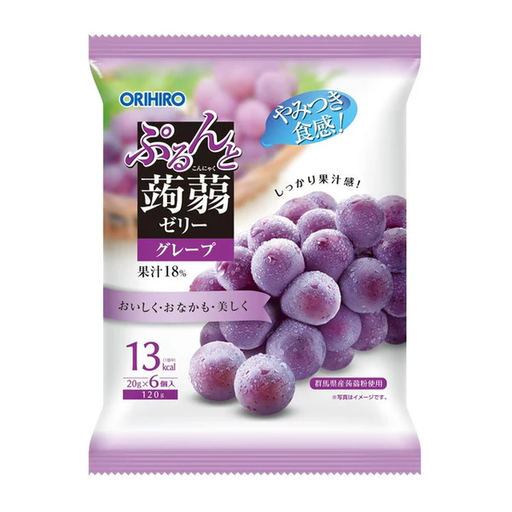
Why this fits the profile: For anyone looking for a grape-flavoured fruit jelly with individually wrapped portions.
The product information states 6 individually wrapped pieces and lists 7 kcal per 100g. Sugar is also in the ingredients list, so this is not a sugar-free jelly.
6 portions, grape flavour, 120g total and handy for lunchboxes or a snack on the go.
We’ve put together a full, up-to-date list of products that fully meet these strict selection criteria and comply with current European safety regulations.
No. Some varieties contain sugar, glucose syrup or fruit sugar. For example, Shimonita Mango and ORIHIRO Grape list sugar-containing ingredients. So always check the nutritional values and ingredients list for each product.
Many unopened products can be stored in a cool, dry place away from direct sunlight, according to the product information. Once opened, some pouches need to be refrigerated and consumed within two days. Always follow the instructions on the pack.
Yes, an individual pouch or separately wrapped portion is practical for taking with you. Watch out for leakage, temperature and the best-before date. Eat the jelly slowly and check beforehand that the ingredients suit your allergies, vegan preferences or restrictions on sugar and carbohydrates.
