
Vandaag of morgen in huis

Kwaliteit gegarandeerd

Welkomstaanbiedingen ontgrendelen: GRATIS bezorging | Tot 80% korting | Gratis 30 dagen JoyPlus-proefperiode
Download de app
Choosing a new frying pan might seem straightforward. But many poor buys only become apparent after a few weeks: the pan doesn’t work properly on induction, the non-stick coating gets damaged or the size turns out to be impractical for everyday use. Terms such as “healthy”, “durable” and “suitable for all hobs” only tell you so much until you check the product specifications.
This buying guide helps you compare your options. You’ll find out what to look for in an induction frying pan, a ceramic frying pan, a frying pan set or an electric model, followed by recommendations for different needs.
A pan isn’t automatically suitable for induction just because it’s made from aluminium or steel. Induction requires a magnetic base. So check whether the product description explicitly lists induction, gas and electric hobs. Also pay attention to the base diameter: a 20 cm frying pan works most efficiently on a suitably sized small cooking zone.
A non-stick frying pan won’t stay in the same condition by itself. Metal utensils, heating an empty pan and high temperatures can damage the coating. Ceramic models are often described as being free from certain substances. This is a product specification from the brand, not a guarantee that the pan will last indefinitely.
Use wooden, silicone or nylon utensils wherever possible. Let the pan cool before washing it, and follow the care instructions on the product page.
The stated diameter isn’t the same as the usable cooking surface. A high rim can be useful for stir-frying, but makes a pan less suitable for cooking a large pancake. So think about how you’ll use it:
Aluminium usually heats up quickly and is relatively lightweight. A magnetic stainless steel base makes an aluminium pan suitable for induction. Layered stainless steel, such as 304 tri-ply with an aluminium core, is another option: this type has no non-stick coating and requires more care with preheating and oil.
Check the handle too. According to the product description, Bakelite stays cooler than the pan during normal use, but it can still get hot during prolonged cooking or oven use. A detachable handle saves space, but check whether the pan can go in the oven without it and what the maximum temperature is.
When choosing a PFAS-free frying pan, check the exact wording. Some sellers state that their coating is free from PTFE, PFOA and PFAS; others only mention PFOA and PFOS. These aren’t the same claims. So base your choice on what the manufacturer actually states.
A ceramic frying pan may be worth considering if you’re looking for a coating that, according to the product description, is free from PTFE, PFOA and PFAS. Don’t use sharp metal spatulas and avoid heating an empty pan on a high setting. To help it last longer, hand-washing may be a better option, even if the pan is described as dishwasher-safe.
A dishwasher-safe frying pan is practical, but dishwasher detergents and high temperatures can affect the life of the coating. Check whether only the pan is dishwasher-safe, or whether the lid and handle are too.
A frying pan with a lid is useful for simmering, braising and keeping food warm. A glass lid lets you keep an eye on your food without lifting it each time. With electric models, pay extra attention to the cord, temperature control and how to clean the plug safely.
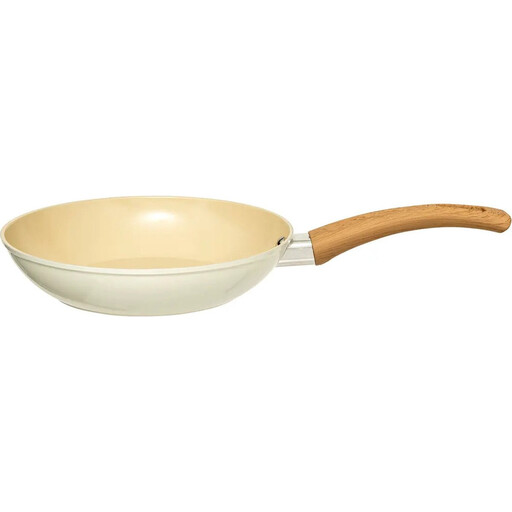
Why it suits this profile: This compact pan is suitable for gas, induction, ceramic and electric hobs. Its size is ideal for students, small households and single portions.
The specifications list all common heat sources and a 20 cm diameter, so you can check in advance whether the size suits your cooking zone and portions.
Recycled aluminium, two non-stick layers, soft-touch handle and dishwasher-safe according to the product information.
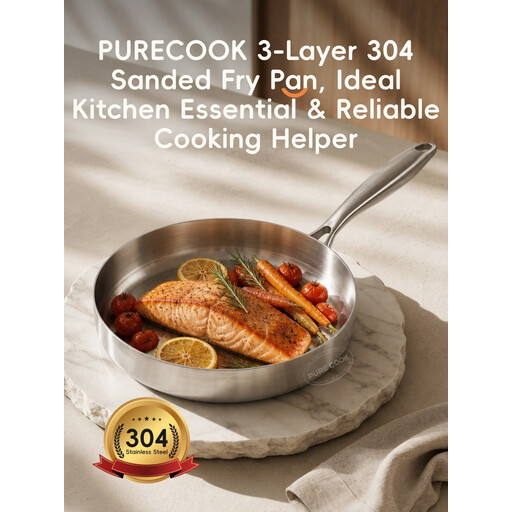
Why it suits this profile: If you prefer cooking without a coating, this 304 stainless steel pan has an aluminium core and is suitable for gas and induction. It’s a good fit for cooks who are happy to adapt their cooking technique.
The product information clearly states that this pan has no non-stick coating. That means there’s no uncertainty about care or using metal utensils.
304 tri-ply construction, aluminium core, smooth-finished rim and oven-safe according to the stated product specifications.
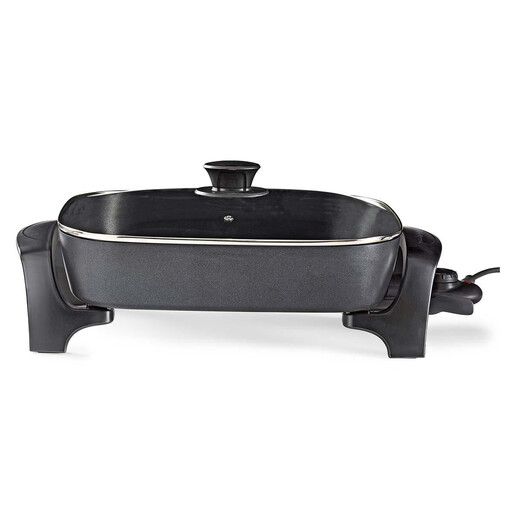
Why it suits this profile: This electric pan is designed for families and anyone who wants to fry, braise or roast large portions without using a hob.
Its 7-litre capacity and 40 cm size make it clear that this isn’t a compact frying pan. The temperature control is detachable and must not be immersed in water.
2,200 watts, adjustable thermostat, glass lid and ceramic coating according to the product description.
We’ve put together a full, up-to-date list of products that meet these strict selection criteria and the applicable European safety regulations.
Choose a model whose product information explicitly states induction compatibility and a magnetic base. A pan that’s suitable only for gas or electric hobs won’t automatically work on induction. Also check that the base fits the cooking zone properly.
Its lifespan depends on the material, how you use it and how you care for it. Don’t use metal utensils, avoid heating an empty pan for a long time and follow the cleaning instructions. Replace the pan if the coating becomes visibly damaged or food keeps sticking to it.
Some models are described as dishwasher-safe, but this doesn’t always apply to the handle, lid or temperature control. If you want to preserve the coating for as long as possible, hand-washing with a soft sponge is often the safer choice.
