
Vandaag of morgen in huis

Kwaliteit gegarandeerd

Welkomstaanbiedingen ontgrendelen: GRATIS bezorging | Tot 80% korting | Gratis 30 dagen JoyPlus-proefperiode
Download de app
A good knife should suit the task, the material and the way you work. A pocket knife for use on the go has different requirements from a utility knife for cardboard, a carpet knife for renovation work or a kitchen knife for everyday food preparation. Yet many products look similar because of broad terms such as “extra sharp”, “professional” or “durable”.
As a Joybuy Product Recommendation Officer, I filter the key product specifications out of the marketing language. This makes it easier to see which features really matter and which purchasing pitfalls you can avoid.
A knife may feel sharp when you buy it, but every blade wears down with use. With a hobby knife, utility knife or Stanley knife, sharpness is therefore not the only important factor. Check whether replacement blades are readily available and which type is compatible.
A snap-off knife uses segments that can be snapped off. A utility knife with a trapezoid blade uses separate replacement blades. These systems are not automatically interchangeable. Check the width, shape and attachment method before buying a supply of blades.
A smooth metal or plastic handle may look compact, but it can be less comfortable during prolonged cutting. For cardboard, carpet or sheet materials, a secure grip is more important than an eye-catching design. Look at the materials used, the shape and whether it has non-slip details.
Wood can feel comfortable and provide a classic appearance. Aluminium is light and strong. ABS with TPR rubber is often used to provide extra grip on utility knives. No material makes a knife automatically suitable for every job; the combination of shape and intended use is what matters.
With a folding or pocket knife, a locking mechanism and controlled opening are important considerations. A liner lock, slide lock or other locking system should keep the blade securely in place during use. With a utility knife, you should also check whether the blade can be fully retracted.
A locking mechanism does not eliminate every risk. Do not use a knife as a lever and do not force the blade through heavy materials. Keep loose blades out of children’s reach and dispose of used blades safely.
Stainless steel is a practical choice for everyday use and food preparation because it is more resistant to moisture than untreated steel. SK5 blades are also used in work knives. SK5 is a type of carbon steel which, according to the product specification, may be suitable for cutting applications where a strong cutting edge is desirable. The actual service life depends on the material, pressure, maintenance and storage conditions.
The shape determines the application:
Also consider the blade’s thickness and length. A longer blade is not always more practical: for precision work, a shorter cutting edge may provide better control.
Check the following before buying:
For example, the WORKPRO Utility Knife Blades are 18 mm wide, made from SK5 steel and have eight snap-off segments per blade. The pack contains 100 blades in individual plastic cases. Take a look at the WORKPRO replacement blades if you already use a compatible utility knife.
A folding knife takes up less space, but check its length when closed, its weight and the clip. A belt clip can be practical on work trousers or a bag. If you plan to carry a knife every day in the UK, it is sensible to check the applicable rules and restrictions in advance. Locations such as events, workplaces and public transport may also have their own regulations.
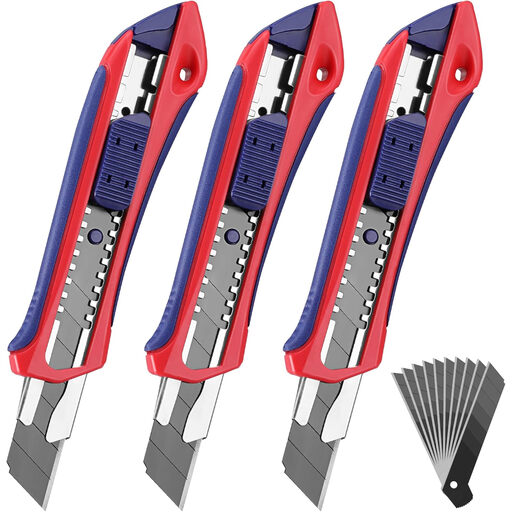
Why it suits this profile: The set contains three utility knives and ten replacement blades. This is practical for household use, hobby projects and opening packages.
The specifications state an 18 mm blade width, SK5 carbon steel and a locking mechanism. This makes it clearer which replacement blade is required.
Three handles, rubber grip, snap-off blades and SK5 replacement blades included.
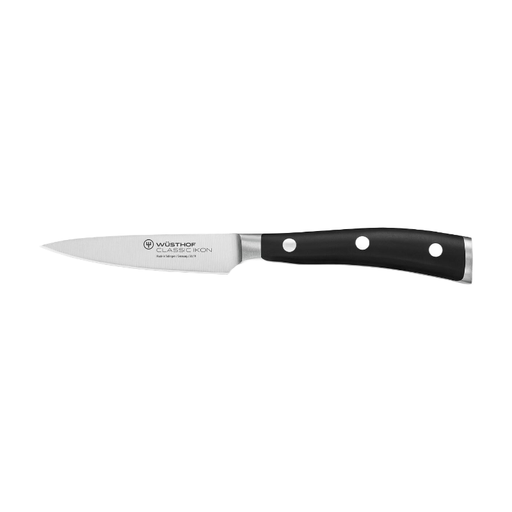
Why it suits this profile: This kitchen knife has a 9 cm stainless steel blade and a plastic handle. Its size is suited to smaller cutting tasks and preparing fruit and vegetables.
The dimensions, materials and intended use are clearly stated. You are therefore buying a kitchen knife for specific tasks, rather than an unclear multifunctional model.
9 cm stainless steel blade, plastic handle and, according to the product information, dishwasher-safe.
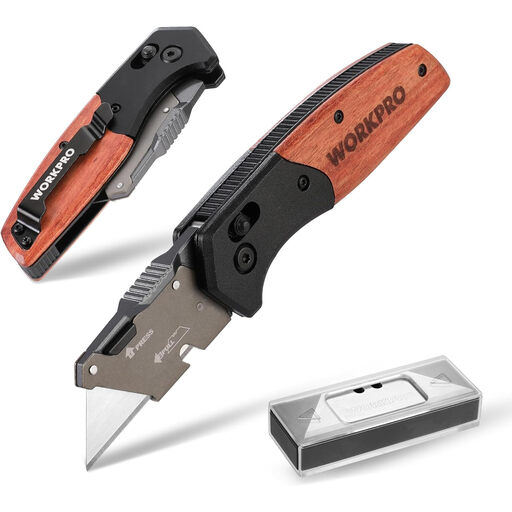
Why it suits this profile: This folding knife combines a compact design with a utility blade, slide lock, belt clip and ten SK5 replacement blades. It is suited to DIY jobs, packaging and outdoor activities.
The product information mentions a quick-change system, a slide lock and a closed length of 116 mm. Always check that the intended use remains within the stated cutting capacity.
130 grams, aluminium alloy with wooden inlay, belt clip and ten replacement blades.
We have put together a complete, up-to-date list of products that fully meet these strict selection criteria and the applicable European safety regulations.
A knife will last longer when you use it for its intended purpose. Cut on a stable surface and do not use excessive force. Clean kitchen knives after use and dry them thoroughly. Replacement blades should be stored in a dry, secure place; some blades are supplied with a protective film of oil.
Before every job, check that the blade is firmly secured and has no visible damage. Fully retract a utility knife when putting it down. Use suitable protection when replacing sharp blades and never place used segments loose in a waste bin.
A utility knife or cutter with a suitable 18 mm blade is generally practical for cardboard, tape and packaging materials. Choose a model with a reliable locking mechanism and check that replacement blades are available. For thick or rigid materials, a trapezoid blade is often more suitable than a small hobby knife.
This depends on the material, the cutting pressure and how often you use the knife. Cardboard and carpet wear down a blade faster than paper. With snap-off knives, you can remove a blunt segment; with trapezoid knives, you replace the entire blade. Keeping replacement blades in stock means you will not have to discard a suitable handle as soon as the cutting edge becomes blunt.
A knife set can be cost-effective if you have several different uses in mind, such as a paring knife, kitchen knife and slicing knife. For one specific task, an individual knife is usually easier to assess. Always compare the actual contents of the set, blade lengths, handle material and included protection, rather than looking only at the number of items.
