Who is this keyboard for?

Developer who uses lots of shortcuts

You programme the counter and repeat commands while testing it. The layout and ability to customise keys determine whether a programmable keyboard suits the way you work. RTINGS discusses options for programming, including the function row, arrow keys and numeric keypad.

Developer who spends long hours at a screen

You want to be able to adjust the position of your hands and keyboard to suit your workspace, without assuming that a particular model will prevent discomfort. Kinesis describes the adjustable setup of the Freestyle2, while Arboportaal provides information about working with display screens.

Home worker or office typist

You may share a workspace or prefer a familiar, quiet typing experience to extensive key customisation. CHERRY describes the STREAM as a keyboard with quiet keystrokes, while Logitech offers the MX Keys S, which includes programmable keys.

What should you look for?

Programmable mechanical keyboard

Choose this if: you use the same shortcuts often and want to customise keys or layers.

Consider: check the exact layout and position of your programming symbols; a macro won’t run a test by itself.

Low-profile, conventional keyboard

Choose this if: you mainly want a familiar layout and a quiet, low-profile keystroke.

Consider: the models listed don’t offer the same level of key customisation; also check the layout and connection type of the version you’re considering.

Split keyboard

Choose this if: you want to set the distance and angle between your hands yourself.

Consider: a different hand position may take some getting used to; check the regional layout, connection version and any accessories.

What to consider What to check before buying Who is this most relevant to?
Layout and programming keys Check the position of the symbols you use on the exact regional variant, and see whether it has arrow, function and numeric keys. When I use symbols and shortcuts often for code and tests, I want to find them straight away in familiar places. That’s why around 36% of consumers put layout and access to programming keys first.
Hand position during long typing sessions Compare a fixed split with an adjustable one, and check that the version and accessories suit your workspace. During longer typing sessions, I want to adjust the distance between my hands without expecting a keyboard to prevent discomfort. Around 29% of consumers give hand position their highest priority.
Quiet keystrokes Check the key mechanism on the version you’re considering and, if possible, try the typing feel for yourself. If I work in a shared space, quiet keystrokes may matter more than extensive key customisation. Around 21% of consumers prioritise quiet typing.
Connection Check which port your computer has and whether the version connects by cable, Bluetooth or receiver. I want the keyboard to connect to my computer and suit the way I work, without needing to switch connections unnecessarily. Around 14% of consumers choose connection as their first consideration.

Common pitfalls

  • Confusing a keyboard macro with an automated test

    Remapping a key can make an action easier to access, but it doesn’t create test code or a test environment.

    First decide which command your test environment needs to run. Then check whether assigning a key to that action would make things easier.

  • Assuming a familiar model name means you’ll get the right regional version

    The Keychron K8 Pro is available in ISO regional variants, while the Keychron Q6 Ultra 8K is an ANSI model. The model name alone therefore doesn’t tell you which key legends you’ll get.

    Before ordering, compare the full version and key legends with the layout set on your computer.

  • Assuming an ergonomic label will resolve discomfort

    An adjustable setup is different from a fixed split. Kinesis states that no keyboard can guarantee to cure or prevent injury.

    Compare the adjustability and contents of the specific version with your workspace, rather than relying on the ergonomic label alone.

    Some Freestyle2 versions offer supports or other accessories as separate options; check what’s included with the version you choose.

Brands to consider

Keychron

The K8 Pro ISO is a tenkeyless model for anyone looking for key remapping and macros. The Q6 Ultra 8K is a larger ANSI model; RTINGS discusses it for programming.

  • Keychron lists wired use, Bluetooth and customisation through Keychron Launcher for the K8 Pro.
  • An ISO version doesn’t automatically mean the keys have Dutch legends. The Q6 Ultra 8K’s features don’t automatically apply to the K8 Pro.

Logitech

The MX Keys S has low-profile keys and programmable functions; the ERGO K860 has a fixed, curved split.

  • Logitech describes the MX Keys S as a model with programmable keys and a design intended to reduce typing noise.
  • The ERGO K860 doesn’t have separately movable halves. The manufacturer’s claims about ergonomic benefits don’t guarantee a particular result.

CHERRY

The STREAM is a conventional keyboard for anyone who values low-profile keys more than extensive macro customisation.

  • CHERRY lists an SX scissor mechanism and describes the keystrokes as quiet.
  • That description comes from the manufacturer; the information provided doesn’t include an independent sound comparison with the other models.

Kinesis

The Freestyle2 has two separately positionable halves for anyone who wants to adjust their hand position.

  • Kinesis lists European ISO versions and different connection options.
  • Check the specific version: according to the manual, some shortcuts depend on the operating system. A keyboard can’t guarantee to cure or prevent injury.

Keyboards on Joybuy

These keyboards are for anyone looking for a keyboard to programme software and write or run tests. Focus on comparing the layout, connection and level of key customisation you need.

Wired QWERTY keyboard with numeric keypad

Wired keyboard with numeric keypad, QWERTY

Suited to anyone looking for a full QWERTY layout with a numeric keypad.

The description lists arrow keys, navigation keys and function keys.

Connection: wired, plug and play.

View on Joybuy

Redragon wired mechanical keyboard with 94 keys

Redragon wired mechanical keyboard with 94 keys

A wired mechanical option for anyone looking for a 94-key layout.

The product information lists hot-swappable switches and a detachable wrist rest.

View on Joybuy

AJAZZ AK820 MAX wired keyboard with magnetic switches

AJAZZ AK820 MAX, 75%, wired

Suited to anyone looking for a compact wired layout with adjustable actuation.

The 75% layout has 82 keys.

The product information lists magnetic hot-swappable switches and adjustable actuation points.

View on Joybuy
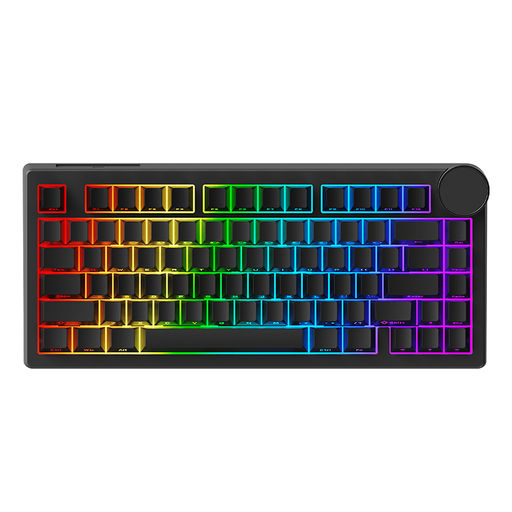
AJAZZ AK820 V2 wired HE magnetic keyboard

AJAZZ AK820 V2, wired, 75%

Suited to anyone looking for a compact wired layout and key customisation.

The product information lists magnetic switches, key remapping and macro recording via a web driver.

View on Joybuy

Ajazz AK820 Pro 75% keyboard with US QWERTY layout

Ajazz AK820 Pro, 75%, tri-mode, US QWERTY

Suited to anyone looking for a compact layout with several connection options.

This version has 82 keys and a US QWERTY layout.

Connection: wired, Bluetooth or 2.4G. The product name lists compatibility with Win, Mac and PC.

View on Joybuy

Frequently asked questions

Do I need a programmable keyboard to run tests automatically?

No. Programmable keys can make an existing shortcut or command easier to access, but tests themselves are run by test software and test code. The pytest documentation explains how to write and run tests; you don’t need a special keyboard for this.

What should I check when connecting and setting it up?

Check the port, connection method and key layout of the exact version. Kinesis states that the USB version of the Freestyle2 can be connected without a special driver and that some shortcuts depend on the operating system.

What maintenance or additional purchases might be needed?

Palm rests are accessories for some Freestyle2 versions. For the version with VIP3 accessories pre-installed, Kinesis describes replaceable adhesive pads; check which parts are included with the version you choose.

What are my rights if a keyboard bought in the Netherlands breaks too soon?

For a consumer purchase, the seller is responsible for the legal guarantee. According to ACM ConsuWijzer, this guarantee in the Netherlands doesn’t have a fixed duration of two years: what you could reasonably expect from the product and whether it has been used normally are what matter. For a typical online consumer purchase, you’ll usually also have a 14-day cooling-off period, subject to exceptions; the Dutch government explains the information requirements and cooling-off period for distance selling.

Do Dutch workplace rules apply when using it for work?

Yes, subject to the rules for employees and display-screen work. Arboportaal states that if you work with a display screen for more than two hours a day, the screen and keyboard must not be attached to each other; when using a laptop, it must then be possible to use a separate screen or keyboard. This isn’t a general purchasing requirement for every hobbyist.
