What should you look for when choosing?
First, decide whether your priority is repeat commands, number entry, hand positioning, or a familiar layout and connection. This will help you weigh up the features without assuming that a keyboard can perform a command your software doesn’t recognise.
| What to consider |
What to look for when buying |
Who will find this especially important? |
| Shortcuts and repeat actions |
Test the shortcuts in your own software. Check that the required modifier keys are available and that any configuration software works on your computer. |
If I often switch between the source and the record, I want to carry out repeat commands quickly without assuming my software supports every key action. Around 33% of consumers give quick switching and repeat tasks top priority. |
| Entering numbers |
Consider how often you enter strings of numbers and check whether the version has a built-in numeric keypad or can be paired with a separate one. |
If I regularly enter pattern or record numbers, I weigh up the convenience of a fixed numeric keypad against the space I need for my mouse. Around 27% of consumers prioritise number entry. |
| Positioning during longer sessions |
Check the dimensions and think about how you want to position your keyboard and mouse in your workspace. Make room for changing activities and taking short breaks too. |
During longer typing sessions, I want to position my keyboard and mouse so they suit my hands and the space I have to move my mouse. Around 20% of consumers prioritise positioning and comfort. |
| Keyboard layout and connection |
Compare the keys shown with those on your current keyboard, and check the regional version, operating system and connection required by your computer. |
If I’m used to a particular keyboard layout, I want familiar key positions for characters and shortcuts, and a keyboard that connects to my computer. Around 20% of consumers prioritise a familiar layout and a suitable connection. |
Keyboards for this indexing task
This selection includes keyboards for entering text, repeating actions and entering numbers when indexing knitting patterns. For each model, check that the layout and any configuration software are compatible with your computer and programme.
 No image available
AJAZZ AK980 V2, 98% QWERTY
For typing text if a 98% QWERTY layout suits the way you work.
The description lists a wired connection, Bluetooth and 2.4G, as well as a control knob and TFT display.
View at Joybuy
 No image available
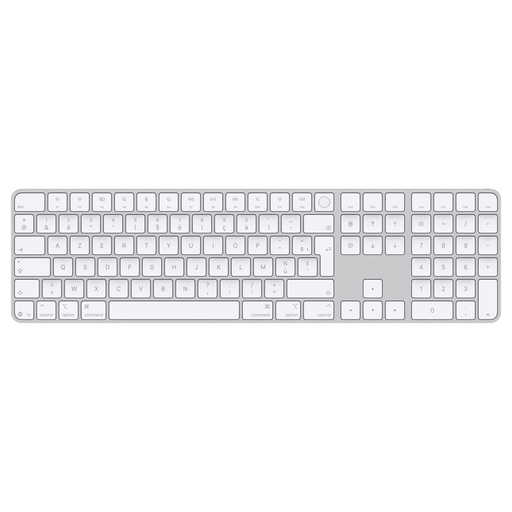
Apple Magic Keyboard with Touch ID and numeric keypad
For anyone who wants a built-in numeric keypad when entering pattern or record numbers.
The product title specifies a version for Mac computers with Apple silicon.
View at Joybuy
 No image available
AJAZZ AK820 MAX, 75% US QWERTY
For anyone who wants to carry out repeat actions using custom macros.
The description lists macros, onboard memory, three connection modes, a function row and arrow keys.
View at Joybuy
 No image available
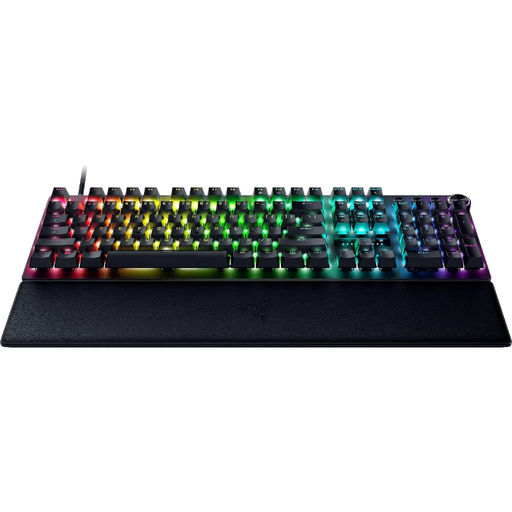
Razer Huntsman V3 Pro, US QWERTY
For anyone who wants to check whether keys can be customised for repeat commands.
The description lists a full-size layout, USB-A and key customisation through Razer Synapse; it also says the software needs to be installed.
View at Joybuy
 No image available
MageGee TS91, 60% wired US QWERTY
For compact typing when desk space matters more than a built-in numeric keypad.
The product name specifies a wired 60% layout with 61 keys. This model has no numeric keypad, which may make it less suitable if you enter numbers frequently.
View at Joybuy
Frequently asked questions
Do I need a special keyboard to display the source and index record side by side?
No. Arranging windows side by side is a feature of your computer’s operating system. Microsoft describes Snap for Windows, while Apple Support explains how to position windows on a Mac. Whether your indexing programme can open both record views at the same time depends on the programme.
Can I use a programmable key with my indexing programme straight away?
First, check whether your indexing programme can perform the action you want using a key. Logitech describes Smart Actions through Logi Options+, while Keychron describes key customisation through Launcher. Also check that you can use the relevant software on your computer.
How should I set up my keyboard for longer indexing sessions?
Position your keyboard and mouse to suit your workspace, and vary your screen-based tasks. Arboportaal recommends, among other things, looking away regularly and taking microbreaks; a split keyboard doesn’t replace the need to vary your activities.
What are my rights if a keyboard bought online isn’t suitable or breaks too soon?
For online consumer purchases, ACM ConsuWijzer says you have up to 14 days after delivery to change your mind, subject to exceptions. This is separate from your statutory guarantee: if a product doesn’t meet reasonable expectations under normal use, contact the seller.
Do I have to use a separate keyboard when working on a laptop in the Netherlands?
Arboportaal says that for employees who work at a screen for more than 2 hours a day, the screen and keyboard must not be attached to each other. This requirement for screen-based work doesn’t automatically apply as a product requirement to every private buyer.


