Who should consider this camera choice?

Sellers who want to show yarn colours accurately

If you photograph yarn colours for product pages, consistent lighting and a fixed white balance can help. Canon Netherlands highlights the importance of accurate colour reproduction, while Nikon Netherlands recommends reassessing the white balance when the lighting changes.

Sellers who want to show stitches and finishing

If you take photos of the whole toy as well as close-ups of the knitting, the maximum magnification of your chosen lens matters. Canon and Nikon’s manufacturer specifications show that different lenses offer different magnification levels.

Beginners who want to make the most of their existing equipment

If you don’t already have a complete camera set-up, you can start with an existing smartphone, a fixed background and even lighting. Shopify Netherlands and Hostnet describe these set-up elements as part of product photography.

Which buying considerations deserve attention?

Existing smartphone and fixed set-up

A good fit if: you mainly photograph whole soft toys and your current phone produces sufficiently sharp images.

Bear in mind: RAW options, manual settings and close-up capabilities vary from phone to phone.

Mirrorless camera with standard zoom lens

A good fit if: you regularly photograph product ranges and want to control focus, exposure or image editing yourself.

Bear in mind: a standard zoom lens for overview shots won’t automatically offer enough magnification for stitch details that fill the frame.

Mirrorless camera with close-up or macro lens

A good fit if: you regularly need to show individual stitches, eyes or finishing details.

Bear in mind: a separate lens must have a compatible mount, and you’ll need to choose the magnification you want carefully.

Consideration What to check before buying Who should pay particular attention?
Yarn colour Work in the most consistent lighting possible and check whether you can set the white balance. Nikon Netherlands recommends reassessing the white balance when the lighting changes. If I want yarn colours to look consistent across product photos, I pay attention to lighting and white balance; consumers who prioritise colour reproduction account for around 33%.
Stitches and finishing Compare the magnification and lens mount of the exact lens. Canon lists a maximum magnification of 1:2 for the RF 35mm F1.8 MACRO IS STM; Nikon lists 1:1 for the NIKKOR Z MC 50mm f/2.8. These are specifications for different lenses, not a comparison of quality. If you want small stitches or finishing details to fill the frame, you need to know how much the lens can magnify; consumers who prioritise showing details account for around 27%.
Consistent product photos Decide whether you’ll work at a fixed table or use a tripod, and whether you can use a fixed background and lighting. Shopify Netherlands and Hostnet list these as elements of product photography. If I want to photograph lots of toy designs from similar angles, a consistent process helps; consumers who prioritise repeatability account for around 20%.
Equipment needed Check what’s included with the exact kit, including the lens. Nikon Netherlands lists a 16–50mm lens with the Z50II kit; compare the kit contents with what you already own. If you want to use your existing equipment first and only add what’s missing, consider the complete set-up; consumers who prioritise the equipment needed for their set-up account for around 20%.

Common mistakes when choosing a camera

  • Choosing a different camera body when the lighting keeps changing

    Changing light and white balance can make yarn colours look different in consecutive photos, even when you’re using a mirrorless camera.

    First, test a fixed lighting set-up with your current device and compare some test shots before choosing a camera body.

    A consistent set-up may still require extra preparation and equipment.

  • Assuming that every lens labelled ‘macro’ offers the same magnification

    According to Canon, the RF 35mm F1.8 MACRO IS STM offers a maximum magnification of 1:2; Nikon lists 1:1 for the separate NIKKOR Z MC 50mm f/2.8. The Nikon lens isn’t included in the standard zoom kit mentioned here.

    Check the maximum magnification and lens mount for the exact lens and camera body. You may need a separate lens to achieve the close-up framing you want.

  • Assuming that every version with the same camera name comes with the same kit contents

    A camera body and a camera kit don’t necessarily include the same items. The supplied lens partly determines which photos you can take straight away.

    Compare the contents of the exact kit with the equipment you already own and the set-up you want to use.

Camera brands to compare

Canon

An EOS R50 with an RF-S standard zoom lens is a mirrorless option for overview shots. A separate RF close-up lens is another option for capturing greater detail.

  • Canon lists a 24.2 MP APS-C sensor and an RF mount for the EOS R50.
  • According to Canon, the RF-S 18–45mm kit lens offers a maximum magnification of 0.16× at 45mm with autofocus. The separate RF 35mm F1.8 MACRO IS STM offers a maximum magnification of 1:2, according to Canon.
  • These specifications aren’t an independent test of photos of knitted toys; check whether the kit lens offers the framing you want.

Nikon

The Z50II standard zoom kit is designed for general product photography; a separate Z-mount macro lens is available for greater magnification.

  • The Z50II kit reviewed includes a NIKKOR Z DX 16–50mm f/3.5–6.3 VR lens, according to Nikon.
  • The separate NIKKOR Z MC 50mm f/2.8 offers 1:1 magnification, according to Nikon.
  • The macro lens isn’t included in the standard zoom kit mentioned here; check the contents of the exact kit.

Sony

The Alpha 6400 is an E-mount system for anyone looking for RAW shooting and interchangeable lenses.

  • Sony lists an APS-C sensor with approximately 24.2 effective MP, an E mount and RAW shooting for the ILCE-6400.
  • The ILCE-6400L version is shown with a 16–50mm zoom lens; check which version and lens are included in the offer.
  • These specifications don’t show that the standard zoom can take every close-up you might want.

Fujifilm

The X-S20 is an X-mount alternative for anyone who wants to choose a lens in advance for both overview shots and detail.

  • Fujifilm lists an APS-C sensor with 26.1 million effective pixels and an X mount for the X-S20.
  • Assess the lens and the exact kit separately; the camera’s specifications don’t determine the magnification achievable with a specific lens.

Cameras for product photography

These Joybuy cameras offer different options for product photography and framing. Check which lens and features are included with each version.
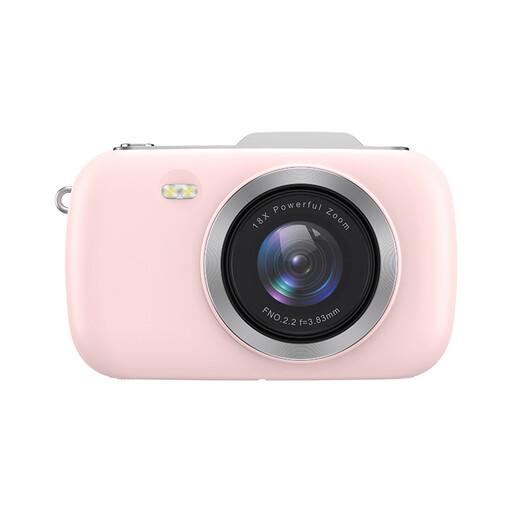
KOMERY G7-A 4K camera with 18X zoom

KOMERY G7-A 4K camera, 18X zoom

The product name mentions 4K and 18X zoom; check whether the zoom suits the framing you want for your product photos.

View at Joybuy

Komery W6 4K camera with 12X optical zoom and 64MP

Komery W6 4K camera, 12X optical zoom, 64MP

The product name lists 12X optical zoom, 4K and 64 MP; compare the zoom with the framing you need for your product photos.

View at Joybuy

DJI Osmo Pocket 3 camera with a rotating 2-inch screen

DJI Osmo Pocket 3

The product description lists a 1-inch CMOS sensor and a rotating 2-inch screen for horizontal and vertical framing.

View at Joybuy

Sony ZV-E10 with 16–50mm zoom lens

Sony ZV-E10 + 16–50mm Zoom Black

This version is listed with a 16–50mm zoom lens; the product description mentions a 24.2 MP APS-C sensor. Check what’s included with the version on offer.

View at Joybuy

Sony Alpha A6100 with 16–50mm f/3.5–5.6 OSS II lens

Sony Alpha A6100 + 16–50mm f/3.5–5.6 OSS II

The product name lists a 16–50mm lens; the product description mentions a 24.2 MP APS-C sensor. Check whether this lens is included with the version on offer.

View at Joybuy

Frequently asked questions

Do you need to buy a mirrorless camera straight away to photograph knitted toys?

No. Start with your existing smartphone, even lighting and a fixed background. Then assess whether you need more control or a different lens for your photos.

How can you keep yarn colours consistent between photo shoots?

Work in the most consistent lighting possible and reset the white balance whenever the lighting changes. Check the photo against the actual product; a camera preset alone can’t guarantee an exact colour match.

Do you always need a macro lens for stitches and eyes?

Not necessarily: first try to get the framing you want with your current lens. If the details don’t appear large enough, compare the maximum magnification of compatible lenses; ‘macro’ doesn’t refer to one fixed magnification value.

What protection applies if you buy a camera for your online shop?

According to ACM ConsuWijzer, consumer protection doesn’t apply to a purchase used mainly or exclusively for business purposes. Before making a business purchase, therefore, confirm the seller’s applicable warranty and service terms.

Can you use photos of similar toys on your Dutch product page?

Don’t use other people’s photos without the rights or permission to do so. The Dutch government explains copyright protection for original works and the information requirements for online sales. Make sure your images and product description match the toy you’re actually selling.
