Who is this buying guide for?

Maker of online shop overview photos

You want to frame whole figures consistently, and don’t necessarily need the greatest possible magnification. A tripod and a fixed setup can help you reproduce the same framing; Canon Europe recommends a tripod for consistent product photography.

Photographer of stitch details

You want to show stitches, seams or small accessories individually. Compare the maximum magnification and consider whether you can get the protruding parts of the figure in focus for the shot. Canon Europe describes focus stacking as a way to combine shots taken at different focus positions.

Maker with a small photography table

You need to position the camera, toy and lighting close together. So compare the space in front of the lens at your desired magnification, not just the stated focusing distance. Nikon Netherlands gives approximately 5 cm between the front of the lens and the subject for the Z MC 50mm f/2.8 at the specified closest setting.

What should you look for when buying?

Existing lens or moderate close-up

Suitable if: you mainly photograph whole figures and your current lens already gives you the framing and detail you want. Canon states a maximum magnification of 0.5× for the RF 85mm F2 MACRO IS STM on a compatible EOS R camera.

Consider: 0.5× is not the same as 1:1 when capturing very small stitches. Try a test shot to check the crop you want.

Compact 1:1 lens with a shorter focal length

Suitable if: you want to photograph both whole figures and small details with a Nikon Z camera. Nikon specifies 1:1 magnification for the NIKKOR Z MC 50mm f/2.8.

Consider: Nikon gives approximately 5 cm of space in front of the lens at the closest specified setting, which can limit where you place your lighting.

90–105 mm macro lens

Suitable if: you want to photograph small details with a compatible Sony E, Canon RF or Nikon Z camera, or a Sigma version for Sony E or L mount, while leaving room for lighting.

Consider: magnification varies by model: Sony, Nikon and Sigma specify 1:1, while Canon states a maximum of 1.4× for the RF 100mm. Also check that your photography table gives you enough room to frame a whole figure.

What to consider What should you check? Who is this important for?
Framing whole figures Start by taking a test shot with your current lens. Check the mount, the angle of view on your sensor and the available shooting distance. I want to keep the whole toy recognisable in the frame and don’t need extra magnification if my current lens already does the job; around 29% of consumers prioritise an overall view.
Stitches and finishing Compare the maximum magnification of the exact lens version and work out whether your detail shot needs 0.5×, 1:1 or more. I want to show stitches or seams individually and choose magnification to suit that crop; around 24% of consumers prioritise these stitch details.
Room for lighting Check the working distance at your desired magnification, and don’t confuse it with the distance from the camera sensor. I work on a small photography table and want to leave room for soft lighting around the toy; around 18% of consumers prioritise this lighting space.
Colour and sharpness Test your own yarn under the lighting you plan to use. Check whether your camera and workflow support the white balance you want and, if needed, focus stacking. I want to assess yarn colours and sharpness accurately in repeated product photos; around 18% of consumers prioritise colour and sharpness in their images.
Complete setup Work out which photos your current equipment can’t take, and include the tripod and lighting setup you’ll need in your decision. I want to keep the cost of my complete photography setup under control and only buy extra magnification if my photos need it; around 11% of consumers prioritise total cost.

Common buying mistakes

  • Assuming ‘macro’ means 1:1

    Maximum magnification varies between versions. Canon specifies a maximum of 0.5× for the RF 85mm F2 MACRO IS STM and a maximum of 1.4× for the RF 100mm F2.8L Macro IS USM.

    Compare the magnification of the exact lens with the detail shot you want to take.

  • Confusing minimum focusing distance with the clear space in front of the lens

    For the Nikon Z MC 50mm, Nikon gives both a focusing distance of 0.16 m and approximately 5 cm between the front of the lens and the subject at the specified close setting. These are different distances.

    Check the working distance at your desired magnification and test where you can position the lighting in your setup.

  • Choosing a lens without checking the exact mount

    The Canon, Nikon, Sony and Sigma versions covered here aren’t interchangeable simply because they have the same focal length or the word ‘macro’ in their name.

    Make a note of your camera model and mount, then check the exact lens version with the manufacturer.

  • Expecting greater magnification to solve colour and depth-of-field issues

    The lens alone doesn’t determine how yarn colour looks under your lighting or how much of a close-up figure appears sharp.

    Test the white balance with your own yarn and allow time for stable lighting and, if needed, focus stacking.

Relevant brands

Nikon

For Nikon Z cameras, Nikon offers both the compact Z MC 50mm f/2.8 and the Z MC 105mm f/2.8 VR S.

  • Nikon specifies 1:1 magnification for the Z MC 50mm f/2.8.
  • At the closest specified setting, Nikon gives approximately 5 cm of space in front of the 50mm lens; bear this in mind when positioning your lighting.

Canon

For compatible Canon EOS R cameras, Canon offers both the RF 85mm F2 MACRO IS STM and the RF 100mm F2.8L Macro IS USM.

  • Canon specifies a maximum of 0.5× for the RF 85mm and a maximum of 1.4× for the RF 100mm.
  • The word ‘macro’ doesn’t make the 85mm equivalent to the 100mm for capturing very small details; choose according to the magnification you need.

Sony

The FE 90mm F2.8 Macro G OSS, model SEL90M28G, is a 1:1 option for a compatible Sony E-mount camera.

  • Sony lists a 90 mm focal length, a 0.28 m minimum focusing distance, 1.0× magnification and Optical SteadyShot.
  • The stated focusing distance is not the distance between the front of the lens and the toy.

Sigma

According to Sigma, the 105mm F2.8 DG DN MACRO | Art is available for Sony E and L mount.

  • Sigma specifies 1:1 magnification and a minimum focusing distance of 29.5 cm for this model.
  • Check the mount of the exact version on offer; the specifications don’t mean the lens will fit every camera.

Joybuy lenses for Sony E-mount cameras

The Joybuy lenses shown are Sony E-mount models. Don’t assume they’re macro lenses: check each lens to see whether its close-up framing and shooting distance suit your photos of knitted toys.
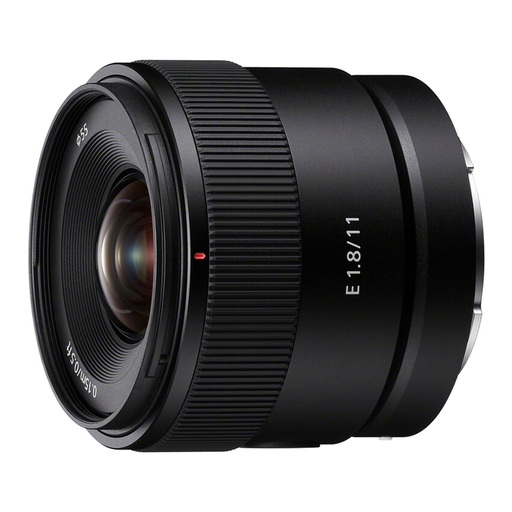
Sony E 11mm F1.8 APS-C wide-angle lens SEL11F18

Sony E 11mm F1.8 APS-C wide-angle lens (SEL11F18)

For close-ups of knitted toys, check whether this Sony E-mount lens can achieve the framing you want.

The stated magnification is 0.13× with AF and 0.20× with MF.

View at Joybuy

Sony E 50mm f/1.8 OSS Black

Sony E 50mm f/1.8 OSS Black

For product photos and close-ups, check whether this Sony E-mount lens suits the detail framing you want.

The stated magnification is 0.16×.

View at Joybuy
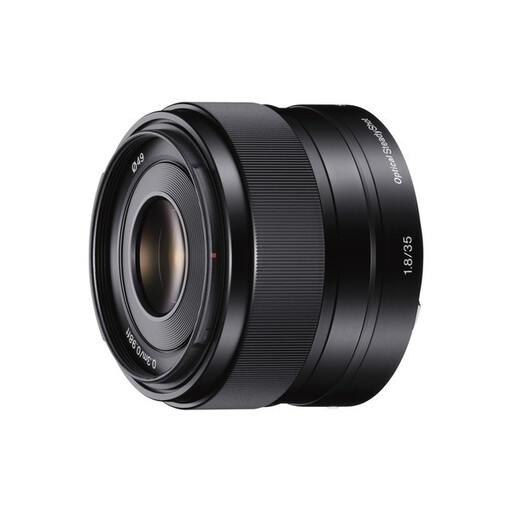
Sony SEL 35mm F1.8 OSS lens

Sony SEL 35mm F1.8 OSS lens

For product photos and close-ups, check whether this Sony E-mount lens captures the level of detail you’re aiming for.

The stated magnification is 0.15×.

View at Joybuy
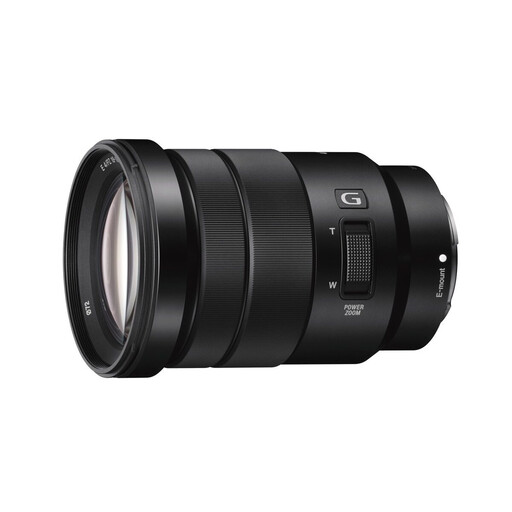
Sony E PZ 18-105mm f/4 G OSS

Sony E PZ 18-105mm f/4 G OSS

For flexible framing in product photos, check whether this Sony E-mount zoom lens can achieve the close-up you want.

The stated magnification is 0.11×.

View at Joybuy

Frequently asked questions

Do I need a 1:1 macro lens for every photo of a knitted figure?

No, not if your current lens already captures the whole figure and the details you want. A lens with a maximum magnification of 0.5× and a 1:1 macro lens offer different magnification ranges. Only choose extra magnification if your detail shots need it.

Why isn’t the whole toy sharp in an extreme close-up?

Depth of field can be shallow when you’re shooting close up. If the figure is still, take shots at different focus positions and combine them if your camera and editing software support it. A tripod helps keep your setup steady.

How can I prevent a colour cast in yarn in an online shop photo?

Check the white balance under the lighting you’re using and compare a test image with the actual yarn. Canon Europe explains that different light sources can make a white background look different.

When buying for my online shop, am I automatically entitled to a 14-day cooling-off period by law?

No, the consumer cooling-off period doesn’t automatically apply to a business purchase. Ondernemersplein distinguishes between a consumer purchase made at a distance and a business purchase. So before ordering, check whether you’re buying as a private individual or as a business, and what returns policy the seller offers. The Chamber of Commerce notes that small businesses may be able to claim consumer protection in certain circumstances.

What should I bear in mind when photographing toys for a Dutch online shop selling to consumers?

Make sure your photos don’t give a misleading impression of the product. The Netherlands Authority for Consumers and Markets warns against misleading presentation, while Ondernemersplein emphasises that product information should be clear and accurate. This doesn’t mean that any particular lens or image editing technique is required or prohibited in itself.
