
Vandaag of morgen in huis

Kwaliteit gegarandeerd

Welkomstaanbiedingen ontgrendelen: GRATIS bezorging | Tot 80% korting | Gratis 30 dagen JoyPlus-proefperiode
Download de app
A drawer full of dull, mismatched knives is a common problem in many kitchens. It makes cooking unnecessarily frustrating and even unsafe. A good knife set isn't a luxury; it's a fundamental investment that makes meal preparation easier and more enjoyable. But with so much choice, finding the right set can be a challenge.
As a Joybuy Product Recommendation Officer, my job is to help you make an informed decision. This guide has been compiled to provide you with practical information, so you can purchase a knife set that suits your cooking style and budget. We'll focus on specifications and practical utility, cutting through the marketing jargon.
Before we dive into the recommendations, here are a few key points to consider that will help you make your choice.
The quality of the steel determines how sharp a knife is and how long it stays sharp. Most kitchen knives are made of stainless steel, which makes them durable and rust-resistant. There is a difference between forged and stamped knives.
A brand like Wüsthof is renowned for its high-quality forged knives, which contributes to their durability and cutting performance.
Ask yourself which knives you will actually use. An extensive knife set with block looks impressive, but sometimes a more compact kitchen knife set is more practical. A good basic set typically includes:
Sets can be expanded with a bread knife, carving knife, santoku knife, and steak knives. Consider what you cook most often and base your choice on that.
A knife should feel comfortable in your hand. The balance between the blade and the handle is crucial for comfort and control. Pay attention to the handle material (plastic, wood, steel) and how it feels. Also, check the maintenance instructions. Although some knives are labelled as dishwasher-safe, hand washing is almost always better for maintaining sharpness and extending the life of the knife.
Based on product specifications, composition, and intended use, we have made a selection of popular choices for different home cooks.

Why It Stands Out This Wüsthof knife set is the epitome of German quality. The set consists of three fundamental knives that every serious home cook needs. The knives are precision-forged from a single piece of high-quality stainless steel and feature the signature triple-riveted handle for excellent balance and control.
Advantages
Who Is This Set For? Ideal for the culinary enthusiast looking to upgrade their basic equipment to professional quality, or as a high-quality starter kit for someone getting serious about cooking.
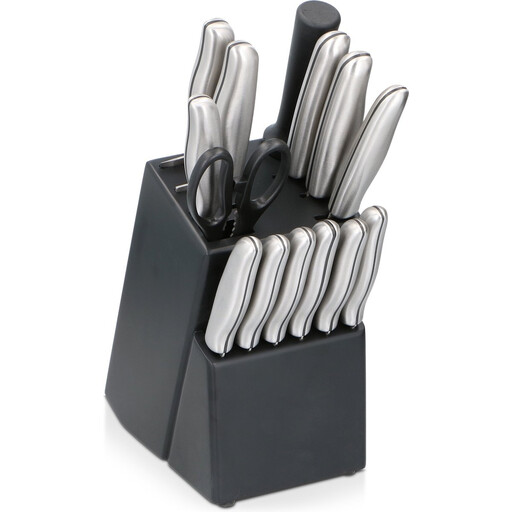
Why It Stands Out This Alpina set offers a highly comprehensive solution at an accessible price point. With 13 knives, a pair of scissors, and a stylish knife block, you have everything you need right away. From a chef's knife to steak knives, this knife set with block covers virtually every cutting task in the kitchen.
Advantages
Who Is This Set For? Perfect for beginners, students, or families looking for a complete and affordable set to fully equip their kitchen instantly.
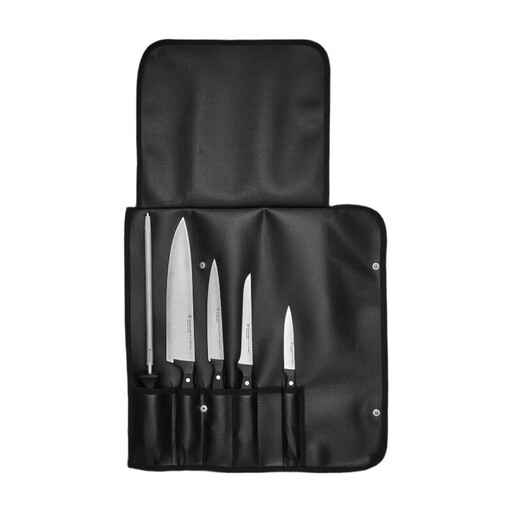
Why It Stands Out This Wüsthof Gourmet set is specially designed for beginners and hobby cooks. What makes this set unique is the included roll-up bag. This not only makes the set easy to store but also ideal for taking with you. The set contains five essential tools, including a honing steel to keep your knives sharp right from the start.
Advantages
Who Is This Set For? An excellent choice for culinary students, home cooks with limited storage space, or as a practical set for a holiday home or camper.
These recommendations are a starting point to help you in your search for the right knife set. However, the world of kitchen knives is vast and diverse. Are you specifically looking for knives made of a certain type of steel, or would you like to browse our full assortment?
Discover our extensive collection of kitchen knives
1. What is the difference between German and Japanese knives? Generally, German knives (like Wüsthof) are made from softer steel, making them more robust and easier to sharpen. They often have a cutting edge of around 20 degrees. Japanese knives are typically made from harder steel, allowing them to have a sharper edge (often 15 degrees), but they can also be more brittle. The choice depends on your personal preference for robustness versus extreme sharpness.
2. How often should I sharpen my knives? This depends on how often you use them and for what purpose. A good rule of thumb is to sharpen your knives a few times a year with a whetstone or professional sharpener. In between, you can maintain the edge by regularly honing the knife with a honing steel. A sharp knife is safer than a dull one.
3. Is a knife set with a block necessary? A knife set with block is a convenient and safe way to store your knives. It protects the cutting edge and ensures your knives are always within reach. If you have limited counter space, a magnetic wall strip or a drawer insert are good alternatives. Tossing loose knives in a drawer is strongly discouraged, as this will dull them quickly and can cause injury.
