
Vandaag of morgen in huis

Kwaliteit gegarandeerd

Welkomstaanbiedingen ontgrendelen: GRATIS bezorging | Tot 80% korting | Gratis 30 dagen JoyPlus-proefperiode
Download de app
A knife set can seem like a simple purchase: choose an attractive knife block, check how many pieces are included and place your order. In practice, sets vary considerably in their contents, care requirements and ease of use. A high piece count doesn’t automatically mean you’ll get the kitchen knives you need.
Pay particular attention to what’s included, the materials and how the knives are stored. The selection below will help you distinguish marketing claims from product specifications you can check.
A set with 15 or 16 pieces may include several knives you’ll rarely use. Check which knives are actually included. For everyday cooking, a chef’s knife, bread knife, santoku knife, paring knife and, if needed, steak knives are usually more useful than several almost identical knives.
Also check what’s counted as a piece. A knife block, kitchen scissors or knife sharpener can increase the total, but they aren’t extra kitchen knives.
Stainless steel is a practical choice for kitchen knives, but even a stainless steel knife set needs care. Salt, acids, moisture and dishwasher cycles can affect the finish and sharpness over time. If a product is described as dishwasher-safe, that doesn’t automatically mean hand-washing isn’t a better option for long-term use.
Dry knives after washing and don’t leave them loose in a cutlery drawer. This limits contact with other items and helps protect the cutting edge.
Terms such as “super sharp” or “stays sharp for longer” are difficult to assess without a measurement method. Instead, look for details such as blade material, edge type, dimensions and handle. Some brands say that a particular coating or sharpening method can improve durability, but this is a brand claim, not a universal guarantee.
A stainless steel kitchen knife set is generally easy to clean and suitable for everyday use. Some models are described as being made from high-carbon steel. This can offer different sharpness and hardness properties, but also requires care when drying and maintaining the knives.
Check the handle too. A comfortable, secure grip helps when you’re cutting repeatedly. Grip is especially important when your hands are wet. A wooden handle can have a warm look, while plastic or fibre-reinforced materials are often easier to clean. Always check the specific product information rather than judging by appearance alone.
A long bread knife with a serrated edge is suitable for bread and cakes. A chef’s knife is versatile for vegetables, herbs and meat. A santoku knife usually has a broad blade and is designed for slicing and chopping. Steak knives often have a serrated or straight edge and are mainly intended for use at the table.
Blade lengths of 12 to 21 cm are available across different types of kitchen and steak knives. Don’t automatically choose the longest option: a shorter knife may be more comfortable for smaller ingredients or when you have limited worktop space.
A knife block keeps knives organised and stops them from lying loose in a drawer. Check that the block is suitable for all the knives included and sits securely on your worktop. A magnetic holder can save space, but it leaves knives visible and within reach.
A child-safe knife set isn’t just about having a safe storage solution. Sharp knives still need to be kept out of children’s reach, even if a product comes with a protective cover or enclosed holder. The 5-in-1 baby food set in the range is designed for food preparation and includes a small knife, safety scissors and a peeler; it isn’t a substitute for a regular adult knife set.
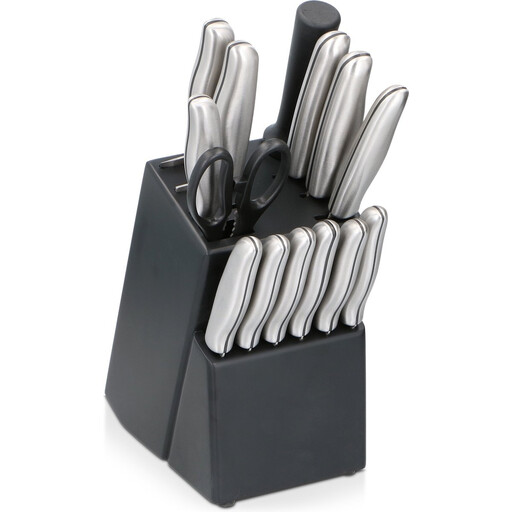
Why it suits this shopper: The set includes 13 knives, a knife block and a pair of scissors. This gives beginners several commonly used knife shapes in one purchase, without having to combine individual items.
The contents are clearly listed: 13 knives, one block and one pair of scissors. This makes it easier to judge what you’ll actually receive than with a set that only gives a high total piece count.
Stainless steel knives, a black knife block and a stated total of 15 pieces. The product description lists a chef’s knife, bread knife, paring knife, steak knives and santoku knife, among other items.
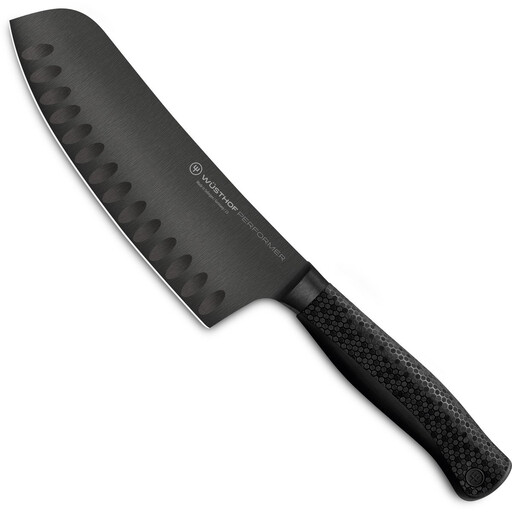
Why it suits this shopper: If you’d rather choose one specific knife than buy a large set, this Rotoku is a focused option for precision work and everyday cutting.
You won’t pay for knives you may not use. The product description clearly specifies a Wüsthof steel blade with a DLC coating and a fibre-reinforced handle.
7-inch size, DLC coating according to the product information and a Hexagon-Power-Grip handle. Hand-washing is recommended to preserve the material and sharpness.
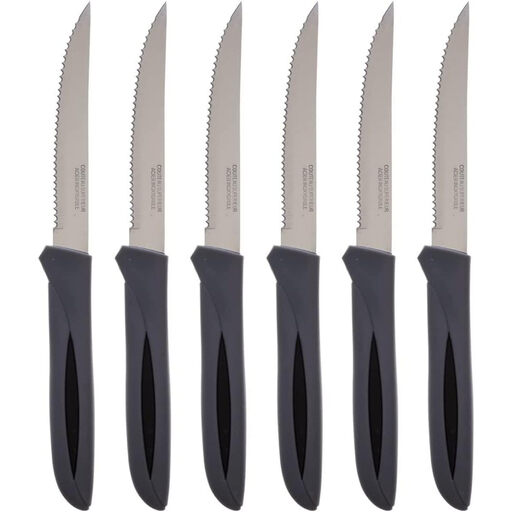
Why it suits this shopper: This set is designed for meals around the table, barbecues and occasions when several people need a steak knife.
This set isn’t presented as a complete kitchen knife set: it contains six stainless steel steak knives with a blade length of 21 cm. That makes its intended use clear.
Stainless steel, six knives and, according to the product information, dishwasher-safe. Colours may vary depending on availability.
We’ve put together a complete, up-to-date list of products that meet these strict selection criteria and the relevant European safety regulations.
A complete knife set is most useful when its contents match the way you cook. For a small household, a chef’s knife, bread knife and paring knife may be enough. If you often entertain, you might want extra steak knives or a cutlery set with knives. A professional knife set isn’t essential for home cooking; materials, ergonomics and care matter more than the number of pieces.
For most households, a chef’s knife or santoku knife, a bread knife and a small paring knife are enough. Extra steak knives are useful if you often have barbecues or eat with a group. Check how you’ll use the knives first, then choose the number of pieces you need.
It depends on the product. Some sets are described as dishwasher-safe, but hand-washing is often recommended to help preserve sharpness, the handle and any coating for longer. Always check the care instructions for the knife set you’re considering.
A chef’s knife usually has a longer, wider blade and is versatile for chopping and slicing. A santoku knife often has a more compact shape and is used for vegetables, herbs and meat. Your choice mainly depends on your hand size, cutting technique and preference.
