
Vandaag of morgen in huis

Kwaliteit gegarandeerd

Welkomstaanbiedingen ontgrendelen: GRATIS bezorging | Tot 80% korting | Gratis 30 dagen JoyPlus-proefperiode
Download de app
A quality knife set is the foundation of any kitchen. But the search can feel like navigating a minefield of marketing claims and unclear specifications. Many home cooks invest in a set only to find it becomes dull after a few months or lies unused in a drawer. Before you buy a chef's knife, it's crucial to know what to look for to avoid wasting your money.
As a Product Recommendation Officer at Joybuy, I've filtered the market for you. Below, we'll discuss the most common pitfalls and the specifications that truly matter.
Many offers seem too good to be true, and often, they are. Pay special attention to these two common problems:
To make a durable choice, focus on a few verifiable properties instead of marketing terms.
The quality of a knife starts with its steel. Many renowned German brands, such as those from Solingen, use X50CrMoV15 steel. This is a reliable stainless steel type that offers a good balance between edge retention, durability, and ease of maintenance. The hardness of steel is expressed in HRC (Rockwell Hardness). A value around 58 HRC is a good indicator for a quality chef's knife.
Also, consider the construction. Forged knives are shaped from a single piece of steel, which provides better balance and sturdiness. This is often identifiable by the bolster (the thick part between the blade and the handle). Stamped knives are cut from a sheet of steel, are lighter, and generally more affordable.
Every kitchen knife set should start with an excellent chef's knife. This is the most versatile knife for chopping vegetables, meat, and fish. A blade length between 16 and 20 cm is ideal for most home cooks. A good chef's knife should feel comfortable in your hand, be well-balanced, and act as an extension of your arm. From this foundation, you can expand your collection with a bread knife or a smaller paring knife.
Not everyone has the same needs. Below are several options, tailored to specific user profiles.
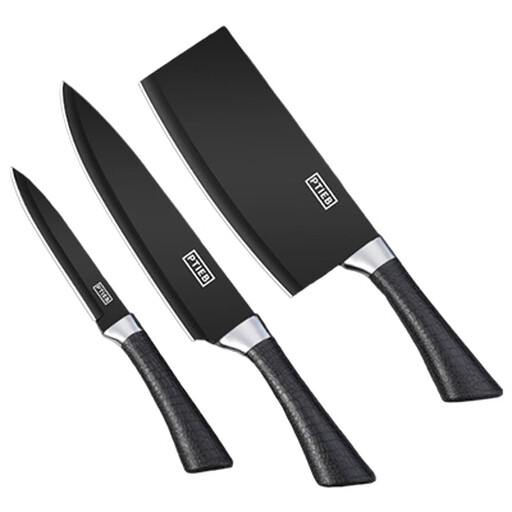
Why This Fits Their Persona: Ideal for those starting their culinary journey who need core functionality without a major investment. This set provides the three most-used knives for everyday tasks.
This set avoids the pitfall of an oversized, redundant collection. You get only the essential knives: a chef's knife, a paring knife, and a carving knife.
An accessible price point and a functional foundation to discover which knives you use most, before potentially investing in more premium models.
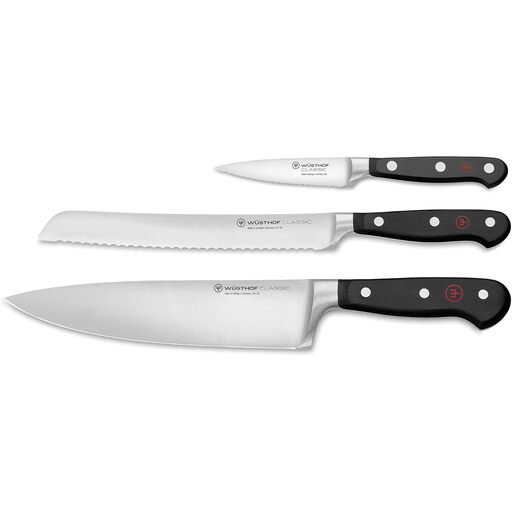
Why This Fits Their Persona: For the ambitious home cook seeking a reliable, durable, and versatile foundation. This Wüsthof knife set is an investment in years of culinary enjoyment.
This set tackles the pitfall of poor materials and balance. The knives are forged in Solingen, feature excellent ergonomics, and are made from proven, high-quality steel.
Includes the three most crucial professional kitchen knives: a chef's knife, bread knife, and paring knife. The forged construction ensures superior edge retention and control.
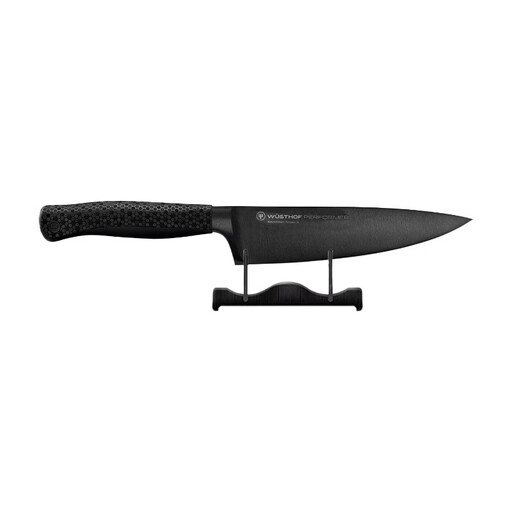
Why This Fits Their Persona: For the cook who wants to upgrade their basic kit with a specific, high-performance tool. This knife is designed for precision and intensive use.
This knife goes beyond vague claims. The DLC (Diamond-Like Carbon) coating is a technological upgrade that provides extreme hardness and a non-stick surface.
The innovative Hexagon Power Grip offers exceptional control, even in wet or oily conditions. The DLC coating makes the blade highly scratch-resistant and durable.
The frequency depends on usage and the type of steel. A general guideline is to sharpen your knives a few times a year with a whetstone or a professional sharpener. In between, you can maintain the edge by regularly honing the knife with a honing steel. A sharp knife is safer than a dull one because you need to apply less force.
For home cooks who value durability, performance, and craftsmanship, a Wüsthof knife set is often a sound investment. The knives are made in Solingen, are known for their excellent balance and edge retention, and will last a lifetime with proper care. It's a choice for long-term quality over a quick, cheap solution.
German knives, like those from Wüsthof, are typically made of slightly softer steel (around 58 HRC). They are robust, relatively easy to sharpen, and designed as all-around workhorses. Japanese knives, such as a Damascus knife, often use harder steel (60+ HRC), allowing for a sharper edge that stays sharp longer but is also more brittle. The choice depends on your personal preference for cutting technique and maintenance.
