
Vandaag of morgen in huis

Kwaliteit gegarandeerd

Welkomstaanbiedingen ontgrendelen: GRATIS bezorging | Tot 80% korting | Gratis 30 dagen JoyPlus-proefperiode
Download de app
Buying a new knife set seems simple—until you start looking online. The selection is overwhelming, and you're bombarded with marketing promises. Many home cooks invest in a set that becomes dull after a year or is filled with knives they never use. Before you make a decision, it's wise to know what to look for. We'll cover the most common pitfalls and give you actionable advice for a purchase you'll enjoy for years to come.
Many sets look great at first glance but hide design flaws or quality issues. Pay attention to the following points to avoid wasting your money.
To make a good choice, focus on a few objective characteristics. These determine the performance and lifespan of your kitchen knife set.
The quality of the steel is crucial. Look for sets that specify the type of steel used. German steel (as found in a Wüsthof knife set) is known for its robustness and is relatively easy to sharpen. Japanese steel is often harder, allowing it to stay sharp longer, but it can also be more brittle.
Also, pay attention to the construction:
A functional basic set for most home cooks consists of three knives:
A santoku knife is a popular alternative to the chef's knife. This Japanese design is ideal for chopping, slicing, and dicing, and often has hollow-ground indentations (dimples) to prevent food from sticking.
We have selected a few products that suit different needs and budgets, based on their specifications and composition.
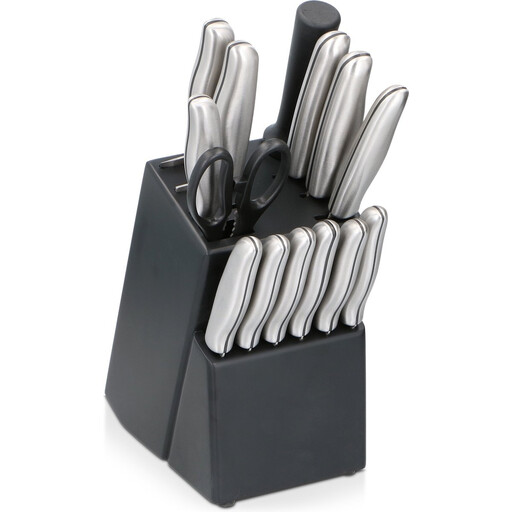
Why This Fits Their Persona: A complete set at an accessible price. Ideal for those starting out in the kitchen who want to discover which knives are useful without making a large initial investment. The set even includes steak knives.
Although it's a large set (pitfall #1), its low price gives you the chance to experiment. This helps you figure out which knives you actually use before potentially investing in more expensive, individual pieces.
An all-in-one solution that includes a knife block for safe storage and a pair of kitchen shears. The knives are made of stainless steel and feature a modern design.
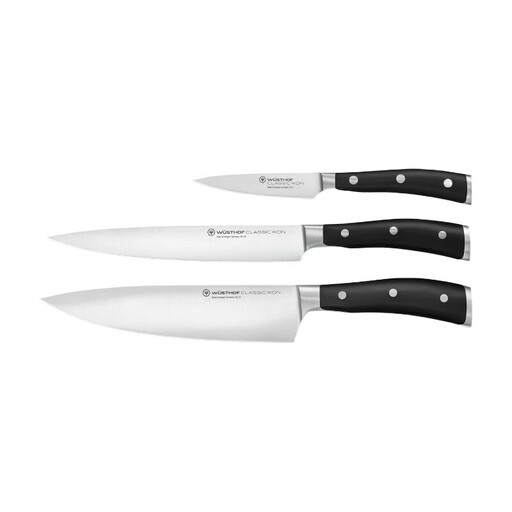
Why This Fits Their Persona: This set focuses on the three most essential knives, all of professional, forged quality. Perfect for those who seek durability, balance, and long-lasting sharpness for intensive daily use.
You're not paying for unnecessary extras but investing in three top-tier knives you'll use daily. This is the core of a professional knife set: quality over quantity.
Forged from a single piece of high-carbon stainless steel for superior balance and durability. The seamless, ergonomic handle offers comfort and hygiene. Made in Solingen, Germany.
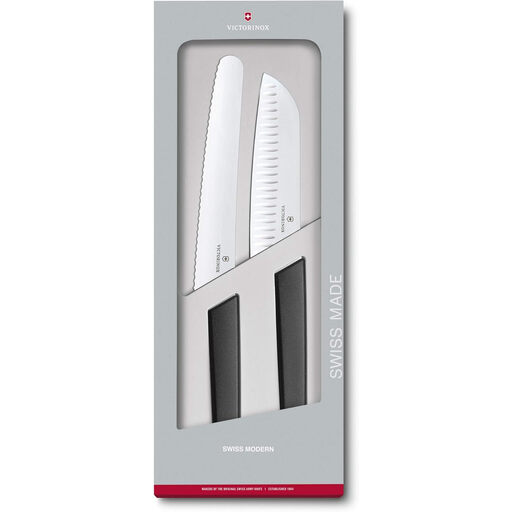
Why This Fits Their Persona: Ideal for cooks looking to expand their core collection with specific, high-quality knives. This set adds a versatile santoku knife and a long pastry/bread knife.
Instead of buying a whole new block, you're strategically adding two functional knives you were missing. No redundant duplicates, just a smart upgrade to your existing toolkit.
The santoku knife has hollow-ground indentations (dimples) that reduce food sticking. The serrated knife is not just for bread but also perfect for fruits and vegetables with a tough skin and soft interior.
We have compiled a complete, up-to-date list of products that fully meet these strict selection criteria.
Proper maintenance significantly extends the life of your knives. Even if the manufacturer states the knives are dishwasher-safe, handwashing is always better. Harsh dishwasher detergents and contact with other cutlery can damage the blade. Wash the knives with a soft sponge and dry them immediately to prevent spots. Keep your knives sharp by regularly honing them with a honing steel.
There is no "better" option; it's a matter of personal preference. A chef's knife has a more curved belly, which is ideal for a "rocking" cutting motion. A santoku knife has a straighter blade and is designed for more of a chopping motion. Many people find a santoku more comfortable for finely dicing vegetables, while a chef's knife is seen as an all-around workhorse.
A more expensive knife set from a brand like Tefal (Ice Force series) or Wüsthof (Classic series) is often worth the investment if you cook regularly. The added value lies in the materials used (better steel), the construction (often forged), the balance, and the ergonomics. These knives stay sharp longer, feel better in the hand, and can last a lifetime with proper care. A cheap set often needs to be replaced after a few years, whereas a quality set can be a one-time purchase.
