
Livraison le jour même et le lendemain

Qualité garantie

Débloquez vos offres de bienvenue: Livraison GRATUITE | Jusqu'à -80 % | 30 jours d'essai gratuits à JoyPlus
Téléchargez l'application
As a Joybuy Product Recommendation Officer, I see many questions about Asian noodles. Knife-cut noodles, or dao xiao mian, are especially popular. The promise of a firm, irregular noodle with a delightful ‘chew’ is tempting. But the reality can sometimes be a disappointment: a package of noodles that cooks up mushy or completely lacks the texture you were hoping for.
Before you fill your shopping cart, it’s important to know what to look for. Common pitfalls can ruin your authentic meal.
To avoid a bad purchase, focus on a few objective characteristics. These specifications on the packaging tell you more than the marketing slogans on the front.
The signature ‘chewy’ texture of quality Chinese wheat noodles comes from the wheat used. Check the nutrition facts panel for the protein content per 100 grams.
Authentic dao xiao mian originate from the Chinese province of Shanxi. They are traditionally made by shaving strips of dough directly from a large block into boiling water with a special knife. This results in noodles that are thicker in the middle and thinner at the edges.
The foundation of good noodles is surprisingly simple: wheat flour, water, and salt. More is often not needed. A short, clean ingredient list is usually a sign of quality. Varieties with additions like spinach powder or buckwheat can offer a nice twist, but the base should remain pure. Be wary of long lists with unfamiliar additives.
To get you started, we've highlighted some popular choices and matched them with different types of home cooks.
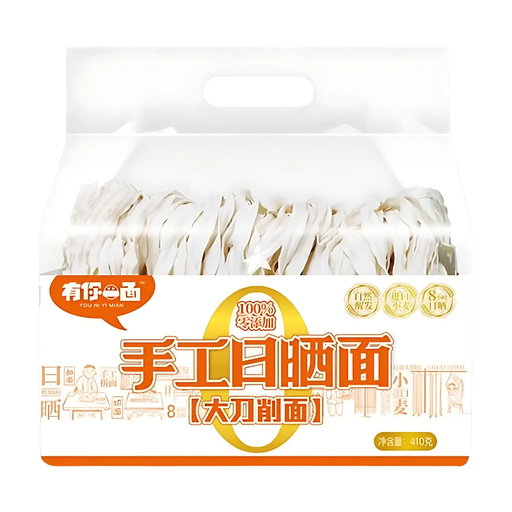
Why This Fits Their Persona: Ideal for those who want to try the texture of dao xiao mian without committing to a bulk package. The 5-7 minute cooking time makes it a quick and easy base for a weeknight meal.
According to the brand, the artisanal cutting technique is replicated, resulting in an irregular shape that avoids the "handmade style" trap of uniform noodles.
Sun-dried and not deep-fried. The ingredient list is simple: wheat flour, water, and salt.
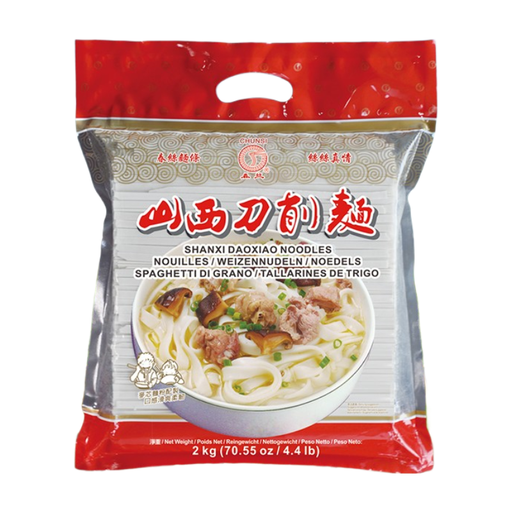
Why This Fits Their Persona: For the home cook seeking the authentic experience of Shanxi noodles and who regularly cooks Asian noodles. The 2kg bulk package is perfect for those who always want to have a supply on hand.
These noodles are explicitly thick and irregular, just as authentic dao xiao mian should be. This helps you avoid the pitfall of thin, limp noodles that aren't suitable for hearty dishes.
Authentic shape that holds sauce exceptionally well. The protein content of 12g per 100g ensures a very good, firm texture.
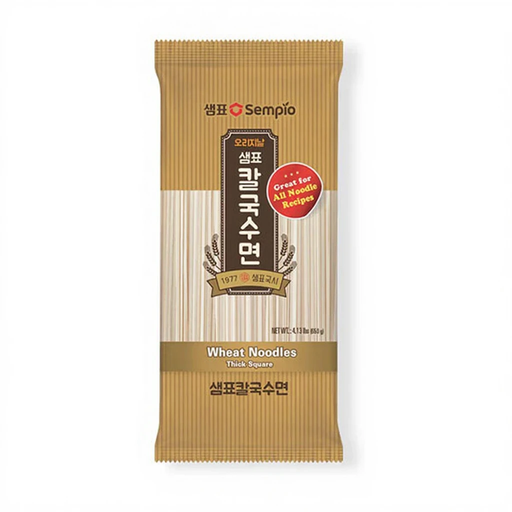
Why This Fits Their Persona: For those who want to explore the Korean version of thick noodles, Kalguksu. Sempio is a well-known Korean brand, which lends confidence in its authenticity for dishes like Jjamppong or a hearty Korean noodle soup.
The ingredient list is pure (98% wheat, salt, water), which avoids the trap of unnecessary additives and guarantees a clean, authentic flavour.
A firm, square shape that holds up well in soups. The high protein content (10g) provides the desired 'chewy' texture.
Want to complete the experience and learn how to cut noodles like they do in Shanxi? Then the right tools are essential.
Cooking time varies by brand and thickness but is typically between 5 and 12 minutes. Because the noodles are often irregular in shape, it's best to taste one during cooking to check for doneness. Cook them until they are ‘al dente’ (cooked through, but with a firm bite), especially if you plan to stir-fry them afterwards.
On the contrary, high-quality knife-cut noodles are excellent for soup due to their robust texture. The trick is to cook the noodles separately according to the package directions. Drain them and add them to the hot soup at the very last moment, just before serving. This way, they retain their perfect texture.
While both are known for their firm texture, there is a slight difference in preparation and shape. Chinese dao xiao mian, as the name implies, are ‘shaved’ from a block of dough, resulting in a rustic, irregular shape. Korean kalguksu (literally ‘knife noodles’) are typically made by first rolling the dough flat and then cutting it into more uniform, flat strips with a knife. Both are excellent choices for anyone looking for handmade noodles with a firm bite.
