Which blender is right for you?

A blender for one smoothie at home

For anyone who usually makes one serving with fresh kiwi and wants a compact appliance without unnecessary extra features. The Consumentenbond describes soft fruit as suitable for most of the budget blenders it tested; Philips describes the HR2510/90 as a mini blender.

Take your smoothie with you

For anyone who blends in advance and wants to take their smoothie in a suitable cup with a drinking lid. Philips lists a travel tumbler with the HR2620/40; Tefal describes travel bottles for the Blend Up BL19H4F0.

Blend without a plug socket

For anyone who wants to blend somewhere without mains power during their break, and is happy to factor in charging and cup capacity. Nutribullet lists a 475 ml cup and around 15 blending cycles per charge for the Portable NBP003NBL; these are the manufacturer's specifications for that model.

What should you look for?

Compact blender for home use

Choose this option: you make one fresh kiwi smoothie at home and drink it straight away.

Keep in mind: if you want to take your smoothie with you, check whether a suitable cup with a drinking lid is included.

Blender with a travel cup

Choose this option: you blend in advance and want to take the same cup with you.

Keep in mind: a travel cup doesn't automatically mean you can blend without a plug socket.

Rechargeable blender

Choose this option: you want to blend during your break somewhere without a plug socket.

Keep in mind: you'll need to charge the appliance and check that the cup capacity suits your portion.

What to consider What to look for Who should consider this?
Portion and capacity Compare the usable capacity with your portion and check the maximum fill line. If I'm making one smoothie, I want a cup that suits that portion. Around 33% of consumers prioritise a fresh, single-serving portion.
Taking it with you Check whether a drinking cup and suitable lid are included; also check whether blending requires a plug socket. If you want to drink your smoothie on the go, check the cup and lid. Around 25% of consumers prioritise portability.
Frozen fruit Check the instructions for the exact model and, if possible, look for an independent test using frozen fruit. If I want to use frozen fruit regularly, I want to know whether the model is suitable. Around 17% of consumers prioritise this use.
Cleaning Check which parts are removable and dishwasher-safe, and follow the instructions for the blades and motor components. If you want to tidy up quickly after a short break, check which parts are easy to clean. Around 25% of consumers prioritise easy cleaning.

Common buying mistakes

  • Assuming more watts mean a better smoothie

    A motor's stated power doesn't prove how a particular model handles kiwi or frozen fruit. The Consumentenbond distinguishes between soft fruit and ingredients such as frozen fruit.

    Start with the ingredients you use most often. For frozen fruit, check the instructions and, where available, a test of the exact model.

  • Assuming a travel cup means cordless blending

    A cup for taking with you and a battery-powered blender are two different things. A model with a travel cup may still need a plug socket while blending.

    Decide where you want to blend: at home before you leave, or during your break without a plug socket. Then check how your chosen model is powered.

  • Assuming the manufacturer's guarantee is the full legal guarantee

    A manufacturer's guarantee does not, by itself, determine your legal rights against the seller. According to ACM ConsuWijzer, the legal guarantee depends on what you could reasonably expect from the product under normal use.

    Keep your proof of purchase and contact the seller if something goes wrong. Also check the terms of any additional guarantee.

Brands to compare

Philips

The models listed range from a compact mini blender to one supplied with a travel tumbler.

  • Philips says the HR2510/90 has easy-to-clean, dishwasher-safe parts.
  • Philips lists a travel tumbler with the HR2620/40.
  • These features apply to the models listed; they don't, by themselves, tell you how a model performs with frozen fruit.

Nutribullet

The Original is a mains-powered option for smoothies; the Portable is a separate, rechargeable model.

  • Nutribullet lists 600 W for the Original and a 475 ml cup for the Portable NBP003NBL.
  • For the Portable NBP003NBL, Nutribullet lists around 15 blending cycles per charge.
  • The charging and cycle details apply to the Portable model listed and are the manufacturer's specifications.

Tefal

The Blend Up BL19H4F0 is a compact blender with travel bottles and extra features.

  • Tefal specifies a power rating of 1000 W and 400 ml and 700 ml bottles for the BL19H4F0.
  • Tefal lists removable blades and a self-cleaning setting for this model.
  • Extra features are most useful if you'll use them; the stated power isn't a model-specific test of the smoothie it makes.

Blenders at Joybuy

This selection includes blenders for a single serving, including models whose product names mention a travel cup or to-go lid. Check that each model's capacity and features suit the way you plan to use it.

Philips 3000 Series Mini Blender HR2510/90, 0.6 L, 350 W, white and silver

Philips 3000 Series Mini Blender HR2510/90 — 0.6 litre, 350 W, white/silver

A compact option to consider if you're looking for a blender for a small preparation. Check whether 0.6 litre suits your portion.

The product name lists a capacity of 0.6 litre and a power rating of 350 W.

View at Joybuy

Aigostar Marden BL-250 blender, 250 W, 500 ml glass jug

Aigostar Marden BL-250 — 250 W, 500 ml glass jug

An option to compare for a smoothie portion. Check whether the jug's capacity suits what you want to make for your break.

The product name lists a power rating of 250 W and a 500 ml glass jug.

View at Joybuy
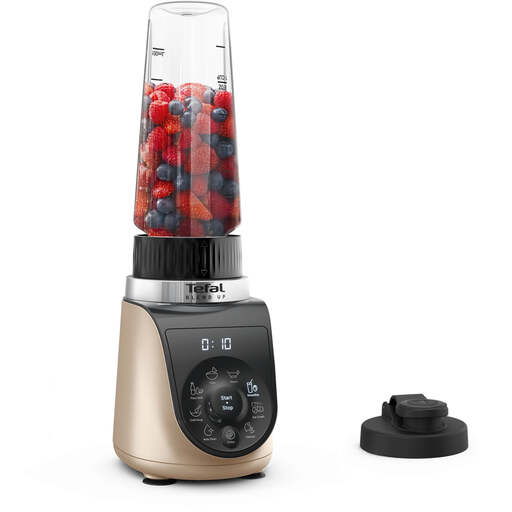
Tefal BL190A Blend Up personal smoothie blender

Tefal BL190A Blend Up Personal Smoothie Blender

The product name describes this model as a personal smoothie blender. Compare the product information with the portion size and the way you plan to use it.

View at Joybuy
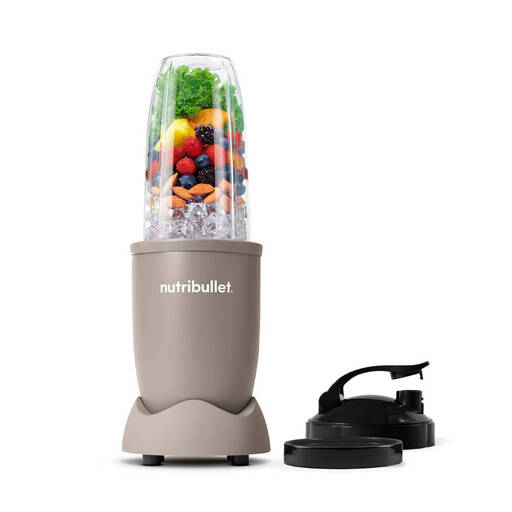
Nutribullet Exclusive Blender, mocha brown, 700 ml, 900 W, with to-go lid and accessories

Nutribullet Exclusive Blender — mocha brown, 700 ml, 900 W

An option to consider if you'd like a to-go lid with your smoothie blender. Check which accessories come with this version.

The product name lists a capacity of 700 ml, a power rating of 900 W, a to-go lid and accessories.

View at Joybuy
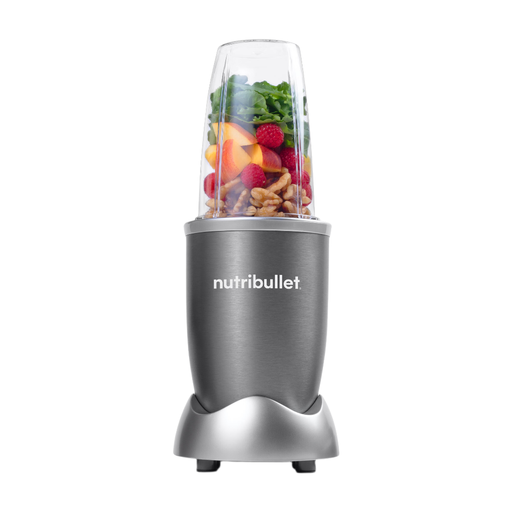
Nutribullet Original Blender, grey, 600 W, with cup and blade

Nutribullet Original Blender — grey, 600 W

An option to compare if you're looking for a smoothie blender. Check whether the included cup suits your portion.

The product name lists 600 W, a cup and a blade.

View at Joybuy

Frequently asked questions

Do I need a higher wattage for kiwi with frozen fruit?

Not on the basis of wattage alone. The Consumentenbond notes that not every blender handles frozen fruit or ice well. Check the instructions and, where possible, look for a test of the exact model.

Can I put the blending cup in the dishwasher after use?

It depends on the model and the part. Philips lists dishwasher-safe parts for the HR2510/90, while Tefal lists dishwasher-safe travel bottles for the BL19H4F0. Check the instructions before cleaning blades or motor components.

How should I store a kiwi smoothie I've made ahead for my break?

If you won't drink your smoothie straight away, cover it and store it in the fridge. The Voedingscentrum recommends keeping your fridge at 4 °C and says a fruit smoothie can be stored in the fridge for 1–2 days; the ingredients in your smoothie may affect this.

Am I automatically entitled to just two years' guarantee in the Netherlands?

No. According to ACM ConsuWijzer, the legal guarantee depends on what you could reasonably expect from the product under normal use. Any manufacturer's or seller's guarantee is in addition to this, not a replacement for it.

What safety marking is required for an electric blender in the Netherlands?

The NVWA states that CE marking is compulsory for electrical products and classifies kitchen appliances as electrical appliances. Check the marking and safety information for the specific appliance; a CE mark is not a performance test.
