
Vandaag of morgen in huis

Kwaliteit gegarandeerd

Welkomstaanbiedingen ontgrendelen: GRATIS bezorging | Tot 80% korting | Gratis 30 dagen JoyPlus-proefperiode
Download de app
Kittens grow quickly, so they need different food from adult cats. There’s a wide range of kitten food to choose from: dry kitten food, wet food for kittens, grain-free kitten food, chicken or fish recipes, and packs for different ages. Attractive packaging or claims such as “high in meat” don’t always tell you whether a product is right for your kitten.
The most common pitfalls:
For everyday meals, choose a product that clearly states it is complete kitten food. This means the product information says it is intended as a complete food for the specified animal and life stage. Check the age guidance too: some formulas are suitable from weaning, while others are for kittens up to 12 months old.
Kitten food for up to 12 months is designed for the growth stage, but the recommended amount varies according to weight, activity and whether you’re also feeding wet food. Use the feeding guide on the pack as a starting point.
The ingredients list shows which raw materials have been used. Analytical constituents include crude protein, fat, crude fibre, moisture and crude ash. Wet food generally has a much higher moisture content than dry food, so protein percentages aren’t directly comparable.
Examples from the range:
These figures are product information, not a judgement on suitability in themselves. Kittens need a complete formula, not just a high percentage of one nutrient.
Dry food for kittens is easy to store and portion. Check the size of the kibble, keep the bag tightly closed and always provide fresh drinking water. Wet food for kittens contains plenty of moisture and is often sold in individual portions. Once opened, a pouch or tray should be refrigerated as directed on the label and used within the recommended time.
A combination can be useful if you want both convenience and variety. Remember to include calories from treats in your kitten’s daily allowance. Cat milk and treats are generally complementary foods and don’t replace complete kitten food.
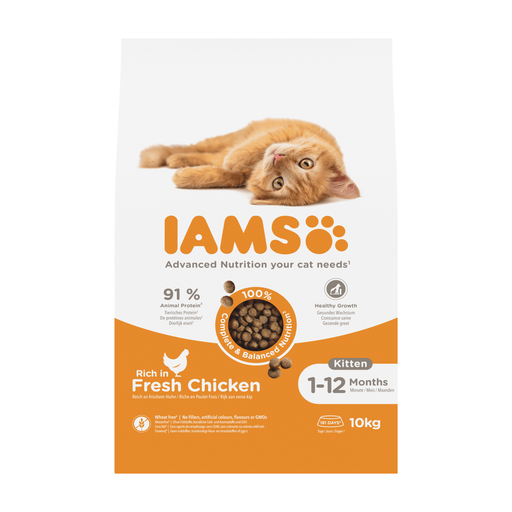
Why it suits this profile: The large pack is ideal for households or breeders who regularly use chicken kitten food and want to order less often.
The product description specifies a kitten/junior formula and nutrients such as DHA, taurine, vitamins and minerals. Check the current packaging and feeding guide before use.
Dry food with chicken; 10 kg pack; described in the product information as suitable for the growth stage.
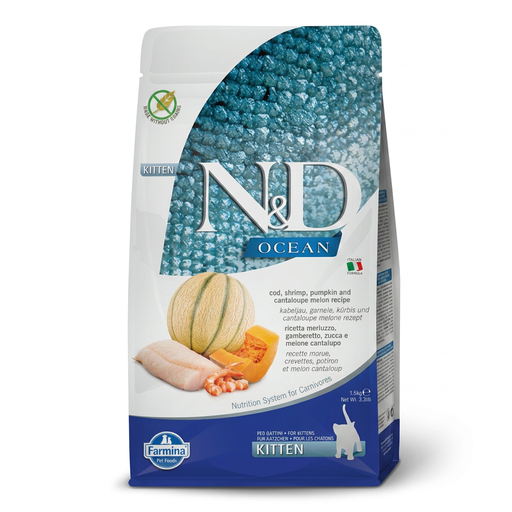
Why it suits this profile: A good choice if you’re looking for a grain-free formula with fish as a key protein source and like to compare ingredients carefully.
The product information lists cod, dried cod and herring as ingredients and states that the formula is grain-free. If your cat is sensitive to certain ingredients, always check the full ingredients list.
44% crude protein; 20% fat; 1.5 kg pack; described as a complete food in the product information.
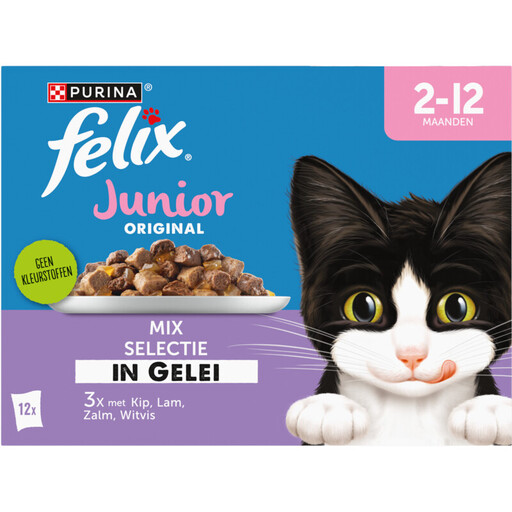
Why it suits this profile: Handy for owners who want to serve several small meals and keep a variety of flavours at home.
The product is described as a complete food for kittens and comes in 85 g portions. Refrigerate opened portions and follow the recommended time for use.
A mix of several recipes; 12 x 85 g; suitable for kittens up to 12 months according to the feeding information.
We’ve put together a complete, up-to-date list of products that meet these strict selection criteria and current European safety requirements.
Choose a product labelled as suitable for kittens from weaning or for your kitten’s specific age. Offer small portions across several meals and make sure fresh water is always available. If your kitten isn’t eating well, has diarrhoea or isn’t growing properly, it’s a good idea to speak to a vet.
No, grain-free food isn’t automatically necessary for every kitten. It’s a specific choice of formula. Always check the full ingredients list, whether it’s labelled as a complete pet food, and how well your kitten tolerates it. Some brands state in their own product information that their formula contains no grains; this isn’t a general nutritional claim for all kittens.
Yes, as long as both products are complete foods intended for kittens. Adjust the amounts so the total daily portion is appropriate. Use the feeding guidelines on both packs as a starting point, and remember to account for treats or complementary products.
