
Vandaag of morgen in huis

Kwaliteit gegarandeerd

Welkomstaanbiedingen ontgrendelen: GRATIS bezorging | Tot 80% korting | Gratis 30 dagen JoyPlus-proefperiode
Download de app
Kittens grow quickly. That means a bag of cat food for adult animals is not automatically suitable for young cats. At the same time, packaging does not make the choice any easier. Terms such as “natural”, “grain-free” and a high percentage of animal-derived ingredients may sound appealing, but they do not always tell you whether the product is complete or suitable for your kitten’s age.
The main pitfalls when choosing kitten food are:
Choose a product that clearly states that it is suitable for kittens. Some varieties are intended for use from weaning up to 12 months, while others are also suitable for pregnant or nursing cats. Also check the legally required designation:
A product such as INABA Churu Cat Tuna is described in the product information as complementary food. The treat contains 91% moisture and is intended as a reward or addition, not as a replacement for complete kitten food. Catisfactions salmon flavour is also complementary food for adult cats and kittens from 8 weeks of age.
The ingredients list shows which raw materials have been used. The analytical constituents include the percentages of crude protein, fat, fibre, ash and moisture. Compare products within the same type of food: dry kitten food generally contains much less moisture than wet kitten food.
When comparing products, look for:
“Grain-free kitten food” is not automatically necessary for every animal. According to the product information, Farmina N&D Ocean Kitten Cod is described as grain-free and contains cod, herring oil, peas and chickpeas, among other ingredients. Purina One Junior, on the other hand, contains wholegrain wheat and maize. The choice depends on the composition, acceptance and any dietary advice, not just on a single marketing term.
A small 300 or 800g pack is useful when you want to try a flavour first. Larger 3, 5 or 10kg bags may be more suitable for households with several cats or for breeders, provided the food is kept tightly sealed and stored in a dry place.
When changing food, make the switch gradually over approximately seven days. Start by mixing a small amount of the new food with the familiar food, then increase it step by step. Always follow the guidelines on the packaging. If gastrointestinal problems or reduced appetite persist, or in special circumstances such as pregnancy and nursing, it is advisable to consult a vet.

Why it suits this profile: The 800g pack is manageable for a first purchase. According to the product information, this is complete food for kittens from weaning up to 12 months, as well as for pregnant or nursing cats.
The life stage and nutritional status are clearly stated, helping you avoid accidentally using complementary snacks as a main meal. The ingredients list includes chicken, animal proteins and fish oil, among other ingredients.
Suitable for the growth stage; can be served dry or softened with a little water; portions can be adjusted to your kitten’s age and weight.
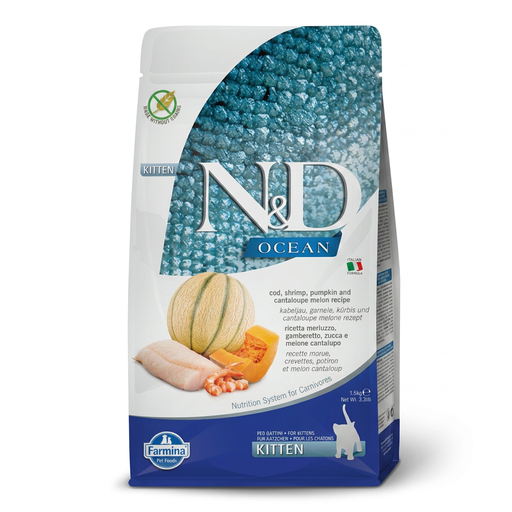
Why it suits this profile: The recipe contains cod, dried cod, herring oil and dried prawns. According to the product information, the food is grain-free and suitable for kittens and pregnant or nursing cats.
The product information lists specific ingredients and analytical values rather than relying solely on a general flavour claim. Do check that your kitten tolerates fish well.
44% crude protein and 20% crude fat according to the stated analysis; with DHA and EPA; 1.5kg pack for regular use.
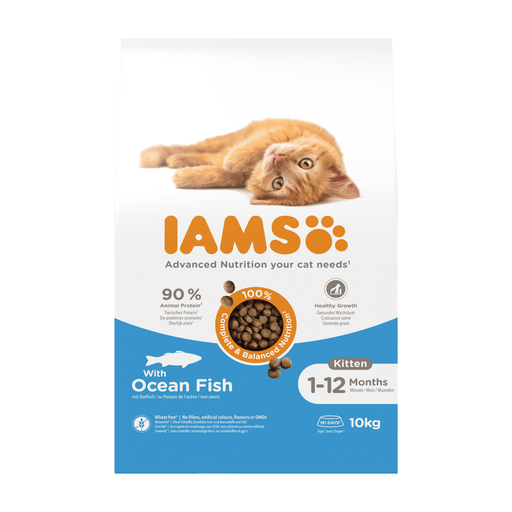
Why it suits this profile: A 10kg pack is suitable for several kittens, a breeder or a household where this flavour is already accepted. The product description mentions fish as the flavour profile and a fibre blend with prebiotics and beet pulp.
The large bag only makes sense when your consumption is high enough. Keep the food airtight, and do not buy this quantity solely because of a lower price per kilo.
10kg capacity; ocean fish variety; according to the product description, with DHA, taurine, vitamin D and minerals.
We have put together a complete, up-to-date list of products that fully meet these strict selection criteria and the applicable European safety regulations.
Dry food for kittens is easy to portion and store. Pay attention to the recommended amount, as dry biscuits contain little moisture and are relatively concentrated. Wet food for kittens generally contains more moisture and may appeal to kittens that prefer softer textures. Felix Junior and Whiskas Junior are examples of wet food in portion packs; check the label to make sure the variety is complete kitten food.
Snacks such as Catisfactions or INABA Churu may be suitable as a small treat. Include the calories from kitten snacks in the total daily amount. Cat milk is not a necessary replacement for water or the main food either. According to the product information, Whiskas Cat Milk is offered as complementary food from 6 weeks of age; store an opened bottle according to the label and always provide fresh drinking water.
Kitten toys can also provide variety and encourage interactive play, but check them regularly. For the ZEZE Lemon Silvervine Cat Toy, supervision is recommended, and the toy should be replaced if the fabric tears or the filling becomes visible.
Choose a product explicitly intended for kittens and labelled as complete food. From around 8 weeks, some complementary snacks may be given, but they do not replace a complete meal. Follow the age and weight guidelines on the packaging.
For young kittens, divide the daily amount into several small meals. The exact amount depends on age, weight, activity level and the type of food. Use the table on the packaging as a starting point and do not make major adjustments without good reason.
No, not for every kitten. Grain-free is a recipe choice, not a general requirement for suitable nutrition. Compare the complete label and consider tolerance, nutritional status and the recommendations for the relevant life stage. If you suspect a food sensitivity, a vet can help determine the most suitable approach.
