
Vandaag of morgen in huis

Kwaliteit gegarandeerd

Welkomstaanbiedingen ontgrendelen: GRATIS bezorging | Tot 80% korting | Gratis 30 dagen JoyPlus-proefperiode
Download de app
Bringing a new kitten home is a joyous occasion. But then comes the question: what should you feed them? The kitten food aisle can be overwhelming, with packaging that promises the world. As a Product Recommendation Officer at Joybuy, I'm here to help you cut through the marketing jargon and make an informed decision. Let's look at the most common pitfalls so you know what to watch out for.
Before you put a bag of food in your basket, it's important to be aware of the common misconceptions. Many owners inadvertently make a choice that isn't optimal for their young cat.
You don't need to be a nutritionist to make a good choice. By focusing on the following three points, you'll be well on your way.
Kittens need plenty of high-quality protein to grow. Cats are carnivores, so animal proteins are essential.
Both wet food for kittens and kitten kibble have their own advantages.
A combination of both can offer a great balance: kibble as the base and wet food as a tasty and hydrating supplement.
Specialised kitten food is more than just smaller-sized kibble. It contains specific nutrients for healthy development. Look for additives such as:
To help you get started, we've highlighted a few products that suit different needs and budgets.
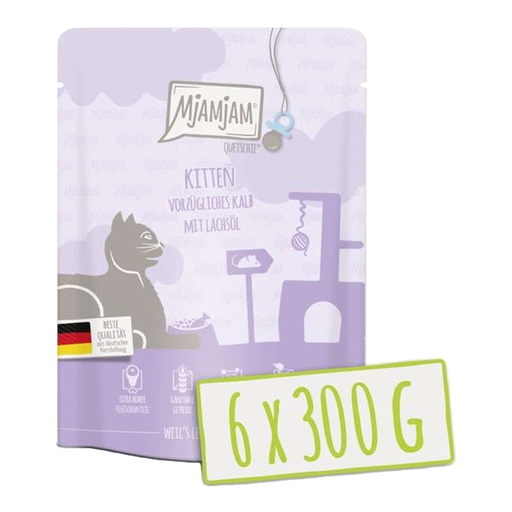
Why This Fits Their Persona: For the owner who reads labels meticulously and prefers natural, clearly defined ingredients. This food focuses on high acceptance and a composition that closely mimics a cat's natural prey.
This product bypasses the pitfall of vague ingredients. The composition specifies 70% veal, liver, lungs, hearts, kidneys, and spleen, so you know exactly what you're feeding.
High and specifically named meat content. Grain-free and gluten-free, with added salmon oil for essential fatty acids.
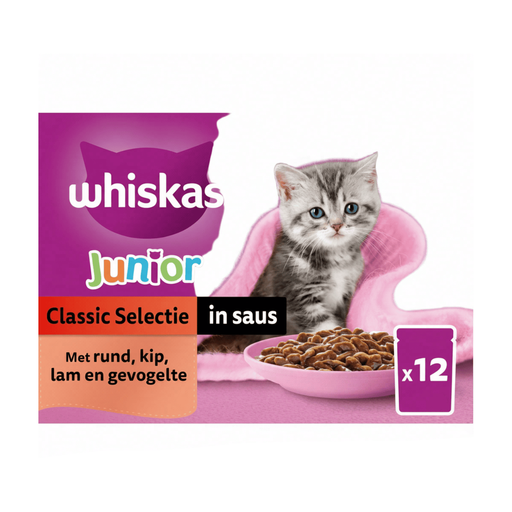
Why This Fits Their Persona: Ideal for the new cat owner looking for a reliable and affordable option from a well-known brand. The pouches are easy to use, and the variety of flavours keeps things interesting for the kitten.
This product is transparent about its positioning. It is a "complete food" that covers basic needs by adding essential vitamins and taurine, without pretending to be a premium, grain-free product.
Affordable, widely available, and portioned in convenient pouches. The multipack offers a variety of flavours.
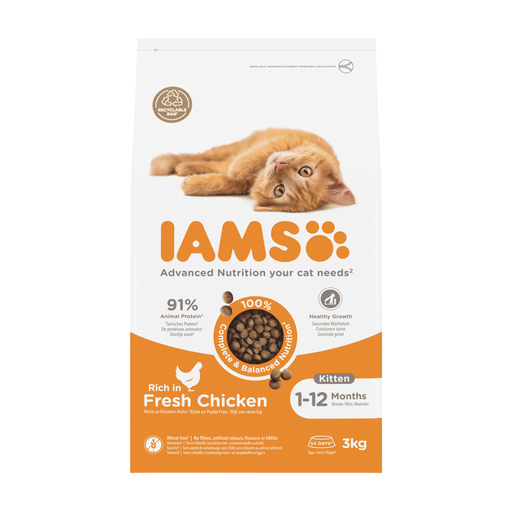
Why This Fits Their Persona: For the owner who trusts nutrition with a scientific approach. Iams focuses on specific functional benefits that support a kitten's healthy development.
Iams gives substance to the "complete food" label by making specific claims. According to the brand, the food contains DHA for brain development and a fibre blend with prebiotics for healthy digestion.
Focused on functional health benefits. According to Iams, it contains 91% animal protein and essential minerals for strong bones and muscles.
We have compiled a complete, up-to-date list of products that meet these selection criteria and current regulations.
Most cats can switch to adult cat food around their first birthday. At that point, they are fully grown and require fewer calories and nutrients for growth. For larger breeds, like the Maine Coon, this might take a bit longer. Always transition gradually by mixing the new food with the old food over a period of 7 to 10 days.
This depends on your kitten's age, weight, and activity level, as well as the specific product. Always refer to the feeding guide on the packaging. A general guideline is to divide the daily amount into 3 to 4 small meals. If you combine wet food with kibble, you'll need to adjust the quantities of both.
Not necessarily. Grain-free food is a good choice for kittens with a grain allergy or intolerance. For most kittens, however, small amounts of grains are a perfectly good source of energy. The most important factor is the quality of the protein sources and the overall nutritional balance. A food with high-quality animal proteins and a small amount of grain can be more nutritious than a grain-free food filled with potato or pea flour.
