
Vandaag of morgen in huis

Kwaliteit gegarandeerd

Welkomstaanbiedingen ontgrendelen: GRATIS bezorging | Tot 80% korting | Gratis 30 dagen JoyPlus-proefperiode
Download de app
A kitten grows quickly and therefore needs different food from an adult cat. Yet in the shop or online, it’s not always clear which product is suitable. Words like “natural”, “premium” or “for healthy growth” don’t mean much on their own. So start by looking at the age, the complete food label and the ingredients.
This guide helps cat owners and breeders compare kitten food in a practical way. You’ll also find examples of dry kitten food, wet kitten food and junior kitten food.
Kitten food with fish or kitten food with chicken may sound appealing, but the flavour doesn’t tell you whether the product is suitable as a daily diet. Check the packaging to see if it states complete food for kittens. A complementary product or treat should not simply replace a full meal.
A percentage on the front may refer to one specific kibble, sauce or variant. So look at the full ingredients list and the analytical constituents. Pay attention to protein, fat, moisture and the added vitamins and minerals. According to the product description, Iams contains 90% or 91% animal protein, depending on the variant. This is a claim from the brand itself; use the full packaging as your source of verification.
A 10 kg bag may seem good value, but it can be impractical if your kitten doesn’t accept the kibble or reacts sensitively to an ingredient. If in doubt, start with a small pack, such as 300 g or 800 g. If the food works well and suits the age, a larger pack can work out cheaper per meal.
Look for a clear label such as kitten, junior or “from weaning up to 12 months”. Kitten food from 2 months old should suit the stage when the animal is eating more solid food. The exact transition depends on development and the advice of your breeder or vet.
Adult cat food is not automatically suitable for kittens. A product like Felix Double the Tasty Salmon, Sea Fish & Beetroot is, according to the product information, intended as a complete food for adult cats. The same applies to many multipacks from Gourmet, Felix and g’woon. So always check the life stage before you order.
The term complete kitten food means the product is intended as a full diet according to the product information. That makes it suitable as a base, provided you follow the recommended portions. If it only says “complementary food”, it is intended to be given alongside other food.
For kittens, several small meals a day are often practical. Give the daily amount according to your kitten’s weight, age and activity level. The guidelines on the packaging are the starting point; adjust the amount if body weight or condition changes.
Dry kitten food is easy to portion and simple to store. Look for a well-sealable pack and keep the kibble cool and dry. Examples include Purina One Junior, Whiskas Junior and Iams kitten/junior.
Wet kitten food contains plenty of moisture and is often supplied in portion pouches or trays. Once opened, leftovers should be kept refrigerated and used within the time stated on the pack. A multipack can be handy if you want to offer different flavours, but check that all variants are for kittens.
A combination of dry and wet food can be practical for variety. However, use the feeding guidelines for the total daily amount. One pouch of wet food on top of a full portion of kibble could otherwise add extra energy without you realising.

Why this fits the profile: The 800 g pack is a manageable size for a first purchase. According to the product description, this food is intended from weaning up to 12 months and contains chicken and grains.
The life stage is clearly stated. This reduces the chance of accidentally choosing adult cat food.
Complete food for kittens; chicken as a named ingredient; available in an 800 g pack.
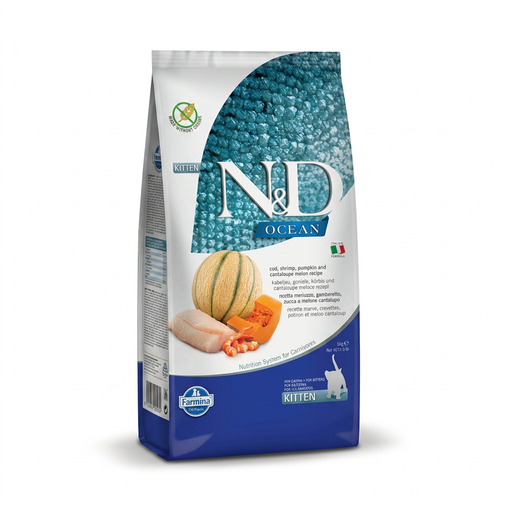
Why this fits the profile: This is a large pack for households with multiple kittens, breeders or owners who already know their pets accept this recipe.
The product information explicitly mentions kitten food, a complete composition and a gradual transition of at least seven days.
According to the product data, the recipe contains cod, DHA and EPA; the analytical composition states 36% protein and 20% fat.
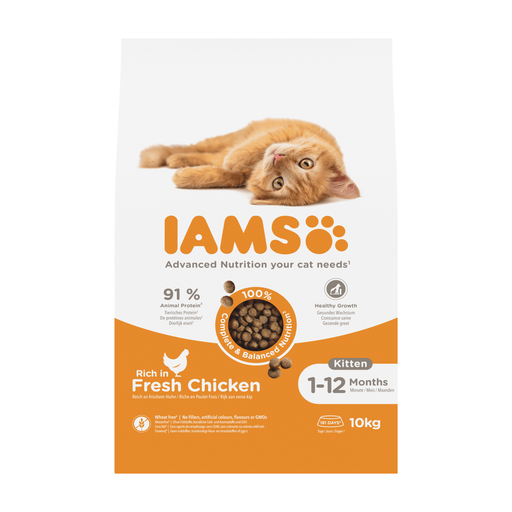
Why this fits the profile: The large bag is aimed at regular use and may suit multiple cats or a kitten that has been eating the same kibble for some time.
The variant is specifically labelled as kitten/junior, so you don’t have to rely solely on the flavour name.
According to Iams, this variant contains 91% animal protein; the description also mentions DHA, taurine and a fibre blend with prebiotics.
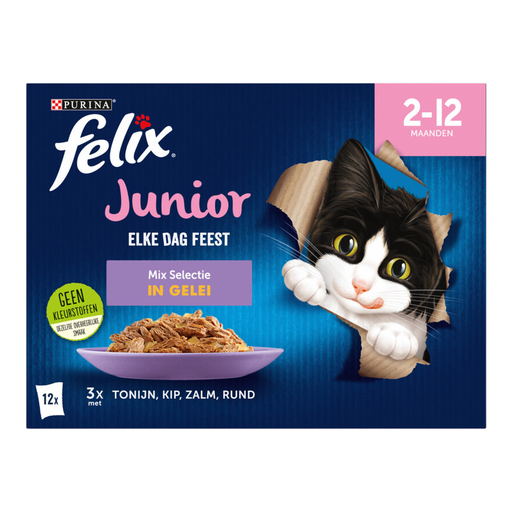
Why this fits the profile: The multipack contains 85 g portion pouches with different flavours and is, according to the product information, intended for kittens from 2 to 12 months.
The age and size are stated on the product. This makes it easier to adjust portions than with a random adult cat food multipack.
Wet food in individual portions; variants including tuna, chicken, salmon and beef; product information mentions vitamins and minerals.
We’ve put together a full, up-to-date list of products that fully meet these strict selection criteria and current European safety regulations.
Choose a product that states it is for kittens and check that it is a complete food. Some wet food products explicitly mention an age of 2 to 12 months. Follow the portion instructions and switch gradually when introducing a new brand.
Many products are intended from weaning up to around 12 months. The exact transition to adult cat food depends on the product, your cat’s growth and condition. Check the packaging and, if in doubt, consult a vet.
No, grain-free kitten food is not automatically needed for every kitten. Farmina N&D Ocean Kitten Cod states a grain-free recipe, while Purina One Junior contains chicken and grains. Look at the full ingredients list and only choose a specific recipe when there is a clear reason to do so. If you suspect a food sensitivity, advice from a vet is wiser than experimenting on your own for a long time.
Store dry food sealed, cool and dry. Opened wet food should, according to the product instructions, be kept refrigerated and used within the stated time. Always provide fresh drinking water and check the best-before date on the packaging.
