
Vandaag of morgen in huis

Kwaliteit gegarandeerd

Welkomstaanbiedingen ontgrendelen: GRATIS bezorging | Tot 80% korting | Gratis 30 dagen JoyPlus-proefperiode
Download de app
A kitchen machine can save you a lot of effort, but not every model suits every kitchen. A stand mixer is geared towards batters and dough, while a food processor is better for chopping, grating and slicing. If you only look at the highest wattage or the biggest bundle of accessories, you could end up with a machine that’s too large, awkward to clean or simply not suited to the recipes you actually want to make.
A high peak power sounds appealing, but it doesn’t tell the whole story. Also check the rated power, the recommended duty time and the maximum amount of dough or ingredients. For instance, the Monsga SM100 lists a peak power of 1000 watts alongside a stated output of 600 watts. That difference matters if you regularly knead heavy bread dough.
Bowl volume isn’t the same as usable capacity. A 6-litre bowl might, for example, have a recommended fill capacity of 5 litres. Overfilling can cause splashes, uneven mixing or extra strain on the motor. Look for the recommended quantities for dough, whipped cream and batters.
A multifunctional kitchen machine with a mincer, blender and slicing discs sounds handy, but accessories should also be easy to fit, clean and store. A machine you use often is usually more practical than one with features that rarely see the light of day.
For a kitchen machine for dough, a stable base, a suitable dough hook and low to medium speeds are important. A kitchen mixer with multiple settings gives you more control for gentle mixing, whisking and kneading. A pulse function is especially useful for short bursts in a blender or food processor.
Also check the prescribed work and rest intervals. Some models are designed for short pulses or cycles. For example, the ROUNY hand blender lists a one-minute operating time followed by one minute’s rest. That makes this type well suited to portions of soup, sauce or smoothies, but less appropriate for prolonged heavy kneading.
For families and home bakers, a stainless steel bowl of around 5 to 6 litres is practical. Do pay attention to the machine’s footprint and the space above the bowl when the head tilts. In a small kitchen, a compact food processor with a 1.3 to 2.1-litre bowl may be more convenient.
A food processor is generally intended for chopping, slicing, grating and sometimes kneading. A stand mixer works with a fixed bowl and accessories such as a whisk, flat beater and dough hook. An electric mixer or hand blender takes up less space, but usually lacks a large bowl or fixed drive.
Check whether the accessories are approved specifically for the model. Look for:
Never immerse the motor housing in water. Always switch off and unplug the appliance before changing accessories or cleaning blades.

Why it fits this profile: According to the product details, this stand mixer has a 5-litre stainless steel bowl, eight speeds and accessories for kneading, mixing and whisking. It’s suitable for basic recipes without jumping straight to a more elaborate system.
The product information lists a 600-watt rated output alongside the peak 1000-watt figure, and a recommended 5-litre bowl capacity. That gives a more realistic picture than a headline wattage alone.
5-litre bowl, eight speeds, splash guard and dishwasher-safe accessories according to the product description.
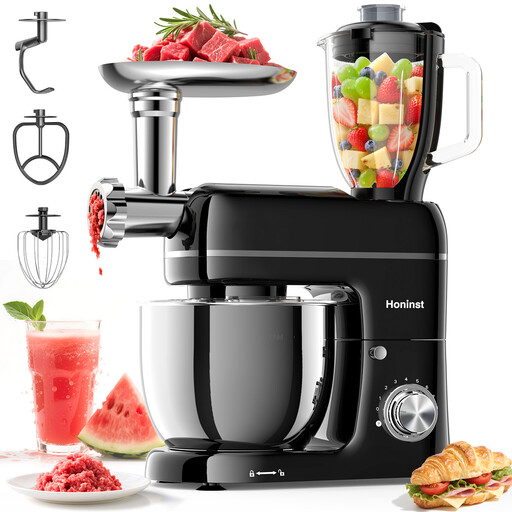
Why it fits this profile: According to the product information, this model combines a stand mixer with a blender and meat grinder. It suits households that want one appliance for dough, whipped cream, smoothies and minced-meat preparations.
Per the description, accessories can be fitted without tools. The tilt head and safety lock make swapping and operation more straightforward.
1300-watt maximum output, a 6 QT stainless steel bowl, eight speeds plus pulse function, and included blender and mincer accessories.
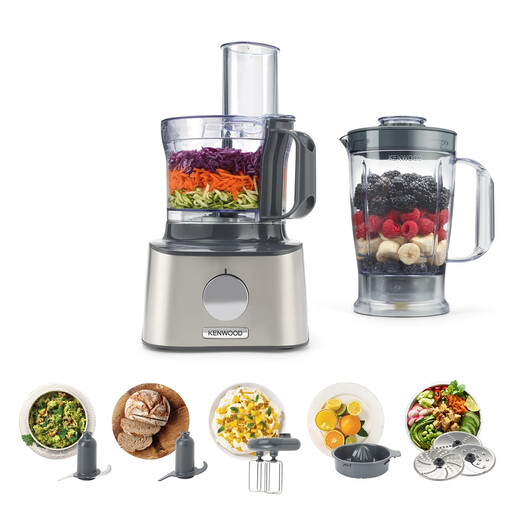
Why it fits this profile: This compact food processor focuses on chopping, slicing, grating, mixing, kneading and juicing. It’s practical for meal prep and everyday cooking when you don’t need a large stand mixer.
The footprint stays relatively compact and the bowl holds 2.1 litres. That prevents you from buying a large machine for smaller daily portions.
800 watts, a 2.1-litre bowl, a 1.2-litre blender capacity and dishwasher-safe accessories according to the product data.
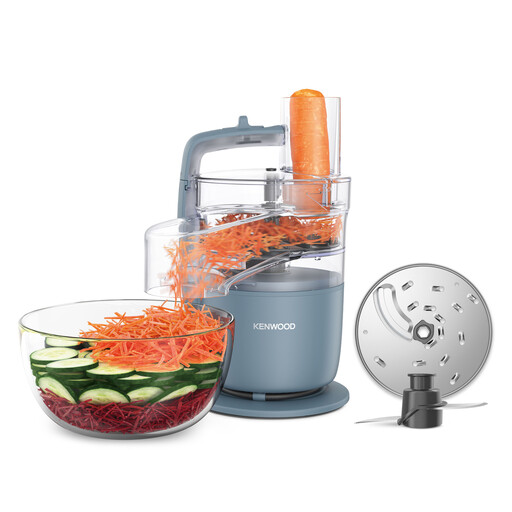
Why it fits this profile: This model is designed for limited workspace and everyday portions. The Express Serve function grates or slices directly into a bowl or pan.
With a 1.3-litre bowl, cord storage and a compact body, it takes up less cupboard space than a large kitchen machine.
650 watts, one speed plus pulse function, reversible slicing and grating disc, and dishwasher-safe parts.
We’ve compiled a complete, up-to-date list of products that fully meet these strict selection criteria and comply with current European safety regulations.
Yes, a stand mixer with a dough hook can be suitable for bread dough, provided you follow the recommended quantity and speed. For heavy dough, use a low to medium setting and let the motor rest when the manual specifies. A food processor is more intended for short bursts of chopping, mixing or kneading smaller quantities.
That depends on the task. For whipped cream, batters and light prep, a lower output can be sufficient. For firm dough or a setup that also includes a mincer and blender, it’s more important to look at the stated rated power, capacity and maximum duty time. A higher number alone is no guarantee of better performance.
Energy use depends on the output and how long the appliance runs. A model rated at 800 watts that runs for ten minutes uses roughly 0.13 kWh in theory. In practice, a kitchen machine often doesn’t run continuously at maximum power. So compare the duty time, portion sizes and the functions you actually need.
