
Vandaag of morgen in huis

Kwaliteit gegarandeerd

Welkomstaanbiedingen ontgrendelen: GRATIS bezorging | Tot 80% korting | Gratis 30 dagen JoyPlus-proefperiode
Download de app
A blunt knife, an awkward handle or an unsuitable blade shape can make cooking unnecessarily difficult. Yet many households buy kitchen knives based on a glossy product photo, a promise such as “extra sharp” or a large number of pieces in a kitchen knife set. This can easily result in the wrong purchase.
As a Joybuy Product Recommendation Officer, I therefore start by looking at verifiable details: the type of knife, blade length, material, care requirements and intended use. This helps you see more quickly which kitchen knife suits your cooking routine.
A chef’s knife can handle vegetables, herbs, fruit and meat, but it is not automatically suitable for bread or fine peeling work. A smooth blade can get stuck in a hard bread crust. For potatoes, apples and garnishes, a large knife is also less precise than a paring knife.
So start by considering the tasks you perform most often:
“Extra sharp” does not tell you much on its own. More important factors include the type of steel, sharpening angle, blade thickness and how you care for the knife. According to the product information provided by some brands, a particular hardness or sharpening method can contribute to long-lasting sharpness, but this is not a guarantee for every user or chopping board.
A sharp kitchen knife remains practical only when used correctly. Glass, stone and metal can damage the edge more quickly. A wooden or plastic chopping board is generally more suitable for everyday use.
A large kitchen knife set may seem like good value, but unused knives take up space and also require care. For many households, three knives are enough: a chef’s knife, a bread knife and a paring knife. A compact set with clearly defined functions is often easier to manage than a pack containing various knives without any explanation.
Also note the difference between kitchen knives and hobby knives. According to the product description, the WORKPRO snap-off knife set is intended for paper, cardboard, tape, fabric, foam board and packaging. These are not knives for food preparation.
The right length depends on your hands, chopping board and ingredients. A 16 cm blade offers a good balance between control and cutting surface for everyday use. A 20 cm chef’s knife is useful if you regularly prepare large vegetables, cabbage or pieces of meat, but it may be less comfortable on small worktops.
A serrated blade, such as the one found on a bread knife or steak knife, works differently from a smooth blade. The serrations grip the crust or skin and require a sawing motion. Do not use this type of knife as an all-purpose chopping knife.
A stainless steel knife is resistant to corrosion during normal use, but it should still be dried after washing. Products made from X50CrMoV15 steel are used for various Wüsthof and Victorinox knives according to the supplied product information.
A forged kitchen knife is formed from a single piece of steel. In some models, the steel extends through the handle, which is known as a full tang. This can contribute to a sturdy construction and a well-balanced feel, but it does not mean that every forged knife is suitable for every hand or cutting technique.
The terms “Damascus” and “professional” are not enough on their own to base your choice on either. Always check whether the product page also provides specific details about the steel, length, handle and care requirements.
Before buying, check whether the knife is dishwasher-safe. According to the product information, hand washing is recommended for the Wüsthof Performer Vegetable Knife to protect the DLC coating. Other products may be listed as dishwasher-safe, but hand washing and drying immediately remain the cautious choice for preserving the edge.
You should also use:
Keep sharp knives out of children’s reach. Disposable wooden knives, such as the 50-piece Alpina set, are intended as cutlery for barbecues, picnics and parties. They are not a substitute for a reusable kitchen knife for everyday cutting.
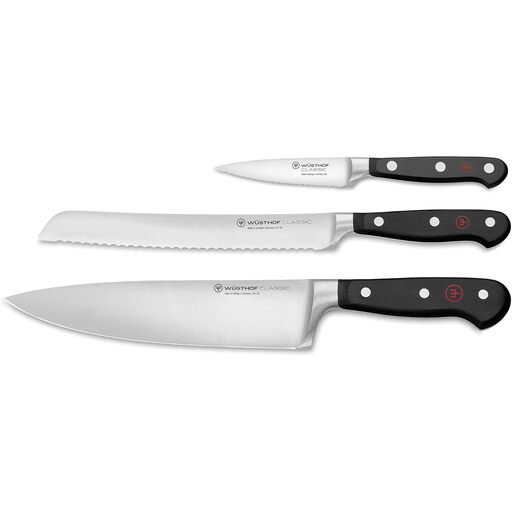
Why it suits this profile: The set contains three clearly defined essentials for everyday cooking: a chef’s knife, bread knife and office or paring knife.
You are not buying an extensive set with unclear uses, but three knives that together cover the most common kitchen tasks.
3-piece set, stainless steel blades and plastic handles according to the product information.
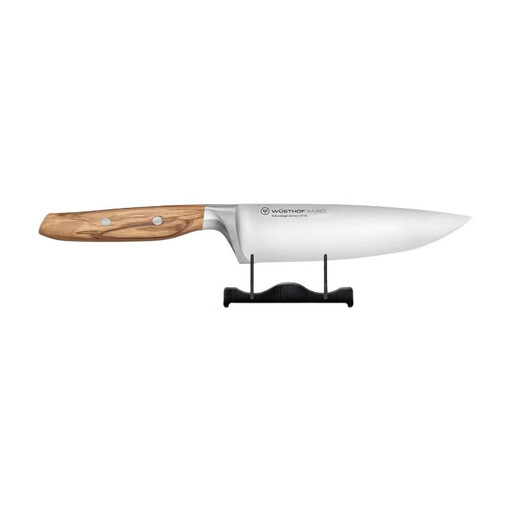
Why it suits this profile: This longer chef’s knife is designed for home cooks who regularly slice, chop and transfer ingredients to the pan.
The product information gives specific details, including a 20 cm blade length, X50CrMoV15 steel and a sharpening angle of 14 degrees.
Forged from a single piece of steel; the product information mentions an olive wood handle and a half bolster for balance and easier sharpening.
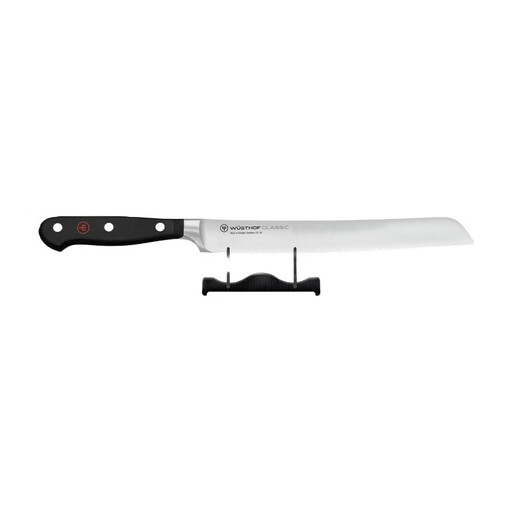
Why it suits this profile: A dedicated bread knife makes sense for households that regularly slice bread, cake or products with a firm skin.
The serrated design is intended for sawing, helping you avoid forcing a smooth chef’s knife unnecessarily through hard crusts.
20 cm blade, X50CrMoV15 stainless steel and serrated edge according to the product description.
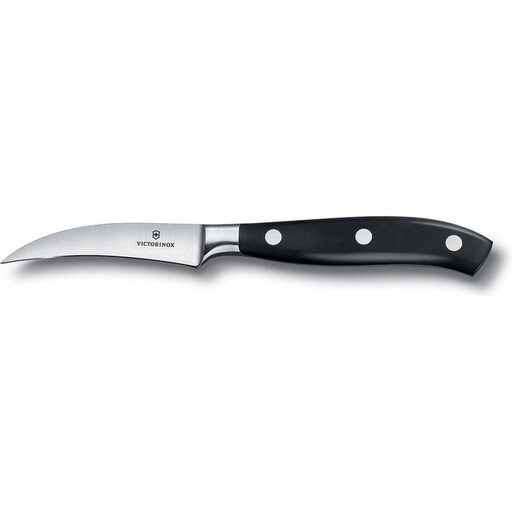
Why it suits this profile: The short, curved blade is practical for peeling, trimming fruit and carrying out small vegetable preparation tasks.
You use a small precision tool for small jobs instead of handling a large chef’s knife awkwardly.
8 cm blade, X50CrMoV15 steel and a POM handle with three rivets according to the product information.
We have compiled a complete, up-to-date list of products that fully meet these strict selection criteria and the applicable European safety regulations.
Start with a chef’s knife of around 16 to 20 cm, a paring knife and a bread knife if you regularly eat bread. A kitchen knife set with these three functions prevents you from immediately paying for knives you rarely use.
The lifespan of the edge depends on the steel, usage, chopping board, cutting technique and care. Do not cut on glass or stone, avoid using excessive force and store the knife so that the blade does not knock against other cutlery. Sharpening or honing may be necessary once the knife no longer moves smoothly through ingredients.
This varies from product to product. Always check the product page. Hand washing with mild washing-up liquid, drying immediately and storing the knife safely is usually the cautious approach to care. For knives with a coating, such as some Performer models, the manufacturer may specifically recommend hand washing.
