
Vandaag of morgen in huis

Kwaliteit gegarandeerd

Welkomstaanbiedingen ontgrendelen: GRATIS bezorging | Tot 80% korting | Gratis 30 dagen JoyPlus-proefperiode
Download de app
A kitchen knife may seem simple to choose: select an attractive model, check that it looks sharp and pay. In practice, the knife type, finish and maintenance have the greatest impact on how enjoyable it is to use every day. A cheap knife can become blunt quickly, while a large kitchen knife set may take up valuable space without being used.
For home chefs, cooking enthusiasts and professional cooks, these are the main pitfalls to avoid:
The right length depends on your cutting technique, workspace and ingredients.
A longer knife is therefore not automatically more practical. Consider the tasks you carry out most often.
A stainless steel kitchen knife is popular because the steel is less susceptible to rust with normal use and is easy to keep clean. When buying, check whether the manufacturer specifies the type of steel. For example, the Wüsthof Classic Chef’s Knife and Wüsthof Amici Chef’s Knife are described as featuring X50CrMoV15 stainless steel.
The sharpening angle affects the cutting experience. A smaller angle can produce a finer edge, but it also requires careful use. According to the product description, the 16 cm Wüsthof Classic Chef’s Knife is hand-sharpened to 14 degrees per side. This is a verifiable product specification, not a guarantee that the knife will remain sharp in all circumstances.
Also look out for terms such as ‘damascus’ or ‘DLC coating’. These names describe a material or surface feature, but do not in themselves indicate how long a knife will stay sharp. According to the product description, the Wüsthof Performer model has a DLC coating and a double-ground edge. You should also always assess the size, handle and maintenance instructions.
A comfortable handle helps you cut with control. Consider the following:
Use a wooden or plastic chopping board. Glass, stone and metal can damage the edge more quickly. A knife sharpener or honing steel can help with maintenance, but use the tool according to the instructions. A sharpener will not automatically make an unsuitable knife right for every task.
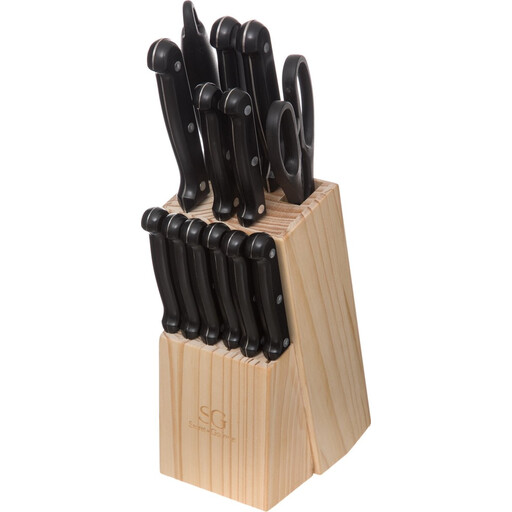
Why it suits this profile: According to the product information, this set contains a chef’s knife, bread knife, steak knives, kitchen scissors, a knife sharpener and a knife block. This gives beginners several essential functions in a single purchase.
The contents are listed clearly, so you do not have to rely solely on a general term such as ‘complete set’.
13-piece collection, stainless steel knives and wooden knife block. Not dishwasher-safe according to the product information.
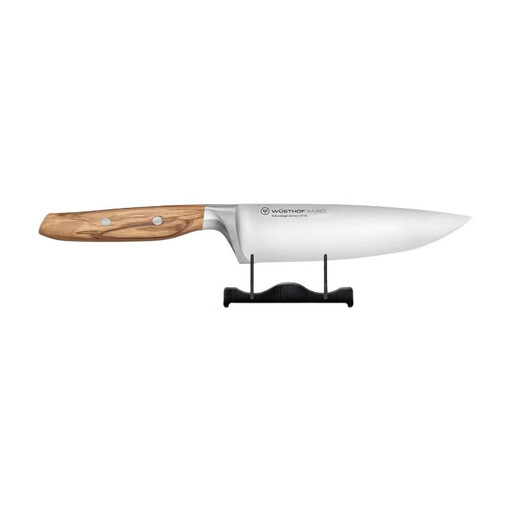
Why it suits this profile: According to the product description, this chef’s knife has a 20 cm blade, X50CrMoV15 steel and an olive wood handle. The size is suitable for users who regularly prepare vegetables, herbs and meat.
The product information specifies the steel type, blade length, sharpening angle and hardness, allowing you to compare more effectively.
20 cm blade, X50CrMoV15 stainless steel, 14-degree sharpening angle and a half bolster according to the product description.
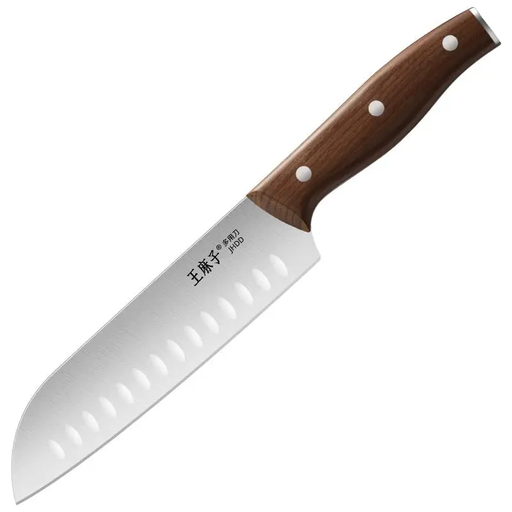
Why it suits this profile: According to the product information, this model is designed for slicing, shredding and chopping meat and vegetables. It is suitable for users looking for a cleaver-style option alongside a chef’s knife.
Its intended use is described specifically. Do not use it for bones unless the manufacturer expressly permits this.
Multifunctional design for preparing meat, vegetables and everyday food; hand-washing and drying thoroughly are recommended.
We have put together a complete, up-to-date list of products that fully meet these strict selection criteria and the applicable European safety regulations.
A 16 to 20 cm chef’s knife is a practical foundation for many households. Choose 16 cm if you mainly do precision work and prepare smaller ingredients. Choose 20 cm if you often process large vegetables, meat or herbs and have sufficient workspace.
Wash the knife by hand, dry it immediately and use a soft wooden or plastic chopping board. Store it in a knife block, protective cover or drawer insert. Only use a knife sharpener or honing steel that is suitable for the sharpening angle and blade type.
That depends on how you use your knives. A set can be practical if you also need a bread knife, steak knives, scissors and a knife block. If you usually cook with just one chef’s knife, an individual stainless steel kitchen knife may be a more targeted choice. Check the contents, material and maintenance instructions before comparing prices.
