
Vandaag of morgen in huis

Kwaliteit gegarandeerd

Welkomstaanbiedingen ontgrendelen: GRATIS bezorging | Tot 80% korting | Gratis 30 dagen JoyPlus-proefperiode
Download de app
A new kitchen machine, food processor or sandwich maker can quickly seem versatile on paper. Yet some appliances end up tucked away in a kitchen cupboard after just a few weeks. The cause is often not simply the price, but an inaccurate assessment of capacity, maintenance and everyday use.
The main pitfalls when choosing kitchen appliances are:
Do not only look at the capacity of a bowl or cup, but also at the amount you actually want to process. For a family or keen home baker, a kitchen machine with a capacity of 5 to 7 litres can be practical. For sauces, herbs, vegetables or small quantities, a food processor or chopper is often sufficient.
Also check the dimensions. A stand mixer with a large bowl must fit beneath kitchen cupboards and have enough room for the head to tilt. Consider how you will store accessories such as a whisk, dough hook or slicing discs.
A stand mixer with multiple speeds gives you more control when whisking, mixing and kneading. A pulse function can be useful for short bursts in a food processor or chopper. More important than maximum power alone are:
For the Honinst 6.5QT stand mixer, for example, the product information states that heavy yeast dough must not be processed continuously for more than 10 minutes, followed by a cooling period. For the AUCMA 6L stand mixer, a maximum operating time of 6 minutes without a break is specified. Always follow the instructions for the model you choose.
A stainless steel bowl is generally practical for mixing and kneading. However, check whether cast-metal accessories need to be washed by hand. For appliances with a non-stick coating, such as a sandwich maker or waffle maker, metal spatulas and abrasive sponges are usually unsuitable.
When choosing cutlery, consider the number of pieces, thickness and dishwasher safety. A 4-piece set is suitable for one person or as an addition to an existing set. For a household, a 16-piece or 24-piece cutlery set is often more sensible. Also check whether it is made of stainless steel and whether the product description provides specific care information.

Why it suits this profile: The 6-litre bowl, six speeds and three accessories provide a straightforward starting point for cakes, bread dough and pizza, without immediately committing to a more extensive system.
The product information mentions overload and overheating protection. Operating time remains important: do not use the appliance for longer than stated in the instructions.
6L stainless steel bowl, six speeds plus pulse function, dough hook, whisk and beater.

Why it suits this profile: This model is aimed at home cooks who regularly mix larger quantities and value an integrated scale and automatic speed control.
The specifications state 1200 W, a 7-litre bowl and built-in scales. Check the available worktop space in advance: the appliance measures approximately 37 × 22.5 × 40 cm.
7L stainless steel bowl, 1200 W, built-in scales and a two-year manufacturer’s warranty, according to the product information.

Why it suits this profile: Ideal for households that regularly want to slice bread, cheese or meat evenly and are looking for a dedicated appliance for the job.
The product description mentions an adjustable slicing thickness of up to 23 mm, a removable carriage and a safety switch. After use, check that all parts can be stored safely.
Metal construction, two blades according to the product description, and electronic speed control.
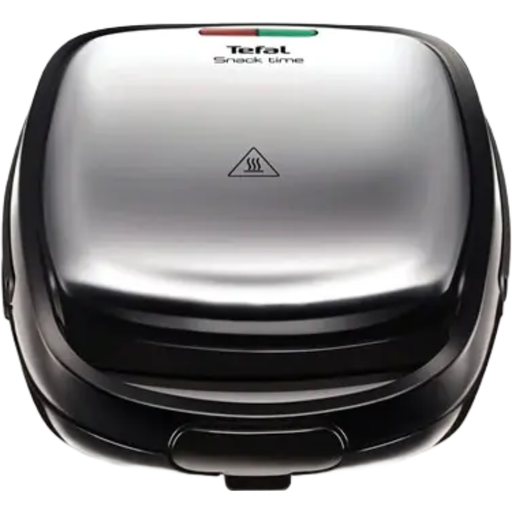
Why it suits this profile: One compact appliance can be used for sandwiches and waffles. This is practical when a separate waffle maker or contact grill would take up too much cupboard space.
The plates are interchangeable and, according to the product information, dishwasher-safe. However, check that they have cooled completely before removing them.
700 W, sandwich and waffle plates, non-stick coating, indicator lights and a lockable lid.
We have put together a complete, up-to-date list of products that fully meet these strict selection criteria and the applicable European safety regulations.
A longer service life starts with using your appliance correctly. Place it on a level surface, keep ventilation openings clear and do not exceed the maximum quantities. With a kitchen machine, always unplug it before changing accessories.
The blades in a chopper or multifunctional kitchen machine are sharp. Remove bones, stones and tough skins before processing ingredients. Use short pulses when stated in the instructions. Do not process boiling liquids in a blender jug unless the manufacturer expressly permits it.
Before buying, also check:
A CE marking is a conformity mark; always also check the safety instructions and product documentation.
That depends on your cooking routine. A stand mixer is a good choice for regular baking and kneading. A food processor or chopper is more useful for vegetables, sauces and mince. A sandwich maker, waffle maker or contact grill is ideal for quick meals and snacks. It is better to choose one appliance you use often than several functions that remain unused.
There is no universal wattage for every recipe. As well as power, consider the bowl capacity, speed control, stability and maximum operating time. For heavy dough, the manufacturer’s instructions are more important than the number on the packaging.
Consumption depends on the power rating and operating time. A 700 W appliance running for ten minutes uses approximately 0.117 kWh. A 1200 W model running for the same length of time uses approximately 0.2 kWh. The actual cost depends on your energy tariff. Use the appliance only for as long as necessary and follow the recommended breaks.
