
Vandaag of morgen in huis

Kwaliteit gegarandeerd

Welkomstaanbiedingen ontgrendelen: GRATIS bezorging | Tot 80% korting | Gratis 30 dagen JoyPlus-proefperiode
Download de app
A kitchen trolley, serving cart, or rolling utility cart can seem like the perfect solution for anyone needing extra storage or counter space. Especially in homes where kitchens aren't always spacious, such a flexible addition is incredibly useful. However, not every model is worth the money. The wrong choice leads to frustration: a wobbly cart, a model that doesn't quite fit, or wheels that leave scratches behind.
Before you make a purchase, it's wise to know the most common pitfalls. We often see people fall into three main traps:
kitchen trolley on wheels should roll when you want it to. Models with poor-quality wheels roll away when they shouldn't, or their brakes are ineffective.This guide will help you avoid these problems and choose a kitchen trolley that truly enhances your household.
You don't need to be a product designer to make a good choice. By focusing on three key points, you can easily filter out the lesser options.
The material determines the sturdiness and lifespan of your kitchen cart. A metal trolley, often made of steel or iron, typically provides a robust foundation for daily use. For those who prioritize hygiene and durability, a stainless steel serving cart is an excellent option, as this material is easy to clean and does not rust. Models made of MDF or plastic are often lighter and more budget-friendly, but pay extra attention to their construction.
Always check the maximum load capacity. This is usually specified per shelf and for the entire trolley. A trolley that can only support 3 kg per shelf is unsuitable for heavy pans or kitchen appliances.
This may sound obvious, but it's a frequent mistake. Accurately measure the space where you intend to place the trolley: width, depth, and height. Have a narrow, unused space next to the refrigerator? A slim kitchen trolley of, for example, 15 or 20 cm wide is a smart solution.
Also, think about functionality. Do you just need extra storage, or an additional work surface as well? Some models feature a wood or bamboo top. A trolley with drawers (often in the form of pull-out baskets) is handy for small kitchen utensils. And if you don't need the trolley constantly, a foldable kitchen trolley is a practical, space-saving choice.
A storage trolley on wheels must move smoothly and stand stably. Check that the trolley has at least two wheels with a brake. This allows you to lock it in place while chopping vegetables or when you don't want it to roll away. The wheel material is also important. Hard plastic wheels can cause scratches on wood or laminate floors. Wheels made of a softer material, like TPR (thermoplastic rubber), are often a safer choice.
Based on objective specifications like material, dimensions, and functionality, we have listed some popular choices for different user profiles.
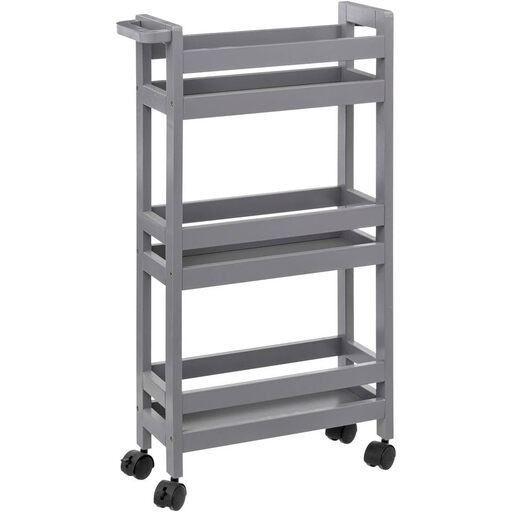
Why This Fits Their Persona: Ideal for anyone looking to utilize every inch in a compact kitchen or bathroom. This trolley fits perfectly into those narrow, unused spaces, like between the washing machine and the wall.
Directly addresses the 'impractical dimensions' pitfall. This model is specifically designed as a slim kitchen trolley, creating storage in places where standard furniture won't fit.
At just 15 cm wide, this is one of the slimmest options on the market. The three tiers provide vertical storage for items like pantry jars or cleaning supplies.
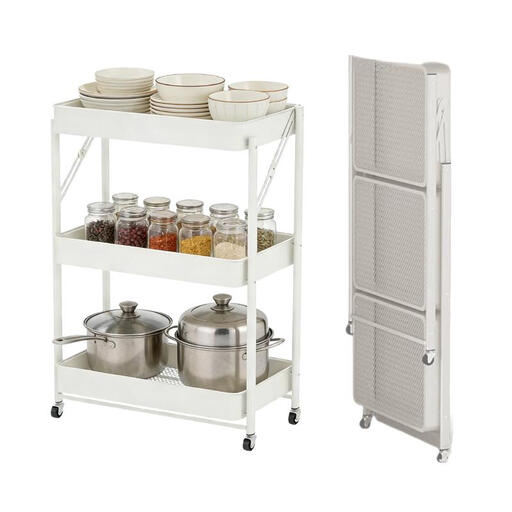
Why This Fits Their Persona: For anyone who doesn't want to deal with assembly instructions and tools. This trolley is an instant solution: take it out of the box, unfold it, and it's ready to use.
Avoids the pitfall of a wobbly structure caused by incorrect assembly. Because the model is pre-assembled, its stability is guaranteed. It's a hassle-free foldable kitchen trolley.
No assembly required and easy to store. According to the manufacturer, the trolley has a robust structure with a load capacity of up to 50 kg.
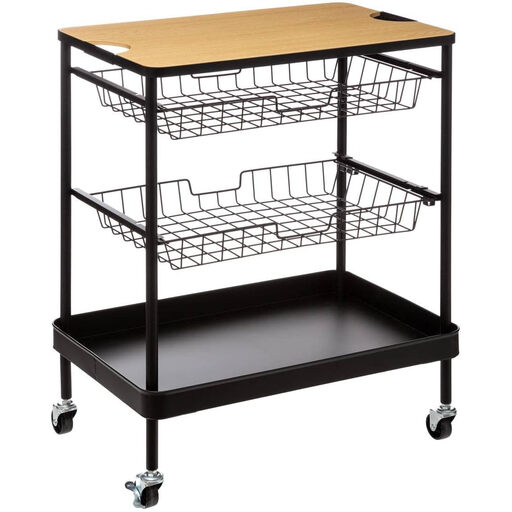
Why This Fits Their Persona: For those who need more than just a storage rack. This trolley serves as a mobile workstation, ideal for prepping meals or as extra surface space while cooking.
This model offers added value, preventing you from buying a simple `storage trolley` that proves too limited. The combination of storage and a work surface makes it a more useful piece of furniture.
Features a removable bamboo cutting board and two pull-out baskets, functioning like a trolley with drawers. The steel frame provides a sturdy base.
We have compiled a complete, up-to-date list of products that meet these selection criteria and comply with current regulations.
This varies greatly by model. Simple plastic or MDF trolleys often have a limit of 2 to 5 kg per shelf. In contrast, a sturdy metal trolley or a stainless steel serving cart can support 10 to 25 kg or more per shelf. Always check the product specifications for the exact values to prevent overloading and unstable construction.
Yes, a kitchen trolley is often very suitable for the bathroom, but pay close attention to the material. Models made of stainless steel or powder-coated metal are highly resistant to moisture. Be more cautious with trolleys made of untreated wood or MDF, as these materials can swell in a humid environment.
Choose a trolley with wheels made of a soft material, such as TPR (thermoplastic rubber). These are gentler on delicate floors like wood, laminate, or vinyl than hard plastic wheels. Also, clean the wheels regularly to prevent sand or other debris from causing scratches.
