
Vandaag of morgen in huis

Kwaliteit gegarandeerd

Welkomstaanbiedingen ontgrendelen: GRATIS bezorging | Tot 80% korting | Gratis 30 dagen JoyPlus-proefperiode
Download de app
Picking a pack of kitchen towels might seem straightforward. Yet many purchases end up disappointing: the cloth barely absorbs any moisture, leaves lint behind, or turns out too small for daily use after just a few washes. If you only look at colour, price or a claim like “extra absorbent”, you’re missing important product information.
The most common pitfalls with kitchen cloths and dishcloths are:
Cotton towels feel familiar and are suitable for hands, crockery and general use. Pay attention to the stated percentage of cotton and the dimensions. A cotton cloth measuring 50 × 70 cm offers more surface area than a small dishcloth.
Microfibre cloths have fine fibres that, according to the product description, can pick up dust, dirt and grease. They are especially practical for smooth surfaces such as stainless steel, glass and worktops. A product with a stated density of 260 g/m² gives you more technical information than just the description “thick” or “quality”.
Viscose cloths are intended for cleaning tasks in, for example, the kitchen and bathroom. With the g’woon Viscose Cloths 3pcs, it states that the cloths should be rinsed in warm water before use. Check the packaging for further usage and storage instructions.
The right size depends on the task:
Also look at the number of pieces. A towel set with three pieces may be enough for one person or a small space. Families often benefit more from a kitchen towel set with six or ten cloths, so you have enough spares while others are being washed.
Washable cleaning cloths and reusable wipes can be practical, but only when they are properly maintained. Wash cloths for the toilet, bathroom and worktop separately where possible. Use different colours as a simple way to tell them apart.
For the microfibre cloth mentioned, 30 × 30 cm, there is a washing recommendation of up to 60 °C, without fabric softener. According to the product information, the VidaXL set can be machine washed and tumble dried on a low temperature. Always check the current product packaging, as care instructions can vary between versions.
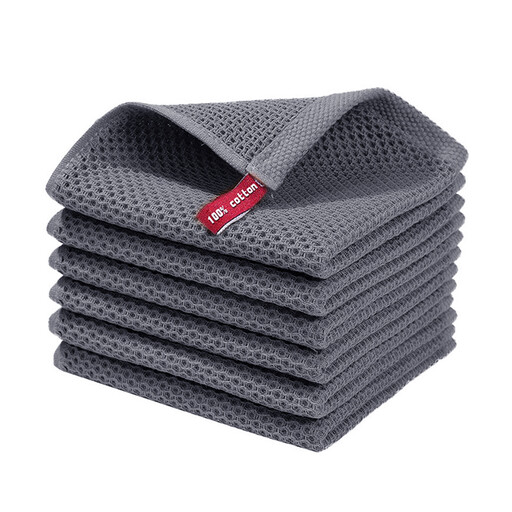
Why this fits the profile: Six cloths measuring 30 × 30 cm provide a manageable starting stock for small kitchens, student accommodation and everyday wiping down.
The number and size are clearly stated, so you don’t have to rely solely on a general absorbency claim.
Six pieces, a compact size and a textured honeycomb surface according to the product name.
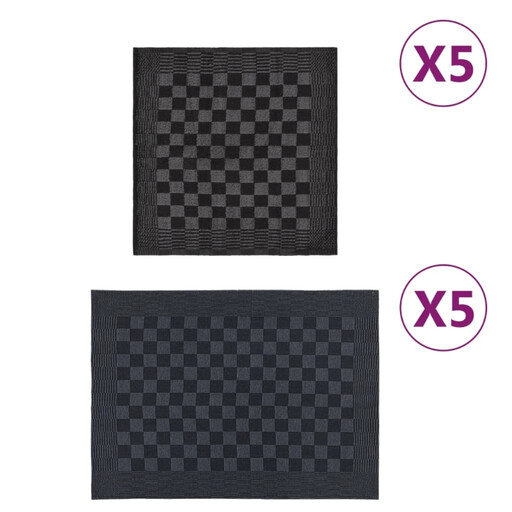
Why this fits the profile: A household with multiple family members benefits from a combination of tea towels and hand towels in one pack.
The pack states ten pieces and splits them into five tea towels and five hand towels.
100% cotton; dimensions of 50 × 70 cm and 50 × 50 cm; machine washable according to the product description.

Why this fits the profile: Handy for glass, worktops, stainless steel, the car or the office when a compact cloth is needed.
The density of 260 g/m² and the washing advice up to 60 °C are more concrete than an unspecified claim about durability.
Microfibre, 30 × 30 cm, machine washable and according to the description, low-lint.
We have compiled a full, up-to-date list of products that fully meet these strict selection criteria and current European safety regulations.
That depends on usage. A cloth for hands or crockery becomes damp and dirty more quickly than a cloth used only for dry wiping. Replace damp cloths regularly and let them dry completely before using them again. Always follow the label for the washing temperature.
Cotton towels are practical for hands, crockery and larger surfaces. Microfibre cloths are compact and are often chosen for smooth surfaces and picking up dust or grease. Look mainly at the size, the washing instructions and the task for which you need the cloth.
For one person, a set of three to six pieces may be enough. Families and households that cook daily usually benefit from a larger kitchen towel set, for example with ten pieces. This way you can lay out clean cloths while others are being washed or dried.
