
Vandaag of morgen in huis

Kwaliteit gegarandeerd

Welkomstaanbiedingen ontgrendelen: GRATIS bezorging | Tot 80% korting | Gratis 30 dagen JoyPlus-proefperiode
Download de app
Anyone looking for kitchen tools will quickly come across dozens of graters, knives, pestles and kitchen accessories that look similar. A low price may seem appealing, but an awkward size, difficult maintenance or an insecure grip can make a purchase less useful than expected. Use these checkpoints to compare kitchen utensils based on practical features rather than marketing claims.
A knife set or multifunctional vegetable slicer with lots of parts may seem versatile. First check which parts you will actually use and how you will store them. Loose knives, graters and cutting blades take up space and can be difficult to clean.
With a set such as the Alpina Multi Grater 7pc, the contents include a collection bowl, holder, several cutting and grating blades and a safety handle. This is practical if you regularly prepare vegetables, fruit, cheese or potatoes, but less suitable if you mainly need one simple grater.
When choosing stainless steel kitchen utensils, it is important to check the stated steel type, finish and care instructions. The Maxcook spider strainer, for example, is made from 304 stainless steel. The manufacturer advises removing any residue from salt, acids or cleaning products promptly and drying the product thoroughly. This is relevant information because even stainless steel can develop marks or rust spots if used incorrectly.
Always follow the product description. A product that the description says is not dishwasher-safe may wear out more quickly when exposed to high temperatures and prolonged moisture.
When choosing kitchen knives, sharpness is not the only consideration. Also pay attention to the blade length, balance, handle and the type of cutting you do. A 20 cm chef’s knife provides a large cutting surface for vegetables, herbs and meat, but may be less comfortable if you have limited worktop space or smaller hands.
Use a suitable chopping board material, keep your fingers out of the cutting path and store knives so that the blade is not left loose in a cutlery drawer. A dishwasher may be permitted according to the product information, but hand-washing and drying immediately afterwards will generally help keep the knife and handle in good condition for longer.
Check what material the working part is made from:
Do not treat a brand claim about durability or ease of use as a guarantee. Look at the specific details: material, dimensions, weight and care advice.
A compact herb mortar measuring around 8 cm is suitable for small quantities of spices, garlic or herbs. For pesto or larger portions, a 10 to 13 cm model is more practical. The Alpina ceramic mortar with pouring spout has a diameter of 10 cm; the 5five bamboo version is 13 cm wide and has a capacity of 0.18 litres.
When choosing a grater, peeler or vegetable slicer, consider how much space you need while using it. A collection bowl helps keep loose ingredients off the worktop. A hand guard is important when using a mandoline-style slicer. Do not push ingredients past a sharp blade with your bare fingers.
Maintenance partly determines how often you will actually use a tool. Therefore, check:
A soup ladle or skimmer made from stainless steel is often easy to wipe clean, but here too you should follow the manufacturer’s advice. Do not use wire wool or a hard brush on the Maxcook strainer, as this may damage the surface.
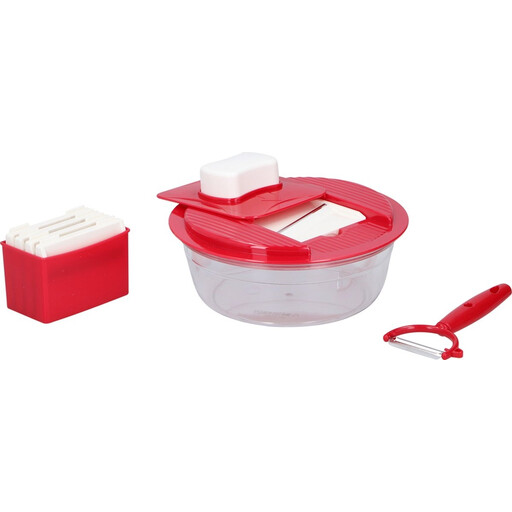
Why it suits this profile: This set combines grating and slicing in one tool and includes a collection bowl. It can be useful for households that want to try different preparations without buying several separate kitchen accessories.
The seven components are clearly listed. However, check beforehand whether you genuinely need the different blades and the safety accessory.
Plastic housing, stainless steel blades, collection bowl and a weight of 369 grams.

Why it suits this profile: If you are looking for one versatile knife for slicing, dicing and chopping, you can compare the specifications of this 20 cm chef’s knife with your available workspace and handle preferences.
The blade length, total length and weight are specified. This lets you assess the size rather than relying solely on a general quality claim.
Stainless steel blade, plastic handle, 20 cm blade length and a weight of 184 grams.
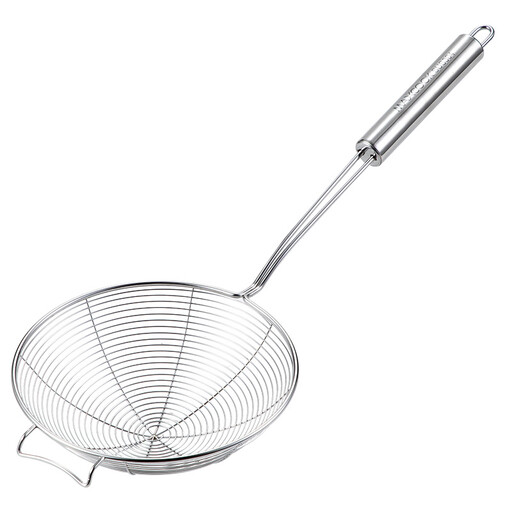
Why it suits this profile: If you often remove pasta, noodles, dumplings or fried ingredients from hot water or oil, a skimmer with a deep, perforated head is a purpose-built option.
The material and care instructions are clearly stated. The handle may become hot, so take care when heating the product for extended periods.
304 stainless steel, hanging hook, deep scoop head and hanging loop for storage.
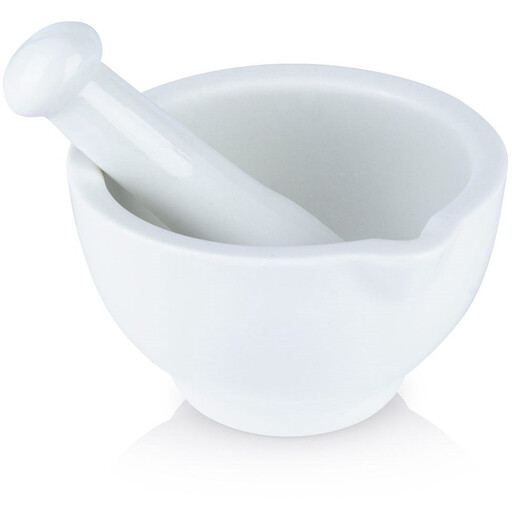
Why it suits this profile: The 10 cm diameter offers more working space than a compact herb mortar. The pouring spout makes it easier to transfer ground ingredients.
The dimensions and material are clearly specified. Ceramic remains fragile, so place the mortar securely and avoid hard knocks.
Ceramic construction, 10 cm diameter, pouring spout and dishwasher-safe according to the product description.
We have compiled a complete, up-to-date list of products that fully meet these strict selection criteria and the applicable European safety regulations.
A practical starting point is a good chef’s knife, chopping board, peeler, grater, soup ladle and skimmer. Add a mortar and pestle if you often prepare herbs, spices or pesto. A vegetable slicer is particularly useful if you regularly cut larger quantities of vegetables.
It varies from product to product. Always check the care instructions. Some items are dishwasher-safe, while others require hand-washing and drying immediately afterwards. Sharp kitchen knives, products with wooden components and tools with delicate joints require particular care.
Lifespan depends on the material, frequency of use and maintenance. Knives remain usable for longer when used on a suitable board and sharpened regularly. Graters and cutting blades should be stored dry. Ceramic mortars can last a long time with careful use, but are more vulnerable to being dropped. Before buying kitchen utensils, always check the warranty terms; the products mentioned are covered by the statutory guarantee under the applicable EU and national regulations.
