
Vandaag of morgen in huis

Kwaliteit gegarandeerd

Welkomstaanbiedingen ontgrendelen: GRATIS bezorging | Tot 80% korting | Gratis 30 dagen JoyPlus-proefperiode
Download de app
A handy vegetable slicer, sturdy grater or versatile food processor can save you time every day. Yet many kitchen tools end up in a drawer after just a few weeks. Often, that’s not because of one poor feature, but because the product wasn’t the right choice for the way you cook.
Look out for these three common pitfalls:
Too many features without a clear purpose
A multifunctional vegetable slicer with lots of attachments might sound appealing, but loose parts take up space and can be difficult to clean. If you mainly slice cucumber, onion or carrot, a simpler model with a collection container may be a better choice.
Overlooking cleaning and storage
A product that isn’t dishwasher-safe needs extra care. Sharp blades, grating discs and mandolines also need to be stored safely. So check in advance whether the parts can be removed, how large the tool is, and whether it comes with a protective cover or storage box.
Confusing marketing claims with specifications
Claims such as “powerful motor”, “professional” or “built to last for years” mean little without technical details. Instead, look at the wattage, bowl capacity, materials, speed settings, dimensions and usage restrictions. Some brands state that features may vary depending on the attachment or how the product is used. Treat such statements as product information, not as a guarantee of a particular result.
For graters, knives and blades, stainless steel is a practical choice. It’s suitable for many everyday cooking tasks and needs less attention than materials that discolour more easily or retain moisture. Do check which parts are made from steel, though: many kitchen accessories have a plastic body, with only the knives or cutting blades made from stainless steel.
A plastic collection container can be useful for grated cheese, vegetables or potatoes. Check its capacity, though. A small container won’t prevent spills when you’re preparing larger quantities.
Measure not just the space on your worktop, but also the room in your kitchen cupboard. A 900 ml manual chopper is suitable for smaller portions, while a food processor with a 6 or 6.5-litre bowl takes up more space.
Examples from the product specifications:
A larger appliance isn’t automatically more convenient. Choose a capacity that suits the quantities you usually prepare.
For a stand mixer or food processor, the number of speed settings, motor power and permitted running time are all relevant. According to the product description, the AUCMA mixer has 6 speeds and a pulse function. The Honinst mixer has a motor rated at up to 1300 W, a 6.5-quart bowl and 8 speeds. The manufacturer says it’s intended for domestic use, and that you should follow the maximum quantities given in the manual.
Always check whether:
For a mandoline, grater or vegetable slicer, a hand guard is just as important as the number of cutting thicknesses. An extra blade is only useful if you can use and clean it safely.
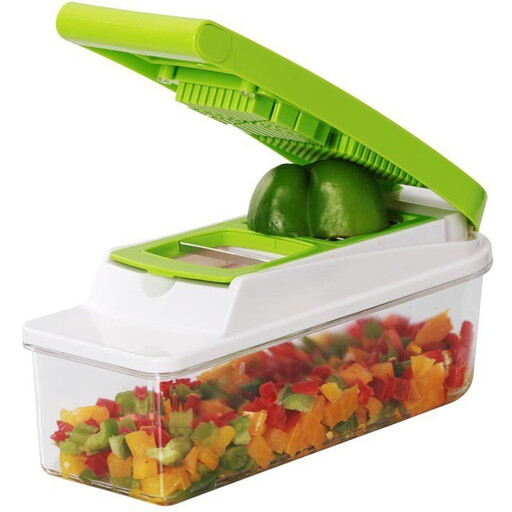
Why it suits this user: The set combines five cutting techniques with a collection container and is designed for everyday preparation of ingredients such as cucumber, onion, carrot and cheese.
The features are clearly described, and the collection container helps keep loose ingredients together. According to the description, it should be cleaned with a damp cloth.
10 pieces, stainless steel cutting blades and a compact size of 31,2 × 11,5 × 14 cm.
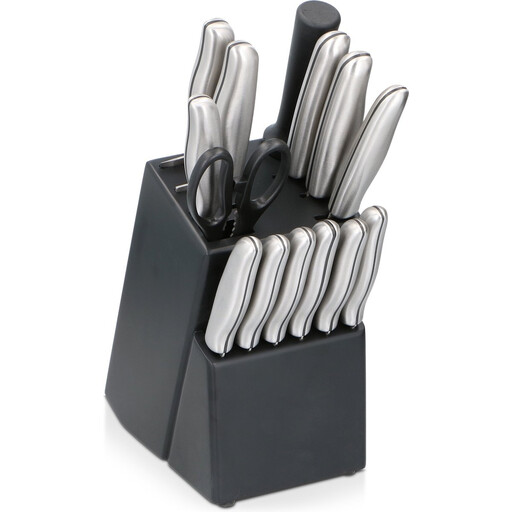
Why it suits this user: If you do a range of cutting tasks, this set gives you 13 knives, a pair of scissors and a knife block for tidy storage.
Each knife has its own place, avoiding loose storage in a kitchen drawer. Do check you have enough room for the block.
A 15-piece set, stainless steel knives and an included knife block.

Why it suits this user: This stand mixer combines mixing, kneading, whisking, grinding and blending. It’s a good fit for households that regularly make dough, sauces or mince.
The product description lists the functions, bowl capacity and 8 speeds separately. Use only approved attachments and follow the safety instructions.
Up to 1300 W according to the product information, a 6.5-quart bowl and a tilting head with a safety lock.
We’ve put together a complete, up-to-date list of products that meet these strict selection criteria and the applicable European safety requirements.
Start with tools you use several times a week: a good knife, a grater, a vegetable slicer or a manual chopper. If you bake, a stand mixer and measuring cups are useful additions. It’s better to choose a few products that suit your needs than a large set with lots of unused parts.
Not always. Stainless steel knives or blades may be part of a product that the manual says must be washed by hand. For example, the Alpina Multi Grater isn’t recommended for the dishwasher, while the Alpina kitchen scissors are described as dishwasher-safe. Always check the care instructions for each product.
Lifespan depends on the material, how often you use the tool, how you clean it and how you store it. Sharp parts wear out more quickly if they’re used incorrectly or come into contact with hard surfaces. Electrical appliances should be used within the limits set for domestic use and must not be overloaded. According to the product information provided, the products mentioned come with at least the statutory two-year warranty; additional rights may apply under relevant Dutch law.
