
Vandaag of morgen in huis

Kwaliteit gegarandeerd

Welkomstaanbiedingen ontgrendelen: GRATIS bezorging | Tot 80% korting | Gratis 30 dagen JoyPlus-proefperiode
Download de app
A kitchen strainer may seem like a simple kitchen accessory, but the wrong model can quickly become frustrating. A strainer that doesn’t fit your sink properly, a fine filter that clogs straight away or a metal rim that’s difficult to clean: these problems often arise when you focus only on the price or product photo.
There are three common pitfalls to watch out for in UK homes:
Do you mainly use a strainer for vegetables, pasta or rice? If so, you’ll need a different type from one designed to keep food scraps out of the drain. A colander and a sink strainer may look similar, but they’re designed for different purposes.
A colander or extendable colander usually sits over the sink. It’s designed for washing vegetables, fruit, pasta or crockery and draining water. A sink strainer, sink filter or kitchen drain filter is placed in or over the drain to catch food scraps.
So, consider the design:
A drain strainer isn’t a substitute for routine drain maintenance. Empty the filter regularly and rinse the sink after use.
Measure the sink opening and the space between the edges before you buy. For example, a round strainer with a diameter of 8 cm won’t necessarily fit every drain. For an extendable colander, check the minimum and maximum width. A product description may say it’s suitable for several sizes, but the exact measurements still matter.
An extendable model is often practical for compact flats and rented homes. You can fold it away after use or rest it on the edge of the sink. Just make sure the support edges sit securely when it’s holding wet vegetables or crockery.
For an stainless steel kitchen strainer, it’s worth checking whether the product is specifically described as stainless steel and what finish it has. Some models, for example, are described as being made from 304 stainless steel, also known as 18/8. This is verifiable material information, but it doesn’t automatically mean that every part of the product is stainless steel.
Also look out for:
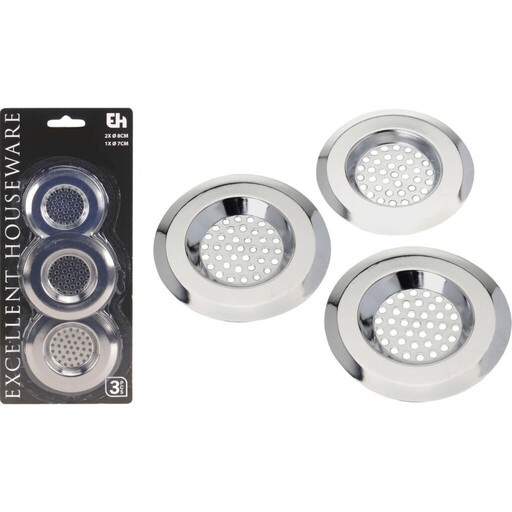
Why it suits this profile: A set of three is practical if you have several sinks or want to keep a spare handy.
The product information gives a diameter of 8 cm, so you can check this against your drain before buying. The set contains three filters.
According to the product description, the filters are dishwasher-safe and made from stainless steel. The pack contains 3 pieces.

Why it suits this profile: This model is designed for anyone looking for a reusable colander for washing, draining and temporary storage.
The adjustable design means you’re not limited to one fixed width. Check the dimensions of 42,6 × 21 × 6,9 cm against your sink.
According to the product description, the model is made from 304 stainless steel, has evenly spaced openings and is dishwasher-safe.
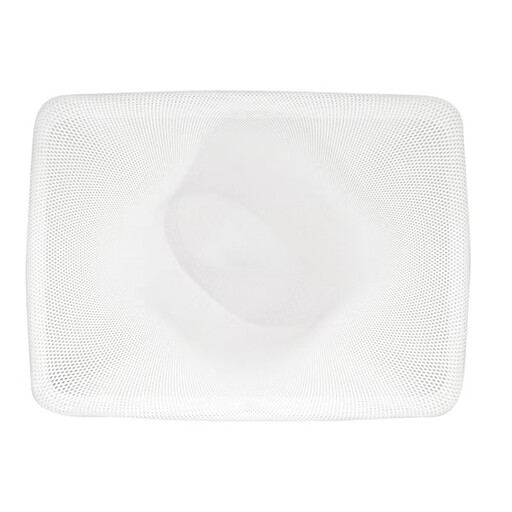
Why it suits this profile: This fine-mesh strainer is for anyone who regularly filters tea, coffee, stock, sauces or small ingredients.
This isn’t a universal drain filter, but a hand-held strainer with fine mesh and a handle. That makes it clear what it’s designed for.
According to the product description, the strainer has a fine mesh, a handle and a stainless steel construction. The description also states that it’s dishwasher-safe.
We’ve put together a full, up-to-date list of products that meet these strict selection criteria and the applicable European safety requirements.
Kitchen strainer is a broad term for tools used to strain ingredients or liquids. A sink strainer or drain strainer is specifically designed to keep food scraps out of the drain. When buying, check whether the product sits on the edge of the sink or fits into the drain opening.
Remove food scraps straight after use and rinse the strainer with warm water. Use a soft brush to clean holes or mesh. If the product description says the model is dishwasher-safe, you can follow that guidance. Dry stainless steel parts thoroughly to help prevent moisture from lingering.
Its lifespan depends on the material, how heavily it’s used and how well it’s cared for. A reusable stainless steel kitchen strainer may be suitable for long-term everyday use, while filter bags are intended to be replaced. Replace a strainer if the mesh becomes misshapen, the edges are damaged or the filter no longer sits securely in the drain.
