
Vandaag of morgen in huis

Kwaliteit gegarandeerd

Welkomstaanbiedingen ontgrendelen: GRATIS bezorging | Tot 80% korting | Gratis 30 dagen JoyPlus-proefperiode
Download de app
A kitchen slicer can process bread, meat, cheese, vegetables and fruit more quickly and evenly. However, an expensive appliance is not automatically practical for your kitchen. Some models take up a lot of space, while others have a limited cutting thickness or are difficult to clean.
The right choice depends on what you want to slice every day, how much control you need and how often you take the appliance out of the cupboard.
A multifunctional vegetable slicer with several blades may seem appealing. In practice, attachments sometimes remain unused in a drawer. So check in advance which cuts you really need: slices, strips, grating or coarse shredding.
For occasional use, a mandoline slicer, kitchen grater or simple vegetable slicer may be sufficient. If you regularly prepare large quantities, an electric machine may be more suitable.
“Adjustable cutting thickness” tells you very little if the range is not specified. For bread and meat, the difference between thin slices and thicker cuts is important. Also check whether the setting is easy to read and remains stable during use.
A bread slicer with a range of 0 to 15 mm is suitable for thin to medium-thick slices. Other models go up to 20 mm, giving you more flexibility for bread, fruit, vegetables and cold meats.
A sharp blade requires a stable surface, a good food holder and clear controls. For electric models, a safety switch and an interruption function are practical features to look out for.
Also check which parts can be removed. A detachable carriage or removable blade makes cleaning easier. A machine that is difficult to clean after every use is likely to be used less often in many households.
The cutting thickness determines how versatile an electric meat slicer or bread slicer is. A low setting is useful for thin bread, cheese and cold meats. A thicker cut may be preferable for firm loaves of bread or vegetables.
According to the product information, the FRITEL SL 3110 has a blade diameter of 17 cm and an adjustable cutting thickness from 0 to 15 mm. The Ritter Sono¹ specifies a cutting thickness of up to 20 mm and a cutting path of 18 cm.
A larger blade or longer cutting path does not automatically mean that every product is suitable. Always check the instructions and the maximum dimensions of the food.
Stainless steel is often used for blades and graters. This is practical for everyday kitchen work, but maintenance remains important. Dry metal parts after cleaning and avoid soaking them for long periods if the instructions advise against it.
A cheese grater or kitchen grater with stainless-steel cutting surfaces is suitable for cheese, vegetables and fruit, depending on the shape of the grating surface. A collection container helps catch ingredients directly and reduces mess on the worktop.
Motor power and controls are relevant when choosing an electric knife slicer or electric meat slicer. The FRITEL SL 3110 has a geared motor with an output of 100 W. According to the product description, the Ritter Sono¹ uses an ECO motor and has a momentary and continuous switch.
A food chopper works differently from a slicer. The Kenwood Easy Chop+, for example, has a 600 ml glass bowl, two speeds and a four-part stainless-steel blade system. This makes it suitable for chopping, not for producing even slices like a slicer.
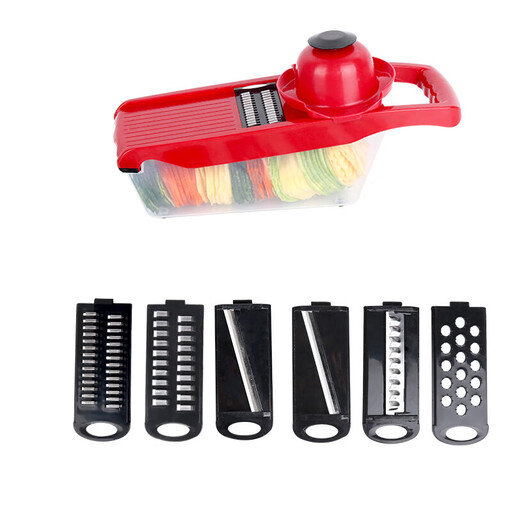
Why it suits this profile: A compact manual option for anyone who wants to slice vegetables without immediately buying an electric appliance.
The collection box makes use more organised. Before buying, check which blade inserts and cutting shapes are actually included.
Manual operation and a collection box; suitable for preparing vegetables every day.

Why it suits this profile: For households that regularly slice bread, cheese, meat, fruit and vegetables to different thicknesses.
The product description specifies a detachable carriage, safety glass and a cutting thickness of up to 20 mm. This makes maintenance and adjustability easier to assess in advance.
Cutting thickness of up to 20 mm; detachable carriage; suitable for several types of food according to the product information.
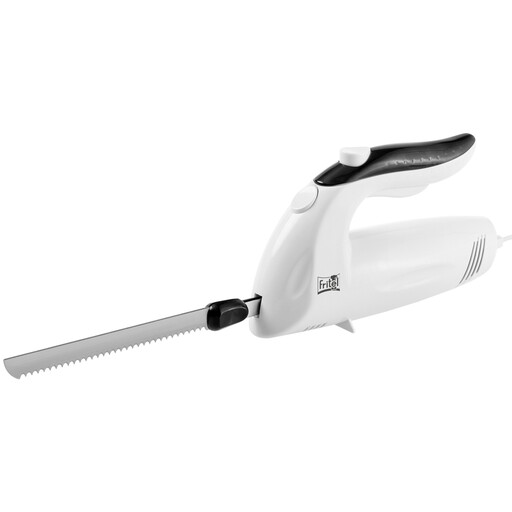
Why it suits this profile: For anyone who mainly wants to slice roasts, baguettes, frozen foods or firm vegetables such as cabbage.
The set includes two blades and a double safety switch. Unplug the appliance before removing or cleaning the blades.
Two interchangeable blades; ergonomic handle; suitable for left- and right-handed use according to the product description.
Choose an electric meat slicer when you often make several slices in succession and want a consistent cutting thickness. An electric knife is more practical for large pieces, bread or frozen foods, but it works differently from a machine with a carriage.
A vegetable slicer with a collection container is useful for salads, potatoes and onions. For small quantities, a kitchen knife is sufficient as long as you work safely and carefully. A four-sided box grater, such as the PLYS stainless-steel grater, offers several grating and cutting surfaces without a motor or cable.
Consider the storage space available. A foldable electric meat slicer, such as the FRITEL SL 3110, can be practical in a smaller Dutch kitchen. The product information also specifies a child-safe on/off switch, removable blade and detachable carriage.
According to the product information, some of the products mentioned are covered by a minimum of two years’ statutory warranty in the EU. Check the current terms and conditions with the product and seller.
We have put together a complete, up-to-date list of products that fully meet these strict selection criteria and the applicable European safety regulations.
It can be, but not every model is designed for this purpose. Check whether the manufacturer lists bread as a suitable use and look at the type of blade. A serrated blade is often used for bread; always follow the product instructions.
A low setting is useful for thin slices of bread. A range of 0 to 15 mm offers several options for everyday bread, cheese and cold meats. If you also want to make thicker slices, consider a model with a range of up to 20 mm.
A manual vegetable slicer does not use electricity and generally has fewer parts that can wear out. An electric model mainly saves time when preparing larger quantities. So do not compare only the purchase price; also consider cleaning, storage and how often you will actually use the appliance.
