
Vandaag of morgen in huis

Kwaliteit gegarandeerd

Welkomstaanbiedingen ontgrendelen: GRATIS bezorging | Tot 80% korting | Gratis 30 dagen JoyPlus-proefperiode
Download de app
A kitchen slicer can be handy for fresh bread, cheese, cold meats, cucumber or potatoes. However, not every model is suited to the same task. A compact mandoline slicer works differently from an electric slicer, while a specialist chip cutter or cheese slicer serves a completely different purpose.
The right choice therefore starts not with the appearance or the number of accessories, but with how you intend to use it. Pay particular attention to these common pitfalls.
A multi-functional slicer with several blades may seem appealing. In practice, loose attachments can be difficult to store or may be less suitable for hard vegetables. So check which cutting techniques are actually mentioned: slices, julienne, grating or strips. A collection tray is also practical for gathering sliced ingredients straight away.
With an electric slicer, blade diameter, drive mechanism and slice thickness are more important than just the wattage. A blade that is too small can be less practical for large loaves of bread or pieces of meat. The difference between a serrated and a smooth blade is also relevant: a serrated blade is primarily intended for bread, whereas a smooth blade is often used for cold meats and cheese.
A kitchen slicer has sharp parts. A hand guard, food pusher, non-slip feet and a stable surface are therefore not unnecessary details. With electric models, you should also look for a safety switch, an easily accessible plug and parts that are removable according to the product information.
What's more, an appliance that is difficult to clean can quickly end up unused in a cupboard. Check beforehand whether the blade, carriage or collection tray can be easily removed and whether the manufacturer recommends hand washing or another cleaning method.
The desired thickness depends on the application. For sandwich slices, a thicker setting can be pleasant, whereas carpaccio-style slices or thin cheese require a smaller setting. Not every vegetable slicer has precise adjustment. With electric models, the setting is often chosen using a dial.
Pay attention to the specified range. The Fritel SL 3070, for example, states a slice thickness of 0 to 15 mm. The Fritel SL 3710 goes up to 20 mm according to the product specifications, while the ritter serano⁷ states a range of up to 23 mm. These are verifiable product specifications, but they don't on their own tell you how each ingredient will cut in practice.
Stainless steel blades are a common choice for kitchen slicers. Also look at the shape:
A stainless steel slicer is not automatically maintenance-free. Dry metal parts thoroughly after cleaning and follow the manufacturer's instructions.
Measure the available space on your worktop and in the cupboard. A bread slicing machine with a foldable housing can be attractive for a smaller kitchen. A larger model may offer more cutting space, but also takes up more room.
Also check the feet, the weight and the carriage. A lightweight manual vegetable slicer is easy to store, but must remain stable during use. An electric meat slicer or slicer for bread, meat and vegetables requires a stable, dry surface.
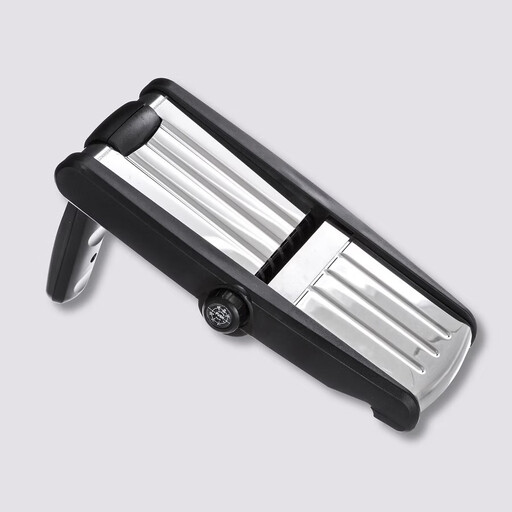
Why this fits the profile: This manual model is compact and has three blades. It suits those who want to try out different cutting techniques first without setting up an electric appliance.
The product information specifically mentions three blades and stainless steel, rather than just a general multi-functional label.
Stainless steel blades, compact size of 23.5 x 13 x 5 cm and a weight of 360 grams.

Why this fits the profile: This electric model is aimed at users who regularly slice bread, cheese and meat in different thicknesses.
The description mentions a serrated blade for bread and a smooth blade for meat and cheese, plus electronic speed control.
Slice thickness up to 23 mm, a cutting path of 24 cm and a collection tray according to the product description.
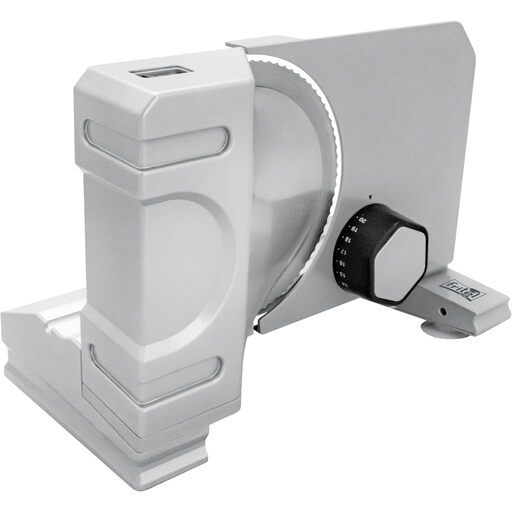
Why this fits the profile: Suitable for households looking for one electric slicer for bread, cheese, charcuterie, vegetables and meat.
The specifications mention a 15° tilted carriage, non-slip feet and a food holder. Stability and hand protection are therefore clearly taken into account.
Slice thickness from 0 to 20 mm, blade diameter of 190 mm and removable carriage and collection tray.
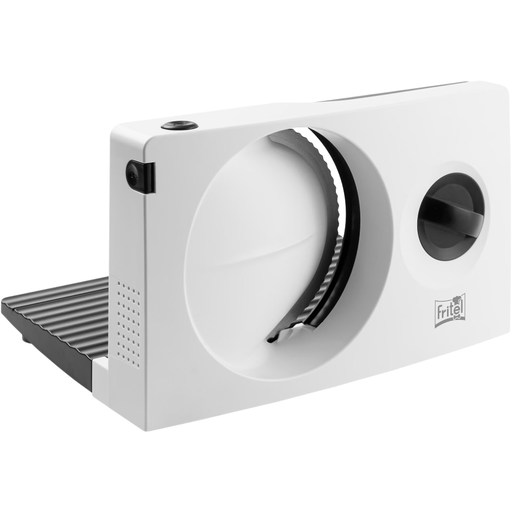
Why this fits the profile: This model focuses on slicing bread and is handy for anyone looking for a compact bread slicing machine that can be stored away.
The product information mentions a child-safe on/off switch, foldable design and a removable serrated cutting disc.
Slice thickness from 0 to 15 mm, a serrated stainless steel blade and a crumb tray.
A manual vegetable slicer is usually suitable for smaller quantities and simple preparations. Think of cucumber, carrot, potato or onion. A separate chip cutter makes more sense when you mainly want to make potato strips. For butter or cheese, a specific cheese slicer can be more practical than a general slicer.
An electric slicer is more interesting when you often slice bread, cold meats and cheese. Bear in mind power consumption, cleaning and storage. Also check the usage duration in the instruction manual. The Fritel SL 3710, for example, states that the motor should not be used for longer than ten minutes continuously, followed by a cooling-down period.
For raw and cooked ingredients: clean blades, carriage and collection tray after use according to the instruction manual. Always use the food pusher and never touch a blade when the appliance is still plugged in.
We have compiled a full, up-to-date list of products that fully meet these strict selection criteria and comply with current European safety regulations.
Choose an electric model with an adjustable slice thickness, a stable carriage and a food holder. A serrated blade is practical for bread. If you also want to slice meat and cheese, look for a model with a smooth blade or a suitable universal cutting disc.
It can be, as long as you use the hand guard and place the slicer on a stable surface. Never push food with bare fingers along the blade. Only clean the part after you have safely removed and stored it.
The cost depends on the motor power and the duration of use. An appliance of 100 or 150 watts uses relatively little electricity for short periods. What often matters more is how often you use the appliance, how long the motor can run continuously and how much time cleaning takes. So check the product specifications and usage instructions before purchasing.
