
Vandaag of morgen in huis

Kwaliteit gegarandeerd

Welkomstaanbiedingen ontgrendelen: GRATIS bezorging | Tot 80% korting | Gratis 30 dagen JoyPlus-proefperiode
Download de app
A kitchen slicer can save you a lot of time when preparing bread, meat, cheese and vegetables. However, not every model is suitable for every task. An electric bread slicer works differently from a mandoline or chip cutter. If you focus only on the price or the number of features, you could end up with an appliance that’s difficult to clean, not stable enough or left unused in the cupboard after a few uses.
This buying guide helps home cooks, keen cooks and households compare the most important differences.
A multi-purpose vegetable slicer with different blades may seem handy, but first consider which tasks you actually need it for. A vegetable slicer for cucumber, carrots and onions isn’t automatically suitable as a bread or meat slicer. For chips, the size of the cutting grid and the appliance’s stability matter more than a large number of separate accessories.
Some products offer only a few fixed settings. If you want to slice thin pieces of cheese, thicker slices of bread or evenly cut pieces of meat, look for a continuously adjustable slicing thickness. Check the range, too. A setting from 0 to 15 mm is suitable for many everyday tasks, while models that go up to 20 mm offer more flexibility for bread and larger ingredients.
A sharp blade, a slippery worktop and no food pusher make for an impractical combination. Check whether the kitchen slicer has a food holder, finger guard, non-slip feet or a stable carriage. On electric models, you should be able to remove the blade with the appliance unplugged. A dishwasher-safe part is handy, but always follow the manufacturer’s specific care instructions.
Wattage isn’t everything, but it does give you an initial indication. According to the product information, the Fritel SL 3655 has a 160-watt motor with gear drive. The Fritel SL 3710 is listed at 150 watts and also has a gear drive. The Severin AS 3915 has a power rating of 180 watts.
A compact model is often enough for occasional bread or cheese slicing. For longer slicing sessions, a metal housing, stable feet and a motor with suitable cooling matter more than a higher wattage alone. For some models, also check the recommended operating time and required cooling period.
A larger blade can be useful for wide loaves or larger pieces of meat. The Fritel SL 3655 has a 17 cm serrated stainless steel blade. The SL 3710 has a 19 cm blade. A serrated blade is handy for crusty bread and cured meats, while a smooth blade is often better for thin slices of meat or cheese.
A product with one all-purpose blade can save space. If you regularly slice different foods, check whether an additional smooth or serrated blade is included.
A stainless steel slicer or a model with metal parts can feel solid, but check the carriage, end plate and feet as well. A metal housing helps with stability, while a plastic food pusher can make the appliance comfortable to use.
For manual tools such as a potato cutter, kitchen grater or mandoline, food-safe stainless steel is a practical material. According to the product information, the PURECOOK set is made from 304 stainless steel and has a straight and a serrated side. Always check that sharp parts can be stored safely and put away completely dry after washing.
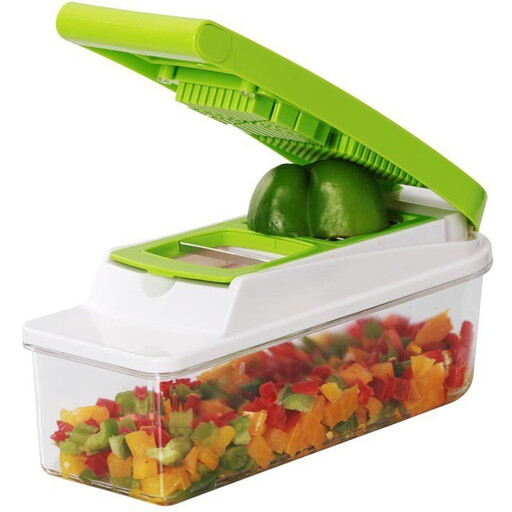
Why it suits this type of user: This set is designed for everyday vegetable slicing and includes five cutting methods, a collection container and ten pieces in total.
Its uses are clearly described, including slicing and grating vegetables. That means it isn’t an all-purpose appliance with unclear capabilities that you’re also expected to use for bread or meat.
Five cutting methods, a 0.3-litre collection container and stainless steel blades.

Why it suits this type of user: This model is designed for people who regularly slice bread, meat, cheese and vegetables, and value a metal construction and a wide range of settings.
The product information lists an adjustable slicing thickness of up to 23 mm, a removable carriage and a large cutting surface. This means you can check the specifications rather than relying on marketing claims alone.
All-metal construction according to the product description, electronic speed control and two different blades.
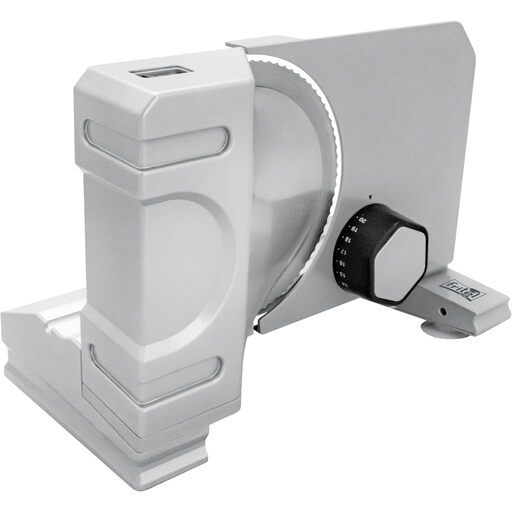
Why it suits this type of user: With a 19 cm blade, a slicing thickness of 0–20 mm and an angled carriage, this model is well suited to households that regularly prepare large quantities of bread, sliced meats or cheese.
The product information lists a food holder, pulse switch and continuous operation setting. The manual also states that the appliance shouldn’t run for more than ten minutes at a time.
Adjustable slicing thickness of 0–20 mm, 190 mm blade, metal parts and non-slip feet.
If you’re mainly looking for a potato cutter or chip cutter, the Excellent Houseware Potato Cutter is a simpler alternative. This manual model is made from plastic and stainless steel, measures 26 × 13,5 cm and, according to the product information, isn’t dishwasher-safe. That makes it suitable for occasional use, but less so if you’re looking for an electric slicer for a range of ingredients.
We’ve put together a complete, up-to-date list of products that meet these strict selection criteria and the applicable European safety regulations.
When used normally by consumers, electric models are covered by the statutory warranty of at least two years. Keep your proof of purchase and contact the retailer first if a fault develops.
Choose a model with a serrated blade for bread and check whether a smooth blade is included for meat and cheese. An adjustable slicing thickness of up to 20 mm gives you more flexibility than a few fixed settings.
Energy use depends on the power rating and how long you use the appliance. A 150 to 180-watt model uses relatively little electricity during short periods of daily use. The purchase price, cleaning and any replacement blades often have a greater impact on the overall cost.
Its lifespan depends on how often you use it, how well you maintain and store it, and the types of food you slice. A metal housing, replaceable blade, stable carriage and correct cooling time can be useful for regular use. Before buying, also check whether spare parts are available.
