
Baker making small batches of dough
You mainly weigh out a few grams of salt separately. Check the scale’s increments at the total load, including the dish.


For small amounts of salt, the key factor is the scale’s increments at the total weight you’re measuring. Beurer states that the KS 36 reads in 0.1 g increments up to 500 g, while the Tanita KD-321’s shared manual indicates that it may switch to larger increments from a total load of 300 g. If you also weigh flour or other larger quantities, compare the platform size and capacity too: Ooni specifies separate platforms for small and large amounts. A stated increment is not the same as an independent accuracy test.
You mainly weigh out a few grams of salt separately. Check the scale’s increments at the total load, including the dish.
You want to weigh both salt and flour, or larger quantities. The weight of your bowl and the capacity of each platform determine what’s practical.
You’re looking for a scale that fits with your dish and is easy to put away after baking and clean according to the instructions.
| What to consider | What to look for | Who is this important for? |
|---|---|---|
| Small amounts of salt | Check the increments at the total load and see whether a minimum detectable weight is specified. | If I’m weighing just a few grams of salt, I want to know how finely the scales read with the weight of my dish on them; an estimated 33% of consumers prioritise weighing small amounts of salt. |
| Salt and larger ingredients | Check the capacity, including the bowl, and the increments at that load. If there are two platforms, compare the limit for each. | If I want to weigh salt and flour with one appliance, my bowl needs to be within the usable range; an estimated 27% of consumers mainly want to weigh both small and larger amounts on one appliance. |
| Use and care | Compare the platform dimensions with your dish and read the cleaning instructions for the specific model. | If I’m short on space, I want my dish to sit steadily and the display to remain easy to read; an estimated 20% of consumers mainly focus on positioning, ease of use and care. |
| Using the scales and aftercare | Check what power supply is required and what warranty terms apply alongside your statutory rights. | If I buy a set of scales, I want to know what I need before using them and who to contact if they develop a fault; an estimated 20% of consumers mainly consider the purchase, power supply and aftercare. |
The increment tells you how finely the display shows the weight. It isn’t the same as an independent test of the model’s accuracy.
Check the increments at the load you plan to weigh. If accuracy is essential, look for independent test results for the exact model.
On some models, the increments change as the total load increases, or differ between platforms.
Compare the range for weighing salt separately with the range for flour or a full bowl.
Tare resets the display to zero, but the bowl’s weight still counts towards the total load.
Include the bowl when checking the range. If necessary, use a lighter dish or a separate small platform.
A removable or splashproof part doesn’t automatically mean the whole appliance can get wet.
Read the care instructions for the platform and housing before you buy.
The KS 36 is designed for weighing salt separately in a small dish.
Tanita says the KD-321 combines a removable platform with a precision-weighing mode.
Ooni describes its Dual Platform Digital Scales as having separate platforms for smaller and larger quantities.
TIMEMORE describes the Basic 2.0 as coffee scales that can also be used for baking.
The KD-8000 is an option for larger quantities and baking with baker’s percentages.
This selection includes digital kitchen and coffee scales. Check that each model’s increments and capacity are suitable for the amount of salt you want to weigh.
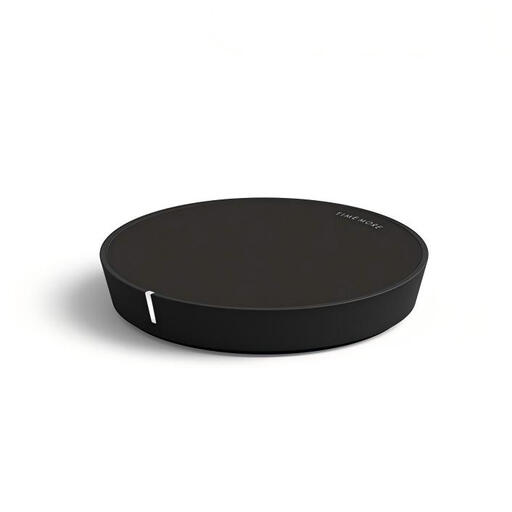 No image available
These coffee scales are designed for people who also weigh coffee. For salt, check the increments and minimum detectable weight at the amount you plan to weigh.
The product name mentions a timer, water flow and coffee-to-water ratio functions, and switching between ounces and kilograms.
 No image available
These digital coffee scales may suit anyone looking for one set of scales for coffee and other small weighing tasks. Check the specifications for weighing salt separately.
The product name mentions a timer, water flow and coffee-to-water ratio functions, and switching between ounces and kilograms.
 No image available
These kitchen scales are designed for general kitchen use. Check that the platform and increments are suitable for weighing salt in a small dish.
The product name mentions a four-point sensor and timer.
 No image available
These scales are listed for kitchen and coffee use. Check that the increments at the total load are suitable for the amount of salt you want to weigh.
The product name specifies 0.1 g and a maximum of 3 kg. Check how the increments apply across the full range.
 No image available
These kitchen scales are an option for general kitchen use. Check that your dish sits securely on the platform.
The product name lists dimensions of 17 × 13 × 2 cm.
Scale the salt in your own recipe in proportion to the flour weight. As a guide, King Arthur Baking generally suggests 1.8–2% salt by flour weight for bread dough; with 200 g of flour, that works out at 3.6–4.0 g. Check that the scales read finely enough at that amount with your dish on them.
No. Tare resets the display to zero, but the bowl still counts towards the total load. The shared manual for the Tanita KD-321 specifies a change from a total load of 300 g; a lightweight dish may help you stay below that limit.
Follow the instructions for the exact model. For the Dual Platform Digital Scales, Ooni recommends cleaning with a dry cloth and says the appliance must not be put in the dishwasher or submerged in water. The removable platform on the Tanita KD-321 does not mean the whole set of scales can be submerged.
Contact the seller if the product develops a fault. According to the Dutch government, goods must meet the statutory requirements for a product of satisfactory quality, in addition to any manufacturer’s warranty; there is no fixed statutory warranty period in the Netherlands.
The Dutch Authority for Digital Infrastructure describes legal verification requirements for certain uses, including commercial transactions and setting a selling price. That is different from private home baking; this buying guide does not assess whether a model can be used to sell goods by weight.