
Anyone weighing small portions of seeds
If you weigh seeds in separate small quantities, check which graduation suits the portions you want to make. The stated graduations vary by model and are manufacturer specifications.


For small, individual portions of seeds, a fine graduation can be useful. If you weigh ingredients one after another in a bowl, tare and sufficient capacity matter more. According to Tanita, the Tanita KD-321 has a stated graduation of 0.1 g and a capacity of up to 3 kg, while the Brabantia and Beurer models mentioned have 1 g graduations and a capacity of up to 5 kg. A displayed graduation is not the same as independently verified measuring accuracy: the Consumers' Association assesses deviation and consistency separately.
If you weigh seeds in separate small quantities, check which graduation suits the portions you want to make. The stated graduations vary by model and are manufacturer specifications.
If you add ingredients one after another to a single bowl, check for a tare function and make sure the bowl and full batch stay within the stated maximum capacity.
If several people use the same workstation, compare how easy the weighing surface is to clean and check that the display and buttons are easy to see and use while you work.
Start with the combined weight of the bowl and ingredients. Then compare the graduation with the smallest portion you want to weigh. Finally, consider how practical the scales will be to clean and read at a shared workstation.
| What to consider | What to look for when buying | Who is this important for? |
|---|---|---|
| Weighing small portions | Compare the stated graduation and the capacity range over which it applies. A finer graduation is not proof of independently measured accuracy. | If you want to weigh separate small quantities of seeds, a fine graduation will matter more to you. Around 33% of consumers in this workshop scenario make small portions their top priority. |
| Weighing ingredients in one bowl | Check that the scales have a tare function and that the bowl and full batch stay within the maximum capacity. | If you want to add ingredients one after another to the same mixing bowl, tare and sufficient capacity are essential for the way you work. Around 27% of consumers make this their top priority. |
| Cleaning when the scales are shared | Compare a wipe-clean surface with a removable platform, and follow the cleaning instructions for the exact model. | If participants share the scales, you’ll want to be able to clean the surface between weigh-ins in line with the instructions. Around 20% of consumers prioritise cleaning when the scales are shared. |
| Display and controls | Check whether the display remains visible with the bowl you plan to use, and whether the backlight and buttons suit the workstation. | If participants need to use the display and buttons easily while weighing, check how visible they are from the working position. Around 20% of consumers make readability and ease of use their top priority. |
The displayed graduation alone doesn’t tell you how large the measurement deviation is, or how consistent repeated measurements are. The Consumers' Association explains that these characteristics are assessed separately.
If you need a small margin of error, compare the product specifications with independent test results for the exact model.
The bowl contributes to the total load. Tare deducts the bowl’s weight from the reading, but it doesn’t increase the maximum capacity.
Before choosing a model, compare its stated maximum capacity with the combined weight of your bowl and full batch.
If the measured weight determines the sale price, the Dutch Authority for Digital Infrastructure says that trading scales must meet specific requirements. This is different from weighing ingredients for a recipe.
Check whether your workshop involves only weighing ingredients or also selling products by weight. If you’re selling by weight, find out what suitability requirements and markings the scales need.
The KD-321 is worth comparing if you want to weigh small portions and also need a tare function.
The Tasty+ Dark Grey is an option to compare for a shared worktop where a backlit display and a stated capacity of 5 kg are important.
The KS 19 Fresh is a straightforward option to compare, with tare, 1 g graduations and a stated capacity of up to 5 kg.
This selection includes digital coffee and kitchen scales. Check each model to make sure its listed features and stated capacity suit weighing seeds and using a mixing bowl.
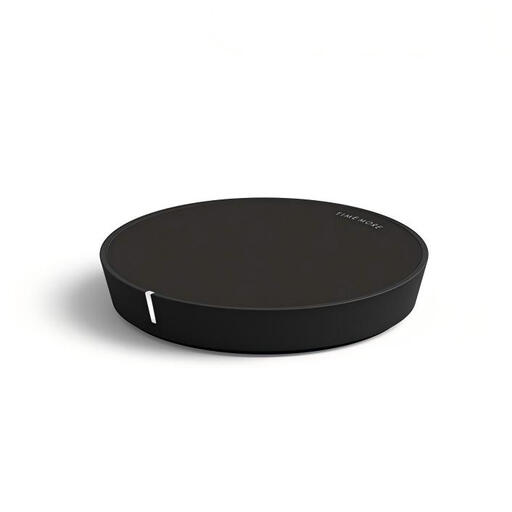 No image available
The product title mentions use for espresso and pour-over coffee; check whether this suits your workshop.
The title lists coffee-to-water ratio, water flow rate and timer functions, with switchable ounce/kg units.
 No image available
The product title mentions use for espresso and pour-over coffee; check whether this suits your workshop.
The title lists coffee-to-water ratio, water flow rate and timer functions, with switchable ounce/kg units.
 No image available
The stated graduation of 0.1 g may be useful if you want to weigh small portions; the graduation alone doesn’t prove independent measuring accuracy.
The product title lists a maximum capacity of 3 kg, a tare function, timer, rechargeable power and a heat-resistant platform. Keep the bowl and contents within the stated maximum capacity.
 No image available
The description lists tare and a maximum capacity of 5 kg, which may be useful if you weigh ingredients one after another in a bowl.
The description mentions an LCD screen with large numbers. Check that the screen remains visible from your workstation when you use your bowl.
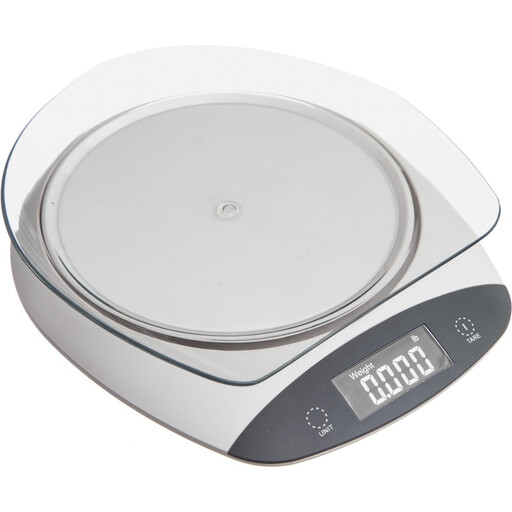 No image available
The removable bowl may suit a way of working where you want to fill or clean the weighing container separately.
The product information lists tare and a maximum capacity of 5000 g. Check that the bowl and full batch stay within that maximum capacity.
No, it depends on the size of the individual portions you want to weigh. The Netherlands Nutrition Centre’s granola recipe includes 75 g of broken linseed for 15 portions, among other ingredients; finer graduations may be useful for smaller portions. The displayed graduation alone doesn’t prove how accurately the scales measure.
Place the scales on a stable surface, add a clean bowl and use the tare function. Keep the bowl and contents within the stated maximum capacity. Follow the cleaning instructions for the exact model. The Netherlands Nutrition Centre recommends washing used kitchen utensils thoroughly; this doesn’t mean that any particular model is dishwasher-safe.
For a faulty product, the seller must offer a solution under Dutch government rules, such as a free repair or replacement; a manufacturer’s guarantee doesn’t replace your statutory rights. Online purchases from a business generally come with a 14-day cooling-off period, subject to legal exceptions.
Not for simply weighing recipe ingredients, based on the stated conditions for use from the Dutch Authority for Digital Infrastructure. If you use the measured weight to determine a product’s sale price, the Authority says the scales must meet legal requirements. Check these requirements before using domestic scales to sell products by weight.
This depends on how the workshop is run. The Netherlands Food and Consumer Product Safety Authority says that anyone offering unpackaged food must inform consumers about the allergens it contains. It also explains that catering and artisan businesses that prepare, process or sell food must have an HACCP food safety plan or follow an applicable hygiene code. Kitchen scales are no substitute for these practices.