Who is this for?

Bakers making small batches of dough

You’re scaling down a bread or other dough recipe and want to measure a small amount of salt accurately. King Arthur Baking explains that bakers’ percentages compare ingredients with the weight of the flour, so the amount of salt to weigh will also be smaller for a smaller batch.

Bakers who weigh everything in one bowl

You want to weigh flour, water and salt in the same bowl, resetting the scales to zero in between. Bear in mind the combined weight of the bowl and ingredients, and check that the bowl won’t obscure the display.

Bakers who already own 1g scales

Your existing scales may work well for larger ingredients, while you’re wondering whether a second device would be useful for small amounts of salt. When testing kitchen scales, the Consumers’ Association of the Netherlands noted that many models struggle to show differences of 1 gram; the My Weigh KD-8000 manual specifies 1 g increments.

What should you look for?

What to consider What should you check? Who should pay extra attention?
Small amounts of salt Check the minimum weight and the graduation at the combined weight of the salt and container. If I’m making a small batch of dough, I want to be able to see small differences in the amount of salt. Around 40% of consumers prioritise precise salt measurements.
Weighing everything in one bowl Check the tare function, maximum capacity and graduation at the combined weight of the bowl and ingredients. If you weigh flour, water and salt in the same bowl, you won’t want to keep switching devices. Around 30% of consumers prioritise weighing everything in one bowl.
Adding to your existing scales Check whether your current scales show the salt increment you need; if you’re considering a second model, compare its minimum weight and tare function too. If I already have scales for larger ingredients, I only want to add another device for small amounts of salt if I need to. Around 20% of consumers prioritise complementing their existing scales.
Storage and maintenance Check the platform size, cleaning instructions and power supply for the exact model. If I often use the scales for small amounts, I want them to fit in my available space and be easy to clean according to the instructions. Around 10% of consumers say compact storage and maintenance are the deciding factors.

Common pitfalls

  • Assuming 0.1 g applies at every weight

    According to the manufacturers, the Beurer KS 36 and Hario V60 Drip Scale use coarser increments at higher weights. The weight of the container and its contents affects the range you’re weighing in.

    Compare the graduation at the combined weight of the container and ingredients, rather than looking only at the smallest increment mentioned for the product.

  • Confusing the graduation with proven accuracy

    A display showing tenths of a gram doesn’t, on its own, prove how accurate or repeatable a measurement is. The Consumers’ Association of the Netherlands reports differences in the accuracy and consistency of the kitchen scales in its test.

    Where available, check test results for the exact model and confirm the stated increment for the weight you want to measure.

  • Choosing coffee scales without checking the minimum weight

    The Hario V60 Drip Scale manual gives a measuring range starting at a total weight of 2 g. A timer doesn’t change the minimum weight the scales can measure.

    Check that the salt and container together fall within the stated measuring range.

Brands compared

Beurer

The KS 36 is a precision kitchen scale worth comparing if you want to weigh small amounts of herbs or powders, such as salt.

  • Beurer says the KS 36 has a tare function, a calibration function and a maximum capacity of 2 kg.
  • The product specification sheet lists increments of 0.1 g below 500 g, 0.2 g between 500 g and 1 kg, and 0.5 g between 1 and 2 kg.
  • These are manufacturer’s specifications, not the results of an independent accuracy test; the 0.1 g increment doesn’t apply across the full range.

Tanita

According to Tanita, the KD-321 combines a maximum capacity of 3 kg with a tare function and removable platform, making it a relevant option if you want to weigh several dough ingredients.

  • Tanita lists readings to 0.1 g, a removable platform and splash resistance.
  • ‘To 0.1 g’ doesn’t mean that increment applies at every total weight. Check the weighing range for the exact variant and include the weight of your bowl.
  • The features listed are manufacturer’s specifications, not independent test results.

My Weigh

The KD-8000 is a larger digital baking scale worth comparing if a wide weighing range matters more to you than fine increments for salt.

  • The My Weigh manual lists a capacity of 8000 g and 1 g increments.
  • This specification alone doesn’t prove that the scales can distinguish small amounts of salt.

Hario

The V60 Drip Scale is primarily a coffee scale with a timer, and is most relevant if you also weigh coffee.

  • The manual lists increments of 0.1 g from 2 to 200 g total weight, 0.5 g from 200 to 500 g, and 1 g from 500 to 2000 g.
  • The minimum weight is 2 g for the container and contents combined. Check that your amount of salt, together with the container, falls within the measuring range.

Products at Joybuy

Here you’ll find digital kitchen and coffee scales, as well as a portable hand scale. Compare the features listed for each product and check that its stated use and specifications suit the way you weigh salt.

TIMEMORE Coffee Scale DOT, PINK

TIMEMORE Coffee Scale DOT, PINK

A related option if you also want to use the scales for coffee.

The product name mentions a timer, a water flow function and a coffee-to-water ratio. It also mentions switching between ounce and kg units.

Joybuy

TIMEMORE Coffee Scale Basic 3.0, Black

TIMEMORE Coffee Scale Basic 3.0, Black

These coffee scales are another related option if you also want to use them for coffee.

The product name mentions a timer, a water flow function and a coffee-to-water ratio, as well as switching between ounce and kg units.

Joybuy

5five Digital Kitchen Scale, Stainless Steel, 17 x 13 x 2 cm

5five Digital Kitchen Scale, Stainless Steel

These digital kitchen scales are an option if you want to use a bowl and weigh ingredients on the same scales.

The product information lists a tare function, a range of 1 to 5,000 g and dimensions of 17 × 13 × 2 cm.

Joybuy

TIMEMORE Black Mirror Basic 2 Pour-Over, Black

TIMEMORE Black Mirror Basic 2 Pour-Over, Black

The product description also recommends these coffee scales for kitchen and food preparation tasks.

The product name lists a reading increment of 0.1 g and a capacity of 2.000 g. The product information also mentions a tare function, a timer and a water flow function.

Joybuy
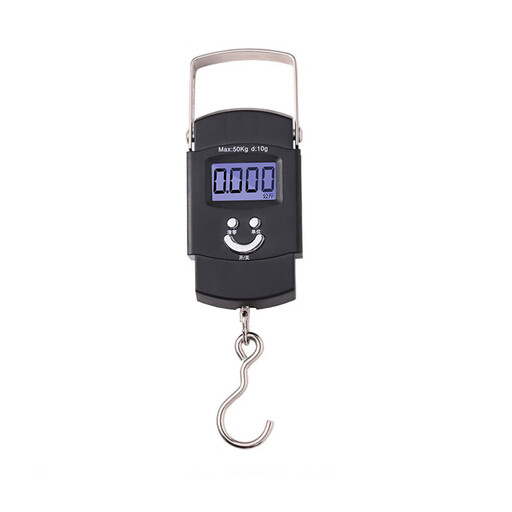
BJ portable hand scale

BJ portable hand scale

The product description recommends this portable hand scale for cooking and weighing with a bag or your own container.

The description lists a tare function and readings in grams or ounces. Check that your container is suitable for the amount you want to weigh.

Joybuy

Frequently asked questions

How do I work out the amount of salt when scaling down a bread recipe?

Calculate the salt percentage in your recipe in relation to the weight of the flour. King Arthur Baking gives 1.8–2% as a typical amount for bread dough; as a worked example, 2% salt for 100 g of flour is 2 g of salt. This isn’t a required percentage for every type of dough or diet.

Does the tare function mean a heavy bowl won’t count towards the maximum capacity?

No. The tare function resets the displayed value to zero, but the bowl and ingredients still sit on the platform together. So check the total capacity and the graduation for that combined weight; the Hario manual specifies increments based on the container and contents together.

How should I use and clean scales for small amounts?

Place the scales on a stable, level surface, add a suitable container, use the tare function and gradually add the salt. Follow the cleaning instructions for your model. In the KD-320/KD-321 manual, Tanita recommends cleaning with a damp cloth and warns against vibrations and significant changes in temperature or humidity.

Do scales for home baking have to meet the requirements for trade weighing?

The EU Directive on non-automatic weighing instruments distinguishes between commercial transactions and other regulated uses, among other things. Using scales for dough at home is not the same as selling a product to the public by weight. Check separately whether a domestic model is suitable if you want to use scales for trade or other regulated measurements.
