
For cooks weighing small amounts of spices
You follow recipes that call for small amounts of spices and want to assess both the weighing increment and the usable range, not just the maximum capacity.


If you often weigh small amounts of curry spices, focus on the display increment at those weights and the space available for your bowl. An increment of 0.1 g does not, on its own, tell you anything about independently verified measurement accuracy. For larger portions or hanging storage, a model with 1 g increments may be more practical.
You follow recipes that call for small amounts of spices and want to assess both the weighing increment and the usable range, not just the maximum capacity.
You want to know in advance how much room the scale takes up when in use and how to store it afterwards.
You want to weigh spices and heavier ingredients on the same scale, so you’ll also want to consider the tare function, space for a bowl and maximum capacity.
Choose this if: you weigh small portions of spices and use a small bowl. Beurer lists 0.1 g increments and an 11.5 × 8.0 cm weighing surface for the KS 36.
Bear in mind: the maximum capacity is 2 kg, and a small weighing increment is not an independent accuracy test.
Choose this if: you want to weigh heavier ingredients as well as spices. Tanita lists a capacity of 3 kg, a tare function and a removable platform for the KD-321.
Bear in mind: according to the manual, the display increment changes in micro mode once the total load reaches 300 g.
Choose this if: easy storage and weighing larger amounts matter more to you than fractions of a gram. Beurer lists a 5 kg capacity for the KS 19 Black; Brabantia describes the TASTY+ as having a hanging loop.
Bear in mind: both models display 1 g increments. The Brabantia TASTY+ is 26.5 cm long, so it may not fit on every narrow worktop.
The product specifications below are from Beurer, Tanita and Brabantia; the Dutch Consumers’ Association treats measurement accuracy as a separate test criterion. The percentages indicate which purchase consideration may be the top priority for consumers in this kitchen scenario.
| What to consider | What to look for when buying | Who is this important for? |
|---|---|---|
| Weighing small amounts of spices | Check the weighing increment at the amount you plan to weigh, the range of any precision mode and the weight of your bowl. | If I want to read small amounts of spices accurately, I look at both the weighing increment and the range with the bowl in place. Around 36% of consumers make precision weighing their top priority. |
| Worktop space and storage | Measure the space available and compare the overall dimensions and weighing surface with your usual bowl. Decide whether flat or hanging storage would work for you. | In a small kitchen, I want to know whether the scale will fit while I’m weighing and where I can put it afterwards. For around 29% of consumers, worktop space and storage come first. |
| Weighing spices and other ingredients | Check the maximum capacity, including the bowl, the increments for small portions and whether there is a tare function. | If I want to use one scale for both spices and larger ingredients, I look at the capacity without losing sight of the finer weighing increment. Around 21% of consumers make versatility their top priority. |
| Tare function, readability and cleaning | Check whether you can reach the buttons with your bowl in place and how the surface can be cleaned. Also check which type of battery it needs. | When I’m cooking, I want to be able to add ingredients by weight and read the display easily. For around 14% of consumers, ease of weighing and cleaning comes first. |
A display increment and independently tested measurement performance are not the same thing. On the Tanita KD-321, the display increment also changes in micro mode when the total load increases.
Check the applicable load range, including the bowl, and consult independent test results if accuracy is essential.
A small appliance may also have a small weighing surface, while a hangable model still takes up worktop space when you’re using it.
Measure the space available and compare the overall dimensions, weighing surface and display position with your own bowl.
The Dutch Government says there is no fixed statutory guarantee period in the Netherlands. Your statutory rights and an additional manufacturer’s guarantee are not the same thing.
Keep your proof of purchase and contact the retailer if the product is faulty.
The KS 36 reviewed here is designed for small amounts; the KS 19 Black is a flatter all-round option.
The KD-321 reviewed here combines a fine display increment with a removable platform.
The TASTY+ reviewed here has a hanging loop, making it a good option if you have a suitable place to store the scale.
This selection includes kitchen scales and coffee scales. For each model, check that the weighing increment, weighing surface and weighing method are suitable for your spices and bowl.
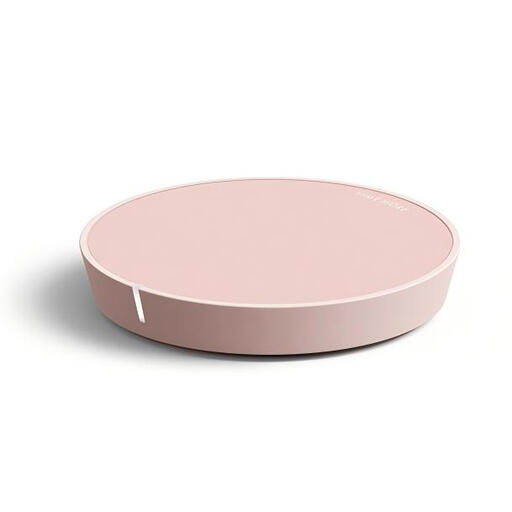 No image available
The fine weighing increment may be useful if you weigh spices in small portions; check that your bowl fits on the weighing surface.
The description lists 0.1 g increments, a capacity of 2000 g and dimensions of 15 × 13 × 3 cm. Timer and tare functions are also mentioned.
 No image available
This model is described as suitable for espresso and pour-over coffee. Check that the weighing surface and controls work for your bowl and how you plan to use it.
The product information lists a ratio function, timer and water flow function.
 No image available
The stated dimensions give you a clear starting point for checking whether the scale will fit on a narrow worktop.
The product information lists dimensions of 17 × 13 × 2 cm, a capacity of 5 kg and a tare function. An LCD screen and automatic switch-off are also mentioned.
 No image available
The listed fine weighing increment may suit small portions; also check that there is enough room for your bowl.
The product information lists 0.1 g increments, a capacity of 2000 g, dimensions of 15 × 13 × 3 cm, a timer and a tare function.
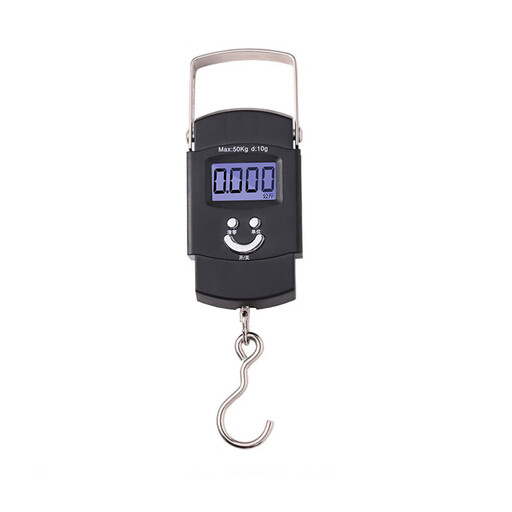 No image available
The product information describes a portable hand scale; check that this way of weighing works for your bowl and worktop.
The description lists an LCD screen, a tare function and readings in grams and ounces.
No. 0.1 g describes a display increment; it does not, on its own, indicate measurement accuracy. The Dutch Consumers’ Association assesses accuracy and repeatability separately. Also check whether any precision mode works with the total weight of your bowl and ingredients.
Place the bowl on the scale and use the tare function before adding any spices. Reset the scale to zero before adding the next ingredient, and keep an eye on the maximum capacity, including the bowl.
Check which type of battery the model needs before buying. According to Brabantia, the TASTY+ reviewed here comes with three AAA batteries. The Dutch Government advises against putting used batteries in general waste. You can return a discarded electrical household appliance to a shop, for example, when buying a similar appliance there.
For weighing curry spices at home, verification for trade use is not a relevant selection criterion. The Dutch Authority for Digital Infrastructure describes verification requirements for certain uses, such as commercial transactions where weight determines the sale price. If you use scales for this purpose, check the rules that apply.
No. According to the Dutch Government, there is no fixed statutory guarantee period in the Netherlands. How long a product should last depends on what you could reasonably expect; if a product is faulty, contact the retailer.