
For cooks weighing small portions
You want to measure small amounts of cornflour in grams and only need a small weighing platform with a suitably sized container.


For small amounts of cornflour, a compact scale with 0.1 g increments may be a good choice, as long as your container fits on the weighing platform and the weight stays within the maximum capacity. If you mainly use larger bowls and 1 g increments are sufficient, a flat kitchen scale with a tare function may be more practical. A finer display increment alone does not prove that a scale is more accurate.
You want to measure small amounts of cornflour in grams and only need a small weighing platform with a suitably sized container.
You want to store the scale flat or hang it up after cooking. You also need to consider how much space the scale and bowl take up together while you weigh.
You want to zero a container or bowl and add ingredients one after another without using extra dishes.
First, consider the smallest portion you want to weigh and how much space you need for your bowl and scale together.
| What to consider | What should you check? | Who should consider this? |
|---|---|---|
| Small portions of cornflour | Check the weighing increments, any minimum weight, the maximum capacity and the dimensions of the weighing platform. If proven accuracy matters, look for test results for the exact model. | If you want to weigh a small amount of cornflour, you’ll want to know whether your container fits and whether the scale is suitable for such a small portion. Around 36% of consumers rank small portions as their top priority. |
| Worktop and storage space | Compare the length, width and height with the space you have available. Also check the weighing platform and whether a hanging option would be useful for you. | If you have limited worktop space, you’ll want to be able to fit the scale in while using it and store it easily afterwards. Space is the top priority for around 29% of consumers. |
| Weighing in one bowl | Check the tare function, the position of the display and whether your bowl and its contents will stay within the maximum capacity. | If you want to weigh ingredients one after another in the same bowl without reaching for an extra dish each time, this is worth considering. Around 21% of consumers rank weighing in one bowl as their top priority. |
| Power and cleaning | Check the battery type or alternative power source, the stated starting point of the weighing range and the cleaning instructions for the exact model. | If you’d rather not use batteries, you’ll also want to know the minimum weight the scale can measure and how to clean it. Power and maintenance are top priorities for around 14% of consumers. |
A display showing increments of 0.1 g or 1 g does not, by itself, tell you how accurately or consistently the scale measures. The Consumentenbond reports that many scales struggle to detect differences of 1 g.
Compare the specifications with the way you plan to use the scale. If accuracy is essential, look for independent test results for the exact model.
Even a flat scale may need a wide weighing platform and space for a bowl while you’re weighing.
Measure the space you have available and the bowl you usually use. Compare these with both the scale’s dimensions and its weighing platform.
According to Brabantia, the Brabantia Tasty+ with dynamo has a stated weighing range starting at 5 g. It won’t suit weighing portions below that limit separately.
Compare the smallest amount you want to weigh with the stated starting point of the weighing range.
Beurer offers a compact model for small amounts and a flatter model with a larger weighing platform.
The Tasty+ is available here as a flat battery-powered digital scale and as a battery-free dynamo model. The two versions have different features.
According to Salter, the Heston Blumenthal Precision Dual Platform Scale has a large platform and a separate precision platform.
HEMA’s digital kitchen scale is designed for general weighing tasks.
A selection of Joybuy products related to this topic. Compare each model’s shape, features and stated dimensions with the bowl you usually use and the worktop space you have available.
 No image available
Its compact dimensions and tare function make it suitable for weighing with a well-fitting container. Check that the weighing platform suits your bowl.
Dimensions: 17 × 13 × 2 cm. Weighing range: 1 to 5000 g; maximum capacity: 5 kg. Batteries required, not included.
 No image available
This is a coffee scale with a tare function. Consider using it for ingredients only if its shape and controls suit your bowl and the way you cook.
The product title states a sensitivity of 0.1 g and a capacity of 2000 g. Dimensions: 15 × 13 × 3 cm. The battery is rechargeable. The product description advises against immersing it in water; clean it with a damp cloth.
 No image available
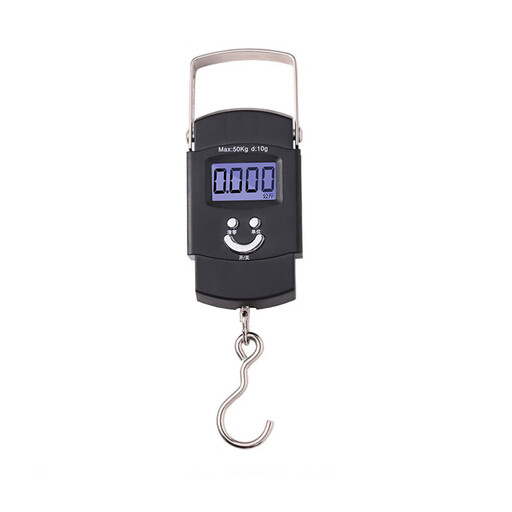
The product name identifies this model as a portable hand scale. Before choosing it, check that its shape and controls are suitable for weighing cornflour in a container.
No. For example, a recipe for vanilla sauce from the Voedingscentrum gives the amount of cornflour in teaspoons. If you want to weigh small amounts in grams, a display with 0.1 g increments offers finer steps than one with 1 g increments. However, this specification alone does not prove that the measurement is more accurate or consistent.
Place the scale on a flat, stable surface, put a suitable container on it and use the tare function to set the scale to zero. Then add the cornflour, making sure the container and its contents stay within the maximum capacity of the model you’ve chosen.
Follow the instructions for the exact model. The product information for the Beurer KS 19 states that this scale is not waterproof: don’t immerse it or put it in the dishwasher. Instead, wipe the surface with a damp cloth and mild cleaning product. Brabantia describes the glass surface of the battery-powered Tasty+ as wipe-clean.
For a standard online purchase, you generally have a statutory 14-day cooling-off period from delivery, although exceptions may apply. ACM ConsuWijzer also explains that your statutory guarantee is separate from any manufacturer’s guarantee. If the product breaks during normal use sooner than you could reasonably expect, the seller is responsible for providing an appropriate solution.
If you’re weighing cornflour for a sauce at home, the scale isn’t being used for a commercial transaction. The Rijksinspectie Digitale Infrastructuur states that scales used for commercial purposes must be accurate. However, a statement about commercial use alone won’t tell you whether a model is convenient for your recipe or worktop.