
Small-batch baker
You want to weigh chocolate in whole grams, then add other ingredients to the same bowl one after another. Brabantia lists 1 g increments and a tare function for the Tasty+.


For chocolate and other ingredients in small batches of biscuits, a digital kitchen scale with a tare function and 1 g increments is enough if your recipe uses whole grams. Choose 0.1 g increments if your recipe calls for tenths of a gram, but check the size of the weighing platform and the maximum capacity too. The Consumentenbond assesses measurement error and consistency separately: a finer scale division alone does not prove greater accuracy.
You want to weigh chocolate in whole grams, then add other ingredients to the same bowl one after another. Brabantia lists 1 g increments and a tare function for the Tasty+.
Your recipe includes quantities under one gram, so you need a scale that displays tenths of a gram. Beurer lists this increment size for the KS 36; also check that your bowl fits on the weighing platform.
You want cleaning to be straightforward after baking. Instructions vary by model; Soehnle, for example, says the Page Aqua Proof can be rinsed under the tap and put in the dishwasher.
Start with the quantities in your recipe: 1 g increments are suitable for weighing in whole grams, while recipes using tenths call for a finer display. Also consider the tare function, bowl size, readability and the cleaning instructions for the specific model.
| What to consider | What should you look for? | Who is this important for? |
|---|---|---|
| Reading small quantities | Compare the displayed increments with the smallest quantity in your recipe. If the weighing platform is small, check that your bowl fits on it too. | If your recipe calls for tenths of a gram, you’ll want to be able to read those quantities; around 36% of consumers give this fine level of readability top priority. |
| Weighing ingredients in one bowl | Check whether the model has a tare function and whether your bowl gets in the way of the display or controls. | If you want to weigh more ingredients in the same bowl after the chocolate, a tare function is an important feature; around 29% of consumers give it top priority. |
| Cleaning up after baking | Read the cleaning instructions for the specific model. Don’t assume it is dishwasher-safe unless this is explicitly stated. | If you want to keep cleaning to a minimum after a small baking session, check what cleaning methods are suitable for the appliance itself; around 21% of consumers prioritise easy cleaning. |
| Display and storage | Check that you can see the display with your usual bowl in place, and that the dimensions and storage options suit your kitchen. | If you want to read the display easily while weighing and need somewhere suitable to store the scale, these features matter; around 14% of consumers prioritise readability and storage. |
The displayed increments and the measurement error or consistency are different things. The Consumentenbond assesses these measurement characteristics separately using standard weights.
Choose the increments to suit your recipe. If proven accuracy matters, compare independent test results.
For the Beurer KS 36, the manufacturer lists a maximum capacity of 2 kg and a weighing platform measuring 11.5 × 8.0 cm. The bowl counts towards the total weight and needs to fit on the platform.
Before buying, check the size of your own bowl and the total weight you’ll be weighing.
Cleaning instructions vary by model. Soehnle says the Page Aqua Proof can be rinsed under the tap and put in the dishwasher; Ooni advises against immersing the Dual Platform Digital Scales in water.
Always follow the cleaning instructions for the model you choose.
The KS 36 is an option for recipes where you need to read quantities in tenths of a gram.
The Tasty+ is an option for weighing in whole grams, with features for easy reading and storage.
The Page Aqua Proof is a model-specific option if you want the appliance itself to be easier to clean.
According to Ooni, the Dual Platform Digital Scales have a small platform for smaller quantities and a larger one for heavier loads.
This selection includes digital coffee and kitchen scales. For each model, check that its features and controls are suitable for weighing chocolate and other biscuit ingredients.
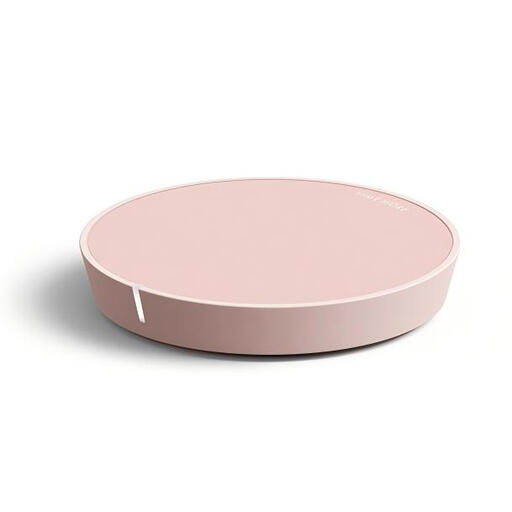 No image available
The product name is aimed at espresso and pour-over coffee; check that its features suit the way you weigh ingredients.
The name mentions switching between ounces and kg, a timer, and coffee-to-water ratio and water flow rate functions.
 No image available
The product name mentions espresso and pour-over coffee; check that this coffee scale is suitable for weighing baking ingredients.
The name mentions switching between ounces and kg, a timer, and coffee-to-water ratio and water flow rate functions.
 No image available
The product name mentions use for espresso, in the kitchen, for baking and for cooking; check that the controls suit your baking routine.
The name mentions switching between ounces and kg, a timer and water flow rate functions.
 No image available
The listed tare function is useful if you want to weigh ingredients one after another in the same bowl.
Maximum capacity: 5 kg. The stated weighing range is 1 to 5000 g; dimensions are 17 × 13 × 2 cm. The scale requires batteries, which are not included.
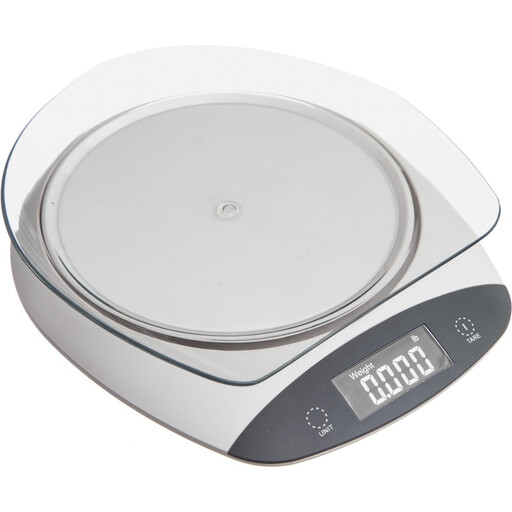 No image available
The removable bowl and tare function make it suitable for weighing ingredients in a bowl; the product information says the bowl is easy to clean.
Maximum capacity: 5000 g. Dimensions are 20.5 × 18 × 4.5 cm. It requires 2 AAA batteries, which are not included.
Put the bowl on the scale and reset the display to zero before adding the chocolate. You can tare it again before adding another ingredient, as long as the total weight stays within the model’s capacity.
Only if the manufacturer says this is safe for the specific model. Soehnle says this applies to the Page Aqua Proof; Ooni states that the Dual Platform Digital Scales are not dishwasher-safe.
According to ACM ConsuWijzer, the seller is responsible for putting things right if a product does not do what you could reasonably expect under normal use. Depending on the circumstances, this could mean a repair, replacement or refund. Online purchases usually also come with a statutory cooling-off period of up to 14 days after delivery, subject to legal exceptions.
Don’t put used batteries in your general rubbish. According to the Dutch government, you can take them to shops and supermarkets that sell batteries, among other places.
No. According to the European Commission, a CE mark indicates that the manufacturer considers the product to comply with the relevant EU product rules; it is not an independent test result proving the accuracy of a specific item. The Consumentenbond assesses measurement error and consistency separately using weights.