
The cook who weighs precisely
You want to read small quantities of spices individually. So, check the weighing increments across the range you use, not just the maximum capacity.


For small, separately weighed quantities of spices, choose a scale with fine increments in the low weight range you’ll be using. If you mainly weigh larger ingredients or a bowl, look for sufficient capacity and a tare function. A model with two platforms can handle both tasks, but the increments and capacity apply to each platform separately. A stated weighing increment is not proof of tested accuracy.
You want to read small quantities of spices individually. So, check the weighing increments across the range you use, not just the maximum capacity.
You weigh several ingredients in the same bowl and want to reset the scale to zero between additions. Make sure the combined weight of the bowl and its contents stays within the weighing range.
You want to weigh larger lunch ingredients as well as curry spices. Compare the fine weighing range with the capacity of a larger platform.
First, decide whether you’ll mainly weigh small portions of spices or ingredients in a bowl. Then check that the scale’s increments and capacity are suited to the task.
| What to consider | What should you look for? | Who is this important for? |
|---|---|---|
| Small quantities of spices | Check the increments in the low weight range and whether your bowl fits on the platform. | If I want to weigh small portions individually, I prioritise fine readings; this is the top priority for around 36% of consumers. |
| Adding ingredients one at a time | Check whether the scale has a tare function and whether the combined weight of the bowl and ingredients stays within its capacity. | I want to add ingredients to the same bowl and reset the scale to zero between additions; around 29% of consumers mainly want this convenience. |
| Larger lunch ingredients | Compare the maximum capacity with the weight of the bowl and ingredients. A high capacity doesn’t necessarily mean the scale is suited to small portions. | If I want to use one scale for larger ingredients too, versatility matters; around 21% of consumers rank this as their top priority. |
| Cleaning and storage | Consider the surface, the storage space available and whether you can still reach the controls with a bowl on the scale. | For around 14% of consumers, being able to clean and store the scale easily after use is the main thing. |
Consumentenbond reports differences in accuracy and consistency between the kitchen scales it tested. A stated weighing increment is not, by itself, the result of an independent test.
Check the range in which the fine increment applies. If repeatability is essential, look for an independent test of the exact model you’re considering.
On the Salter Heston Blumenthal Precision Dual Platform Scale 1049A HBBKDR, the 200 g and 10 kg capacities apply to different platforms.
Remember to include the bowl’s weight, and use the designated platform for larger ingredients.
Voedingscentrum lists different weights in grams for a level teaspoon of different herbs and spices.
Follow the gram measurements if the recipe gives them. If you’re converting from spoon measurements, take the specific ingredient into account.
The KS 36 is designed for precise weighing, while the KS 19 Black is a standard kitchen scale for larger portions.
According to Salter, the Heston Blumenthal Precision Dual Platform Scale 1049A HBBKDR has two separate weighing platforms.
The Tasty+ is a standard digital kitchen scale for weighing spices in whole grams and larger ingredients.
The WS305B is worth considering if you’re looking for a standard scale with a tare function.
This selection includes digital scales for ingredients, including models for everyday kitchen weighing, precise portions and portable weighing.
 Image unavailable
An option if you’re looking for a kitchen scale with a compact stated size.
The product is listed as stainless steel and, according to the title, measures 17 x 13 x 2 cm.
Batteries are not included.
 Image unavailable
Suitable if you also want to weigh larger lunch portions on a kitchen scale.
The product title lists a 10 kg capacity and a 1 g weighing increment. A stated weighing increment is not proof of independently tested accuracy.
 Image unavailable
An option if you’re looking for a food scale with a stated capacity of 5 kg.
The title lists a 5 kg capacity. Batteries are not included.
 Image unavailable
Worth considering if you want to weigh small portions individually.
The product title lists a 0.1 g weighing increment and a 2000 g capacity. A stated weighing increment is not an independent accuracy test.
Clean with a damp cloth; submerging it in water is not recommended.
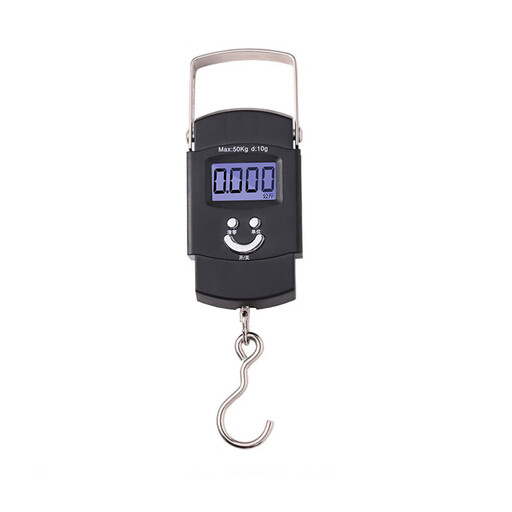 Image unavailable
An option if you’re looking for a portable hand scale for a cooking task.
Check that its shape and controls work with the bowl you plan to use.
No, not if your recipe and how you cook call for whole grams. If you want to weigh smaller quantities, check the range in which the fine increment applies; it doesn’t guarantee tested accuracy.
Place the scale on a stable surface, put the bowl on it and use the tare function before adding ingredients. You can reset it to zero after each ingredient; keep the total weight, including the bowl, within the capacity of the platform you’re using.
Before you order, check the total price, any delivery charges and who the seller is. According to the Dutch government, in many cases you have 14 days to change your mind when buying online from a business. If a product is faulty, you can contact the seller; in the Netherlands, there is no set statutory guarantee period that applies to all products.