What should you look for when buying?
First decide whether you mainly need to weigh small portions of salt, a full bowl or ingredients quickly in a shared workspace. Then check the graduation and capacity for the way you plan to use the scale.
Precision scale for weighing salt separately
Choose this when: participants weigh small portions of salt separately and a fine reading matters more than space for a large bowl.
Bear in mind: the weighing surface may be smaller or the maximum capacity lower; a fine graduation alone doesn’t prove weighing accuracy.
Dual platform for salt and larger quantities
Choose this when: you want to weigh both small portions of salt and a heavier bowl at the same workstation.
Bear in mind: the fine increments on the Salter Dual Platform Scale apply to the small platform, not the larger one.
Standard digital kitchen scale
Choose this when: the recipe can be weighed to the nearest whole gram and an easy-to-read scale for several participants is the priority.
Bear in mind: 1 g increments don’t offer a finer reading for small portions of salt; also check that the bowl and its contents are within the scale’s capacity.
| What to consider |
What to look for |
Who is this most important for? |
| Small portions of salt |
Check the graduation at the weight of the salt and any small dish you’re using; distinguish between the displayed reading and tested accuracy. |
When I weigh small portions, I want to know which graduation applies at that weight. Around 36% of consumers put precise salt dosing at the top of their list. |
| Bowls and larger batches |
Add the weight of the empty bowl to its contents and compare the total with the scale’s capacity; also check the available platform space. |
When I weigh flour or dough ingredients in a bowl as well as salt, the scale needs to handle the total weight. Around 29% of consumers prioritise capacity for a bowl and batch. |
| Shared use |
Check whether the display is easy to read with a bowl on the scale and how simple it is to reset the scale to zero. |
When participants take turns weighing, I want a clear reading and simple controls. Around 21% of consumers prioritise quick and easy shared use. |
| Cleaning and maintenance |
Check whether the platform is removable and read the manufacturer’s cleaning instructions. |
If the scale is used for several workshop sessions, I want to be able to clean the surface easily. Around 14% of consumers put maintenance and cleaning first. |
Products at Joybuy
This selection of products at Joybuy includes kitchen and coffee scales. Check each model’s graduation, capacity and platform to make sure it’s suitable for salt and dough.
 No image available
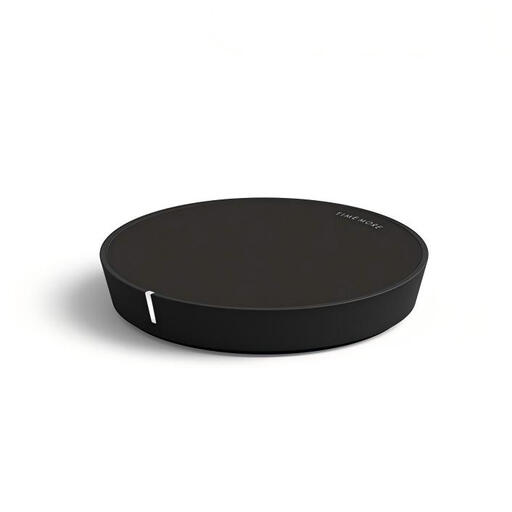
TIMEMORE Coffee Scale DOT, black
The product name describes this coffee scale as suitable for espresso and pour-over. Check that its graduation and platform suit your portions of salt and bowl.
The product name lists a timer, a coffee-to-water ratio, water flow display and a switch between ounce and kg.
View at Joybuy
 No image available
TIMEMORE Coffee Scale Basic 3.0, black
The product name associates this coffee scale with espresso and pour-over. Check that its graduation and platform are suitable for the workshop task.
The product name lists a timer, a coffee-to-water ratio, water flow display and a switch between ounce and kg.
View at Joybuy
 No image available
Digital kitchen scale with dual LED display, 4-point sensor and timer
The product name describes a kitchen scale. Before using it for salt, check which graduation applies to your portion and whether the capacity is sufficient for the bowl and its contents.
The product name lists a dual LED display, a 4-point sensor and a timer.
View at Joybuy
 No image available
Digital coffee scale with timer and tare function
The product name describes this scale as suitable for cooking and baking. Check that its stated graduation and capacity suit your portion of salt and the bowl you’re using.
The product name lists a graduation of 0.1 g up to 3 kg, a timer, a heat-resistant platform and a tare function.
View at Joybuy
 No image available
TIMEMORE Black Mirror Basic 2, black
The product name describes this scale as designed for pour-over coffee. Check that its graduation and capacity are suitable for weighing salt and a bowl.
The product name lists a graduation of 0.1 g, a capacity of 2000 g, an automatic timer and a water flow function. The product description recommends cleaning with a damp cloth and avoiding immersion.
View at Joybuy
Frequently asked questions
Does a 0.1 g display reading mean proven accuracy to 0.1 g?
No. Manufacturer claims about a display increment or graduation don’t, by themselves, prove measured accuracy. The Consumentenbond assesses accuracy and consistent readings separately using standard weights. For your chosen model, check which graduation applies to the weight of the salt and small dish.
How do you use the tare function when participants weigh salt in a small dish?
Place the scale on a firm, level surface, put the empty dish on it and reset the reading to zero using the tare function before adding salt. The dish still counts towards the maximum load; follow the manufacturer’s cleaning instructions for your chosen scale.
What should you do if your scale doesn’t work properly after you buy it?
Contact the seller. According to the Dutch government, the seller must provide a product that works properly and can’t simply refer you to the manufacturer if the product is faulty.
Does a scale used for a cooking workshop have to be legally verified?
That depends on how it’s used. The Rijksinspectie Digitale Infrastructuur lists weighing goods to determine a selling price as an application subject to specific legal requirements. Weighing salt for dough alone doesn’t show that the scale is being used for such a commercial transaction; check the relevant requirements if the weight determines the selling price.
Can salt be placed directly on any weighing platform?
Don’t assume so. The Dutch Food and Consumer Product Safety Authority describes requirements for articles intended to come into contact with food. Check whether the platform is intended for food contact; otherwise, you can use a clean small dish suitable for the purpose and tare the scale.


