
Cook with limited worktop space
You want to keep some space free at breakfast and put the scale away easily afterwards. So compare both its dimensions when in use and how you can store it.


Choose a scale that takes up little space, gives your bowl a stable base and lets you see the display clearly. When adding fruit to a bowl, tare and useful gram increments matter more than a high maximum capacity. A display that shows 1 g increments does not, by itself, prove that every 1 g addition will be measured reliably.
You want to keep some space free at breakfast and put the scale away easily afterwards. So compare both its dimensions when in use and how you can store it.
You want to add a chosen amount of dried fruit each time. Check the gram increments, but don’t take a small display increment as proof of measurement accuracy.
You add fruit to other ingredients and want to reset the scale to zero between additions, without counting the weight of the bowl and ingredients already in it.
Start with the space available and the bowl you use. Then decide which weighing and display features you need for your routine.
| What to consider | What to check before buying | Who might care most? |
|---|---|---|
| Space and storage | Compare the dimensions and weighing platform, and check whether you can store the scale in the space available. | If I have limited worktop space, I want to be able to put the scale away easily after breakfast. Around 36% of consumers give space their top priority. |
| Small portions | Check the stated gram increment. If small differences matter, look for independent test results for the exact model. | If I want to weigh small portions of dried fruit, what matters to me is how useful the readings are at low weights. Around 29% of consumers prioritise small portions. |
| Weighing in one bowl | Check whether the model has a tare function and whether you can operate the button with your bowl on the scale. | When I add fruit to muesli, I don’t want to keep using a separate bowl. Around 21% of consumers care most about weighing ingredients one after another in the same bowl. |
| Display readability | Look at where the display is positioned and check whether you can see it clearly with your bowl in place. Also check whether it has a backlight. | With a larger bowl, I want to be able to see the reading without relying on bright light. Around 14% of consumers put readability first. |
The display increment alone doesn’t tell you how reliably small additions are measured. The Consumentenbond reports that many scales in its test struggle to detect differences of 1 g. This general finding is not a test result for the scales featured here.
If you weigh small portions, look for an independent test result for the exact model. Treat the stated gram increment as a product specification, not a measurement report.
A small weighing platform can save space, but a wide bowl may sit unstably on it or block the display.
Compare the platform with the base of your bowl and check that you can still see the reading.
The battery-powered Tasty+ and the dynamo-powered version use different power sources and have different stated minimum weights. Brabantia specifies three AAA batteries for the battery-powered version and a minimum weight of 5 g for the dynamo-powered version.
Check the full version name, power source and stated minimum weight in the listing you’re viewing.
With the battery-powered version, you’ll also need to factor in using and replacing three AAA batteries.
Beurer offers two options here: the compact KS 22 and the flatter KS 19 Black, which has a larger platform.
The battery-powered Tasty+ is worth considering if hanging storage and a backlit display matter to you, as well as the space available while weighing.
The Page Compact 300 is another flat kitchen scale to compare if you’re looking for a tare function and easy storage.
These Joybuy product options include kitchen scales and a handheld scale. For each model, check whether its design, features and intended use make it suitable for weighing fruit for muesli.
 No image available
The product description mentions a tare function for weighing in a bowl, but presents this model as a coffee and pour-over scale. Check whether that suits the way you plan to use it.
The product name and description state a capacity of 2000 g, a sensitivity of 0.1 g, USB-C charging and a timer function. The stated sensitivity is a product specification, not an independent measurement result.
 No image available
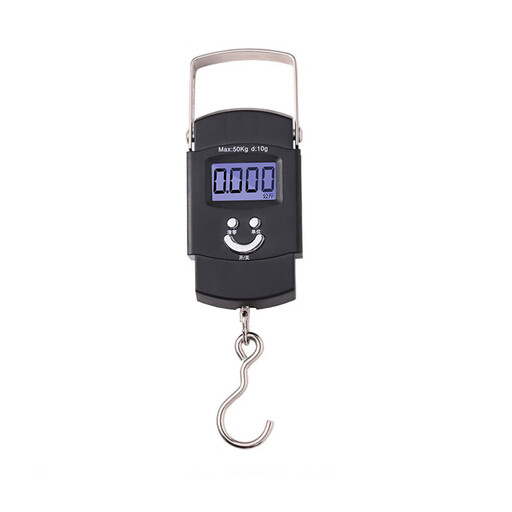
The description mentions cooking and weighing ingredients in your own container. Bear in mind that this is a handheld scale, not a flat kitchen model.
The product description lists an LCD screen, readings in grams and ounces, and a tare function for the container you use.
 No image available
The stated tare function and kitchen-scale design are useful if you want to weigh ingredients in a bowl. Check whether the Bluetooth and app features suit the way you’ll use it.
The product description lists a maximum capacity of 10 kg, 1 g increments, a minimum weight of 3 g and dimensions of 200 × 140 × 19,5 mm. A 1 g increment is not an independent accuracy test.
 No image available
The tare function may be useful when weighing ingredients in a bowl. Before buying, check that the bowl can sit stably on the weighing platform.
The product description lists dimensions of 17 × 13 × 2 cm, an LCD screen and a range of 1 to 5000 g. According to the description, batteries are required and aren’t included.
 No image available
The product description mentions a tare function for adding ingredients one after another to the same bowl. Check that the bowl won’t block the display.
The product name and description state a maximum capacity of 5 kg, 1 g increments and a profile height of 17 mm. The increment is not an independent accuracy test.
Place the bowl on the scale on a flat, stable surface and use the tare function to reset the display to zero before adding the fruit. If needed, reset the scale again before adding another ingredient. Check that the bowl is stable and the display remains visible.
No. A display that shows 1 g increments doesn’t prove that every 1 g addition will be measured accurately. The Consumentenbond reports that many tested kitchen scales struggle to detect differences of 1 g. This general finding doesn’t provide a verdict on a specific model without a corresponding test result.
Compare the weighing platform with the base of your bowl and check that the bowl doesn’t block the display. Also check the scale’s dimensions and whether you can store it in the space available after use.
No. The battery-powered and dynamo-powered versions use different power sources and have different stated minimum weights. Brabantia specifies three AAA batteries for the battery-powered version and a minimum weight of 5 g for the dynamo-powered version. Check the full product name and specifications of the version you’re viewing.
According to ACM ConsuWijzer, if a product is faulty, the seller must offer a solution under the terms of the statutory guarantee, such as a repair, replacement or refund. A manufacturer’s guarantee doesn’t replace this statutory right.