
Student making a larger batch of jam
You’d ideally like to weigh the fruit and other ingredients in one bowl. So check the weight of the bowl plus everything that goes in it.


Choose a scale based on the total weight of your bowl and ingredients: a compact model may be enough for smaller batches, while a higher maximum capacity gives you more room for larger quantities. The tare function lets you weigh ingredients one after another in the same bowl. A stated increment of 1 g does not, by itself, prove how accurately or consistently a model weighs, as the Consumers' Association distinguishes in its kitchen scale test.
You’d ideally like to weigh the fruit and other ingredients in one bowl. So check the weight of the bowl plus everything that goes in it.
You’re looking for a flat model that’s easy to store. Also check that your own bowl won’t obscure the display.
You want to use the tare function without choosing features you don’t need. Assess a stated graduation separately from test results: the Consumers' Association tests accuracy and consistency independently.
Start with the total weight of the bowl and ingredients, then compare storage space, controls and power source.
The percentages below show which concern comes first when weighing fruit for jam. Each consumer is assigned one primary need.
| Buying concern | What should you look for? | Who is this important to? |
|---|---|---|
| Weight capacity | Add together the weight of the bowl and ingredients; weigh in batches if needed. | If I want to weigh fruit, sugar and a heavy bowl all at once, I check the total load. Around 33% of consumers put weight capacity first. |
| Essential functions | Check that the tare function and an easy-to-read display suit the way you weigh ingredients. | I want the functions I need for my recipe without taking extra features as a given. Around 25% of consumers prioritise these basic needs. |
| Tare function and test results | Check whether you can zero the scale with your bowl on it, and look for test results for the exact model. | If I want to add ingredients one after another to the same bowl, I need the tare function and don’t want to confuse a stated graduation with proven accuracy. Around 17% of consumers put this convenience first. |
| Storage and cleaning | Check the dimensions, whether the display remains visible with your own bowl on the scale, and the cleaning instructions. | In a kitchen with limited cupboard space, I want to be able to store and clean the scale easily. Around 17% of consumers prioritise these practical space needs. |
| Power source | Check whether the model uses batteries or is powered by a dynamo, and look at its stated minimum weighing range. | If I don’t want to replace batteries, I look for an alternative power source and check how it works. Around 8% of consumers prioritise avoiding battery maintenance. |
A display in 1 g increments doesn’t, by itself, tell you how accurately or consistently a scale weighs. The Consumers' Association assesses these measuring properties separately.
Use the stated increment as a product specification, and base your judgement of weighing performance on results for the exact model.
The maximum capacity applies to everything on the scale, including the bowl and any other ingredients.
Add those weights together and choose a suitable capacity; you can also weigh ingredients in several batches.
If the capacity is too low, weighing in several batches can take extra time.
According to Beurer, the Beurer KS 25 comes with a 1.2-litre dishwasher-safe bowl and has a maximum capacity of 3 kg. Bowl capacity and maximum weight are two different things.
Compare both with your recipe and the total weight of the bowl and ingredients.
Brabantia offers a battery-powered Tasty+ and a separate dynamo-powered version.
Check the full model name and power source before choosing.
With a battery-powered version, you’ll need to replace the batteries eventually.
Leifheit/Soehnle lists a maximum capacity of 5 kg for the Page Compact 300 and 10 kg for the Page Comfort 300 Slim. According to the manufacturer, both models have a tare function and 1 g increments.
Beurer lists a tare function and a maximum capacity of 5 kg for the KS 19 Black. The KS 25 comes with a separate bowl and has a stated maximum capacity of 3 kg.
According to Brabantia, the Tasty+ is available as a battery-powered version and as a dynamo-powered model. These are different versions.
HEMA offers a digital kitchen scale which the brand lists as having a maximum capacity of 5 kg and a display that measures in grams.
This selection includes digital kitchen scales and a measuring jug with graduations. Check which type suits the way you measure ingredients for jam.
 Image unavailable
Worth considering if these are the features you’re looking for: the product name lists a dual LED display, a 4-point sensor and a timer.
 Image unavailable
The dimensions in the product name make this worth considering if you’re short on storage space; check that your bowl won’t cover the display. The product name lists stainless steel and dimensions of 17 × 13 × 2 cm.
 Image unavailable
This digital food scale may suit you if the nutritional display mentioned is useful for your needs; the product name lists a capacity of 5 kg. Check that this is enough for the bowl and ingredients combined.
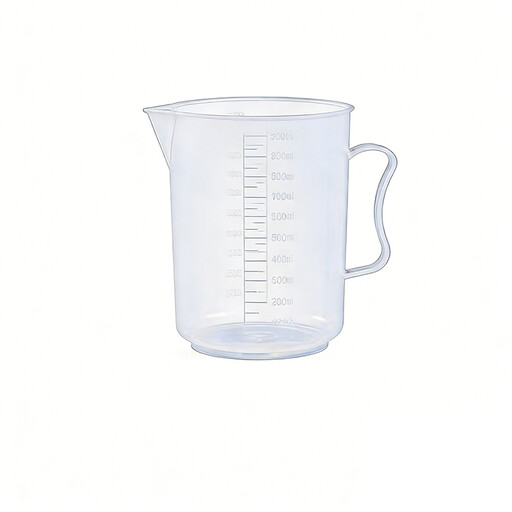 Image unavailable
According to the product name, this is a measuring jug with graduations, not a digital kitchen scale. Choose it only if measuring with a jug suits your recipe. The product name lists 1000ml.
Place the bowl on the scale and use the tare function to zero the display before adding an ingredient. You can tare the scale again afterwards; keep the total weight of the bowl and ingredients within your model’s maximum capacity.
Don’t assume that a dishwasher-safe bowl means the whole scale is dishwasher-safe: Beurer applies this feature to the separate bowl supplied with the KS 25. Check the cleaning instructions for the scale itself; Brabantia says to wipe the glass surface of the battery-powered Tasty+ clean.
Not necessarily: the stated increment is not the same as proven accuracy or consistency. The Consumers' Association assesses these measuring properties separately, so don’t treat the graduation as proof of weighing performance.
The Netherlands Nutrition Centre advises cleaning pans, jars, lids and spoons thoroughly when making jam. It also recommends cleaning them with hot water and soda crystals, then rinsing with clean, hot water. A kitchen scale is no substitute for this food-safety advice.
The rules described by the Dutch Government concern measuring instruments used by businesses; they aren’t a reason to automatically choose a trade scale for private use. If you sell jam by weight, check which rules apply to that business use.