
Bakers who weigh honey in the bowl
If you want to weigh honey and then add other ingredients to the same bowl, a tare function is useful. The Netherlands Nutrition Centre recommends using a kitchen scale to measure quantities.


For best results, weigh honey in a bowl using a scale with a tare function, so the bowl’s weight isn’t included in the measurement. Choose a size that leaves the display and buttons uncovered by your bowl. A finer graduation may be useful for small amounts, while a model that’s easier to clean may need more storage space. A display that measures in 1 g increments doesn’t, on its own, prove that the scale can reliably measure differences of 1 g.
If you want to weigh honey and then add other ingredients to the same bowl, a tare function is useful. The Netherlands Nutrition Centre recommends using a kitchen scale to measure quantities.
A flat model may be easier to put away after use. At the same time, check that your bowl won’t cover the display or controls; dimensions alone won’t tell you whether your bowl will fit well.
For small quantities, the scale’s displayed increments can matter. A finer graduation doesn’t mean that its measuring accuracy has been proven.
Start with the bowl and quantities you actually use, then compare the storage space you’ll need and how the scale should be cleaned.
| What to consider | What to look for | Who is this important for? |
|---|---|---|
| Weighing honey in a bowl | Check that the scale has a tare function and that the bowl leaves the display and buttons uncovered. | If I want to weigh honey and other ingredients one after another in the same bowl, I look for a tare function and a clearly visible display. Around 36% of consumers say weighing in a bowl is their main priority. |
| Worktop and storage space | Measure the available storage space and compare it with the scale’s footprint and the base of your bowl. | If I have limited space on the worktop or in a drawer, a flat model is a consideration, as long as my bowl fits properly on the scale. Around 29% of consumers put saving space first. |
| Reading small quantities | Compare the graduations and capacity, including the weight of your bowl; look for test results for the quantities you use. | For small recipe quantities, I want the display to be easy to read and don’t want to confuse the increments with proven accuracy. Around 21% of consumers say small quantities are their main priority. |
| Cleaning and operation | Follow the cleaning instructions for the exact model and check that the display and buttons remain visible with your bowl in place. | If honey might spill while I’m pouring, I want to know how to clean the model and still be able to use the scale. Around 14% of consumers say cleaning and operation are their main priorities. |
Consumentenbond reports that many of the kitchen scales it tested struggle to distinguish differences of 1 g. So, the increments shown on the display alone don’t tell you how reliable the measurement will be for your recipe.
Use the graduations as a product specification and look separately for test results for the exact model and the weights you’ll be measuring.
If the display is covered, it’s harder to follow the reading while you pour. Consumentenbond also notes that the buttons are awkwardly placed on some models.
Compare the position of the display and controls with the bowl you use.
Tanita describes the KD-321 as splash-resistant, while Soehnle describes the Page Aqua Proof as dishwasher-safe. These claims apply to different models and aren’t interchangeable.
Follow only the cleaning instructions for the exact model.
The Page Compact 300 is a flat option with a tare function; the separate Page Aqua Proof is designed to be cleaned according to the manufacturer’s instructions.
The KS 19 Black is a flat glass kitchen scale with a tare function for use with a bowl.
The Tasty+ is available in several versions, including a battery-powered model and a dynamo-powered model; compare them separately.
The KD-321 may be worth considering if a finely graduated display matters for small quantities.
This selection includes digital scales described partly as coffee scales and partly as products specifically for the kitchen, baking or cooking. Check whether each model’s features, units and design suit the way you weigh honey.
 No image available
This digital coffee scale is most relevant if you also make coffee; check that its features suit your baking recipes.
The title lists a ratio function, water flow display, timer and conversion between ounces and kg.
 No image available
The product title mentions kitchen, baking and cooking use; check that the model suits the bowl and ingredients you use.
The title lists a digital scale and conversion between ounces and kg. The product description mentions a timer and water flow function.
 No image available
The listed dimensions may be useful if you have limited storage space; compare them with the base of your bowl too.
The title lists dimensions of 17 × 13 × 2 cm. The product description mentions a tare function, an LCD display and a weighing range of 1 to 5000 g.
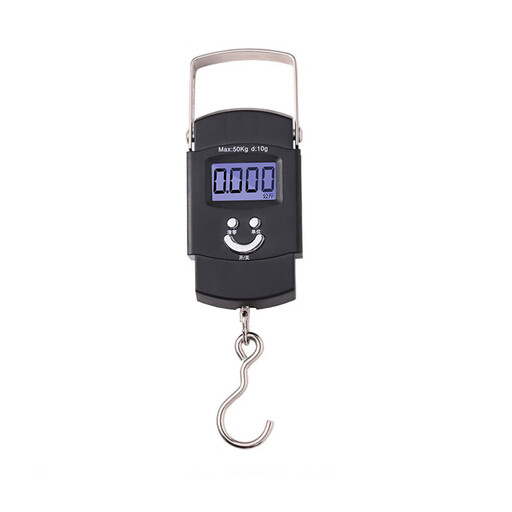 No image available
This is a portable hand scale; first check whether it’s suitable for ingredients and for weighing with a bowl.
 No image available
The stated graduations may be useful for small quantities; this model is described as a coffee scale for pour-over brewing.
The product information lists 0,1 g graduations, a tare function, a maximum capacity of 2000 g and dimensions of 15 × 13 × 3 cm. Clean with a damp cloth and don’t immerse the scale. A 0,1 g display increment isn’t an independent accuracy test.
Place the scale on a flat surface, put the bowl on it and use the tare function to reset the reading to zero before adding honey. While pouring, check that the display remains visible.
Use the unit specified in the recipe; if it asks for grams, select the grams setting. Tanita describes the KD-321’s millilitre conversion for liquids such as water and milk, not as a verified conversion for honey.
Only if the instructions for that exact model allow it. Soehnle describes the Page Aqua Proof as dishwasher-safe; for other models, check their own cleaning instructions.
No. The increments shown on the display don’t, on their own, prove how accurate or repeatable a measurement is. Consumentenbond reports that many of the kitchen scales it tested struggle to distinguish differences of 1 g; look for relevant test results for the model and the weight you’ll be measuring.
According to Brabantia, the battery-powered version uses three AAA batteries and has a stated range starting at 1 g; the dynamo-powered Tasty+ has a range starting at 5 g and works without batteries. Compare these details for each version with the smallest quantity you want to weigh.