
People portioning food with limited storage space
You freeze food in containers and want to clear the scale from the worktop after use. Storage space, the fit of your container and visibility of the display all matter when choosing a scale.


Choose a scale that fits your usual freezer container, has a display you can read with the container on it, and is easy to put away after use. A flat model with a tare function is handy for weighing portions one after another, while a hanging model can save cupboard space. A scale with its own bowl is most useful if the bowl suits the way you work. In its test published on 9 July 2026, the Consumers' Association reported that many scales struggle to distinguish differences of 1 g. So a stated increment of 1 g does not, on its own, prove that a scale is accurate.
You freeze food in containers and want to clear the scale from the worktop after use. Storage space, the fit of your container and visibility of the display all matter when choosing a scale.
You divide a meal between several containers and want to tare each one before weighing a portion.
You weigh a larger batch and need the weight of the bowl and its contents to stay within the scale's maximum capacity.
Compare your container and storage space with the scale's dimensions and controls. Then check that its capacity and cleaning requirements suit the way you portion food.
| What to consider | What should you check? | Who is this important for? |
|---|---|---|
| Space and storage | Compare the platform size and height with your drawer or hanging space. Also check that your container fits and the display remains visible. | If you have limited worktop space, you’ll want to put the scale away quickly after use; around 36% of consumers focus mainly on space and storage. |
| Weighing portions one after another | Check that the scale has a tare function and that the buttons and display remain accessible with the container on it. | When filling several containers in a row, you’ll want to exclude the weight of each empty container; around 29% of consumers prioritise portioning repeatedly. |
| Bowl plus contents | Add the weight of your usual empty bowl to that of your largest portion, then compare the total with the stated maximum capacity. | If you weigh larger batches in a bowl, its weight counts too; around 21% of consumers focus mainly on capacity. |
| Cleaning and readability | Check which parts can be cleaned and whether you can see the display without the container covering the buttons. | This matters most if you want to clean up quickly after portioning and read the figures clearly; around 14% of consumers prioritise maintenance and ease of use. |
An increment stated in the product specifications is not the same as an independent test of measurement accuracy. In its test published on 9 July 2026, the Consumers' Association reported that many scales struggle to distinguish differences of 1 g.
Treat gram increments as a product specification and assess any available test results separately.
Even a flat model takes up space while you’re weighing. A large container can cover the display or controls, and a hanging loop saves space only when the scale is not in use.
Measure your drawer or hanging space and compare the platform size with your usual container.
The Beurer KS 25 has a dishwasher-safe bowl, but its stated maximum capacity is 3 kg. According to Beurer, the Beurer KS 19 Black has a maximum capacity of 5 kg.
Check that the bowl and its contents stay within the maximum capacity, and that you’ll actually use and have room to store the separate bowl.
The KS 19 Black and KS 25 offer different options: a flat platform or a model with a removable bowl.
The Tasty+ range includes a battery-powered model with a hanging loop, as well as a separate dynamo model.
The Disc 1036 is a flat platform for weighing ingredients one after another in your own bowl.
HEMA offers a straightforward digital kitchen scale to compare if you’re mainly looking for a basic model.
This selection includes kitchen and coffee scales. For each model, consider whether its listed features, capacity and shape suit weighing and storing freezer portions.
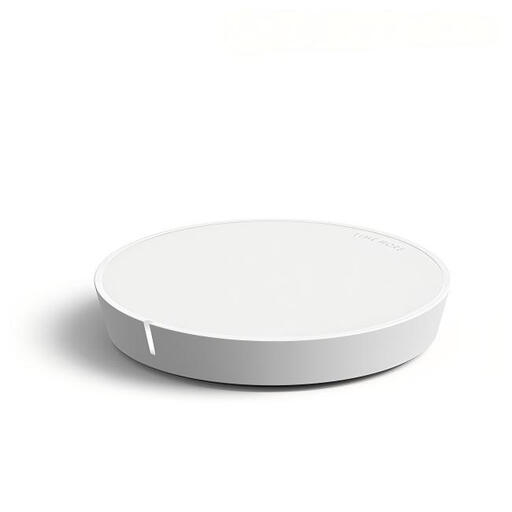 Image unavailable
The product name identifies this as a coffee scale; it’s relevant for freezer portions only if its coffee-focused features suit the way you’ll use it.
The product name lists a coffee-to-water ratio, water flow display, timer and switching between ounces and kg.
 Image unavailable
The stated size may be useful if you want to store the scale in a drawer after portioning; also compare the platform size with your container.
The product name lists stainless steel and dimensions of 17 × 13 × 2 cm.
 Image unavailable
If you weigh larger quantities in a bowl, compare the stated maximum capacity with the weight of the bowl and its contents.
The product name lists a capacity of 10 kg, Bluetooth, support for multiple units and app integration. A 1 g increment is not proof of independently tested measurement accuracy.
 Image unavailable
If you mainly want to check the weight of freezer portions, consider whether the listed nutrition features would add anything to the way you use the scale.
The product name lists a capacity of 5 kg, app synchronisation, a nutrition database and calorie and nutritional information. These listed features are not proof of any nutritional or health benefits.
 Image unavailable
The product name identifies this as a coffee scale; check whether its coffee-focused features suit the way you weigh portions.
The product name lists a capacity of 2000 g, a 0,1 g increment, a timer and a water flow display. If you use a bowl, remember to include the weight of the bowl and its contents.
Place the scale on a flat surface, put an empty container on it and use the tare function before adding a portion. Repeat for each container, and check beforehand that it won’t get in the way of the display or controls. A tare function is documented for the Beurer KS 19 and Salter Disc 1036.
Weighing food doesn’t replace safe storage. The Netherlands Nutrition Centre advises freezing food in small portions, setting your freezer to −18 °C, and cooling leftovers quickly before storing them in a sealed container. Don’t leave leftovers out of the fridge for more than 2 hours; storage advice can vary by product.
Don’t assume so. Beurer says only the removable bowl of the KS 25 is dishwasher-safe; Salter states that the Disc 1036 is not dishwasher-safe. Follow the cleaning instructions for the version you choose.
No. An increment of 1 g does not, on its own, prove accuracy to 1 g. In its test published on 9 July 2026, the Consumers' Association reported that many scales struggle to distinguish differences of 1 g. So don’t treat a product specification as an independent accuracy test.