Who is this choice for?

Home baker measuring small amounts of yeast

You want to weigh small amounts of yeast after your class and need a clearly specified low weighing range, not just a high maximum capacity. Broodsmakelijk discusses weighing both light ingredients such as yeast and heavier ingredients such as flour and water.

Baker making a full bread recipe

You want to weigh yeast, flour and water without using several devices. Baktotaal describes the BrandNewCake Duo as having two weighing ranges with different capacities and display increments.

Baker using a large mixing bowl

You weigh larger recipes or use a bowl that takes up space on the weighing platform. The manufacturer My Weigh lists a capacity of 8000 g for the KD-8000; OXO's UK product information describes a pull-out display.

What to consider when buying

A separate precision scale alongside a standard scale

Choose this if: you already have a suitable scale for flour and water and mainly want to weigh small amounts of yeast or salt.

Bear in mind: you will need a second device; check that the container and ingredient together are within the maximum capacity. Broodsmakelijk discusses this combination as baking advice, not as the result of a comparative laboratory test.

Digital scale with two weighing ranges

Choose this if: you want one device for both small amounts and a mixing bowl. Baktotaal lists the BrandNewCake Duo as having a 10 kg range with 1 g increments and a 1 kg range with 0.1 g increments.

Bear in mind: you need to use the correct range for yeast; stated display increments are not an independent measurement of accuracy.

Kitchen scale with a high capacity

Choose this if: a large bowl and larger quantities are your main priorities. My Weigh lists a capacity of 8000 g with 1 g increments for the KD-8000.

Bear in mind: this capacity does not automatically make the model suitable for small amounts of yeast; use another suitable scale for these if needed.

What to consider What should you check? Who is this important for?
Small amounts of yeast Check the low weighing range and display increment in grams; don't treat the increment as proof of accuracy. If you weigh small amounts of yeast after a class, you'll want to know whether the model is suitable. Around 36% of consumers prioritise this.
Yeast and larger ingredients on one device Check the maximum capacity, display increment and tare function for each weighing range. If you want to weigh yeast and larger ingredients on one device, separate ranges are important. Around 29% of consumers prioritise this.
Large mixing bowl and display visibility Compare the maximum load including the bowl, the platform dimensions and the position of the display. If you use a large mixing bowl, you'll want the load to be within the scale's range and the display to remain easy to read. Around 21% of consumers prioritise this.
Operation and care Check the button position, auto-off behaviour, cleaning instructions and power supply. If you want to weigh ingredients quickly after a class and keep the device easy to maintain, ease of use and cleaning matter. Around 14% of consumers prioritise this.

Common buying mistakes

  • Confusing the display increment with weighing accuracy

    A display showing 0.1 g or 0.01 g describes the display increment, but it doesn't prove how accurately the scale actually weighs. The Consumentenbond explains how to assess accuracy using weights; look for a measurement and test method if you need an accuracy claim.

    Check the weighing range and display increment for the exact version. If accuracy is crucial, look for an independent measurement rather than relying on the display increment alone.

  • Looking only at the maximum capacity

    A high capacity doesn't automatically mean a scale will display small amounts of yeast usefully. Large bowls and light ingredients may call for different ranges or separate devices.

    Compare a separate precision scale with a model that has two weighing ranges. Bear in mind that the separate-scale option means using two devices.

    A separate scale for small amounts of yeast means you'll need a second device.

  • Overlooking conflicting maximum capacities

    The product information for the BrandNewCake Precision Scale lists both 200 g and 500 g as the maximum capacity. This makes it unclear whether the container and ingredient will fit within the range of the version on offer.

    Ask the seller which maximum capacity applies to the exact version, especially if you plan to leave the container on the scale.

Relevant brands to consider

Beurer

The KS 36 is a compact precision kitchen scale; the KS 34 is a separate range designed for heavier loads.

  • Beurer lists a maximum load of 2 kg, 0.1 g increments and a tare function for the KS 36.
  • These are manufacturer specifications, not an independent accuracy measurement. Don't confuse the KS 36 with the KS 34.

BrandNewCake

The brand offers a Duo with two weighing ranges and a separate precision scale for small amounts.

  • According to Baktotaal, the Duo has a 10 kg range with 1 g increments and a 1 kg range with 0.1 g increments.
  • For the Precision Scale 200gr / 0.01gr, Baktotaal lists both 200 g and 500 g as the maximum capacity. Confirm the range of the version on offer.

My Weigh

The KD-8000 is designed for weighing larger quantities in a bread recipe.

  • The My Weigh manual lists a capacity of 8000 g with 1 g increments.
  • This specification does not establish that the model is suitable for small amounts of yeast.

OXO

A version with a pull-out display may be useful if a bowl blocks your view of the screen.

  • OXO lists a pull-out display and metric increments of 1 g on its UK product page.
  • If buying in the Netherlands, check the exact version; the UK specifications do not show that a Dutch version is available or suitable for small amounts of yeast.

Joybuy products

This selection features digital coffee scales. Check that each model's weighing range, display increment and intended use are suitable for your bread recipe.
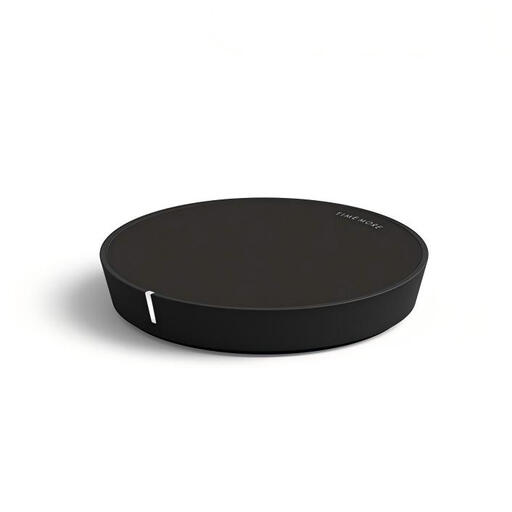
TIMEMORE Coffee Scale DOT digital coffee scale

TIMEMORE Coffee Scale DOT

This model is described as a coffee scale; check whether its specifications are suitable for weighing ingredients for your bread recipe.

The product name mentions a coffee-to-water ratio, water flow rate, timer and switching between ounce and kg units.

View at Joybuy

TIMEMORE Coffee Scale Basic 3.0 digital coffee scale

TIMEMORE Coffee Scale Basic 3.0

This model is described as a coffee scale; check whether its specifications are suitable for weighing ingredients for your bread recipe.

The product name mentions a coffee-to-water ratio, water flow rate, timer and switching between ounce and kg units.

View at Joybuy

Digital coffee scale with 0.1 g increments and capacity up to 3 kg

Digital Coffee Scale, 0.1 g, up to 3 kg

This model is described as a coffee scale; check whether its stated range suits your ingredients and the bowl or container you use.

The product name lists 0.1 g increments, a capacity of up to 3 kg, a rechargeable design, timer, heat-resistant platform and tare function. The display increment is not an independent accuracy measurement.

View at Joybuy

TIMEMORE Black Mirror Basic 2 Pour-Over Drip Coffee Scale

TIMEMORE Black Mirror Basic 2 Pour-Over Drip Coffee Scale

This model is described as a coffee scale; check whether its specifications are suitable for weighing ingredients for your bread recipe.

The product name lists 0.1 g increments and a capacity of 2000 g, as well as a timer and water flow rate function. The display increment is not an independent accuracy measurement.

View at Joybuy

Frequently asked questions

Do I always need a scale with 0.01 g increments for yeast?

No, not for every bread recipe. Start by checking the quantity in your recipe, then check the low weighing range and display increment of the exact version. Broodsmakelijk lists 0.1 g and 0.01 g increments as options for small amounts; a display increment is not proof of weighing accuracy.

How do I weigh yeast in a container?

Place the scale on a stable surface, put the container on it and use the tare function before adding the yeast. Also check that the container and ingredient together are within the maximum capacity; taring does not increase that capacity.

Should I automatically use less yeast for a longer rise after an evening class?

No, follow your chosen bread recipe first. King Arthur Baking explains that using less yeast generally calls for an adjusted proving time and/or temperature; there is no fixed conversion that works for every recipe.

What can I do if a scale I bought online is faulty?

In the Netherlands, the seller is your point of contact if there is a problem with a product, according to the Dutch government. There is no fixed statutory warranty period of two years. Online purchases generally come with a 14-day cooling-off period from delivery, according to ACM ConsuWijzer, although exceptions apply.

Does a scale for home bread-making have to be legally verified?

Don't assume that requirements for certain commercial uses also apply to weighing bread ingredients for private use. The Rijksinspectie Digitale Infrastructuur describes requirements for uses including cases where weight determines a selling price; assess use for sales separately.
