
Vandaag of morgen in huis

Kwaliteit gegarandeerd

Welkomstaanbiedingen ontgrendelen: GRATIS bezorging | Tot 80% korting | Gratis 30 dagen JoyPlus-proefperiode
Download de app
A roll of kitchen roll may seem like a simple household product, but the differences between kitchen rolls become clear during use. Thin paper tears more easily when dealing with a wet spill, small sheets are less practical for larger messes and a large pack is not automatically better value.
If you buy kitchen roll online, don't just look at the number of rolls or a temporary kitchen roll offer. The number of layers, sheet count, sheet size and intended use determine how much value you actually get.
A pack of twelve rolls may seem appealing, but the number of sheets per roll can vary considerably. There are also double or jumbo kitchen rolls that replace several standard rolls. So compare:
A pack with fewer rolls may last longer in everyday use if each roll contains more sheets.
Terms such as absorbent kitchen roll, “super absorbent” and “moisture catcher” are often product descriptions used by the brand. They indicate the intended use, but are not, in themselves, an independent performance standard. According to the brands’ own product information, certain variants are intended for absorbing water, oil or grease.
So also look at verifiable details, such as the number of layers, the material and the sheet surface area. For kitchen roll designed to absorb moisture, a larger sheet is practical for spilled soup or water. For grease, a sheet with a sturdy structure may be more useful.
3-ply kitchen roll generally feels sturdier than 2-ply kitchen roll, but that does not mean it is needed for every job. For drying hands or dealing with small spills, 2-ply kitchen roll may be sufficient. For grease, wet surfaces and intensive cleaning, the extra strength may reduce the number of sheets required.
Also pay attention to the instructions. Used kitchen roll belongs in general waste, not down the toilet. Keep plastic packaging out of the reach of young children.
2-ply kitchen roll consists of two layers of paper bonded together. 3-ply kitchen roll has an additional layer and can therefore offer greater strength and volume. However, the number of layers does not tell you everything: the fibre structure, paper weight and sheet size also affect how it feels and performs.
For everyday kitchen tasks, 2-ply is often a practical choice. If you regularly clean up oil, sauce or larger quantities of water, consider 3-ply or an extra-strong variant.
A large sheet covers more surface area at once, but can also lead to unnecessary use for smaller tasks. Products with perforations allow you to tear off one or a few sheets at a time.
For the Selpak Kitchen Paper Jumbo 1x6, the product information states approximately 300 sheets per roll, with a sheet size of approximately 260 x 228 mm. According to the product description, the roll is equivalent to six standard rolls. When purchasing, always check that this comparison is stated on the label or product page.
Many kitchen rolls are made from cellulose or virgin paper pulp. Some variants use bamboo pulp or state that they contain recycled packaging film. These are relevant details if you want to consider the choice of material and packaging when making a purchase.
One example is Nalys Moisture Catchers Kitchen Paper, whose product information states that the packaging contains 80% recycled film. This information refers to the packaging and does not automatically apply to the paper fibres themselves.
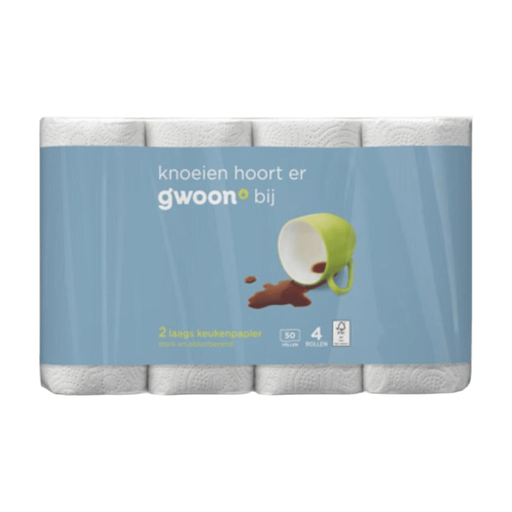
Why it suits this profile: A straightforward pack for households looking for an everyday kitchen roll for spills, drying hands and general cleaning.
The product information states that it is 2-ply and contains 4 rolls. This makes the basic specifications easier to compare than a general claim about absorbency alone.
2-ply construction; pack of 4 rolls; suitable for general household tasks according to the product description.
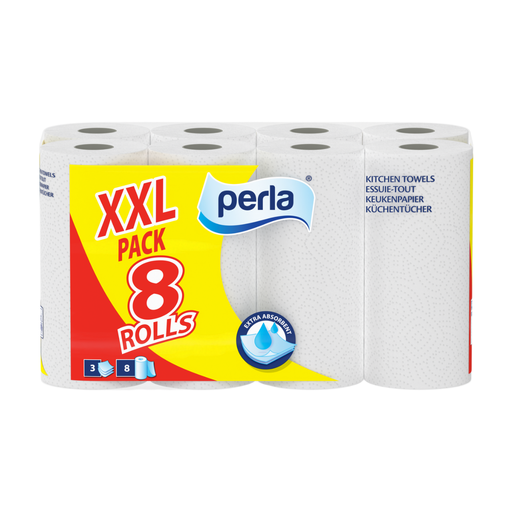
Why it suits this profile: Designed for users who prefer a 3-ply sheet for a sturdier feel when using kitchen roll for cleaning.
The product name and information state both 3-ply and 8 rolls. You can therefore base your choice on specific features rather than promotional copy alone.
3-ply construction; 8 rolls per pack; designed for absorbent and robust kitchen tasks according to the product information.
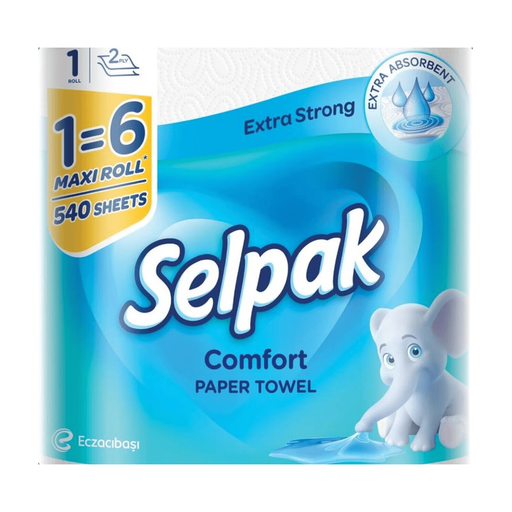
Why it suits this profile: A jumbo kitchen roll is ideal for households that clean frequently and prefer to store fewer individual rolls in the cupboard or kitchen.
The stated approximate sheet count of 300, sheet size and 1=6 indication help you assess storage and usage more realistically.
Approximately 300 sheets; perforated; product information states that the sheets are extra strong and absorbent and suitable for food contact.
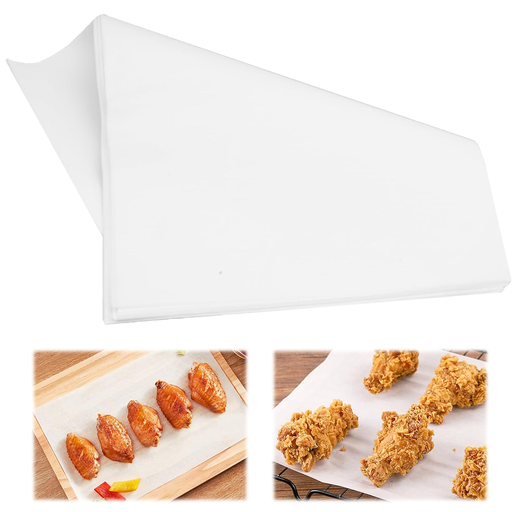
Why it suits this profile: For anyone mainly looking to absorb oil and grease when barbecuing, baking or lining a baking tray, rather than using a general-purpose kitchen roll.
The intended use and dimensions are clearly stated: 50 sheets measuring 35 x 25 cm. Do not use it as a substitute for paper specifically suitable for high temperatures without checking the label.
50 sheets; size 35 x 25 cm; intended as oil-absorbing paper for barbecue and baking applications according to the product name.
We have put together a complete, up-to-date list of products that fully meet these strict selection criteria and the applicable European safety regulations.
A low price per roll tells you little if a roll contains only a small number of sheets. Use this simple comparison:
A kitchen roll offer can be appealing when the sheet count and construction are comparable with those of other packs. Also consider storage space: a jumbo or maxi roll reduces the number of replacements needed, but will not fit every holder.
Not necessarily. An extra layer can contribute to strength and absorbency, but the paper structure, material and sheet weight also play a part. Look at the complete product information and choose 2-ply for general tasks or 3-ply for heavier use.
Dry, unopened kitchen roll can generally be stored as long as the packaging remains intact. Store kitchen rolls in a dry place, away from direct sunlight and moisture. For any shelf-life or packaging information, always check the product label.
Many variants are marketed, according to their product descriptions, for absorbing oil and grease. For baking or barbecuing, specific oil-absorbing paper is more practical. Always check the instructions and do not use paper with hot oil or an open flame unless this is expressly permitted.
