
Vandaag of morgen in huis

Kwaliteit gegarandeerd

Welkomstaanbiedingen ontgrendelen: GRATIS bezorging | Tot 80% korting | Gratis 30 dagen JoyPlus-proefperiode
Download de app
A kitchen roll may seem simple to choose, but packaging can make comparisons unnecessarily difficult. A description such as “extra strong”, “maxi” or “1=6” only means something when you also consider the number of sheets, their size and the number of layers. If you only look at the price per pack, you may sometimes pay more for less paper.
The most common pitfalls when buying kitchen roll are:
2-ply kitchen roll is often suitable for everyday tasks such as drying hands, dealing with small spills and wiping worktops. 3-ply kitchen roll may offer more body and strength, but practical performance also depends on the material and the sheet’s structure.
A thicker sheet is not automatically better value. For light cleaning tasks, a 2-ply kitchen roll may be sufficient. For oil, grease or larger amounts of water, a stronger sheet can be more convenient, as you may need fewer sheets.
Look out for descriptions such as “strong kitchen roll” or “extra-absorbent kitchen roll”. Treat these as product descriptions. According to the brand or seller’s description, the paper may be suitable for certain tasks, but performance varies depending on how it is used.
Do not just look at the number of kitchen rolls. Make a note of:
For example, the Nalys Wish pack states that two rolls are equivalent to four standard rolls. The product description mentions convenient sheets and a compact size. This may be useful for a small kitchen, but when comparing products, pay particular attention to the total number of sheets and their dimensions.
A jumbo kitchen roll can save space when it needs replacing. According to the product information, the Selpak Kitchen Paper Jumbo 1x6 is described as equivalent to six standard rolls, with approximately 300 perforated sheets per roll and a sheet size of around 260 × 228 mm. However, check that your holder is suitable for the larger diameter.
Many kitchen rolls are made from cellulose or wood pulp. The C&S 200sheets 2ply Hanging Kitchen Towel states 100% virgin wood pulp, a size of 225 × 200 mm and 200 sheets per bag. These are verifiable product specifications, while terms such as “soft” or “premium” should mainly be viewed as indications of the intended user experience.
If you are considering bamboo kitchen roll, look at:
The BABO product listings mention 2-ply paper, 120 sheets per roll and bamboo pulp, among other details. One variant also states that it has ISEGA certification for food contact. Check the current packaging and product page before using the paper for direct contact with food.
Packaging is also relevant. Nalys Moisture Catchers is available in a pack of 12 rolls with 80% recycled film. Paper packaging may be appealing if you want to reduce plastic in the outer packaging, but also compare the total amount of paper and the storage space available.
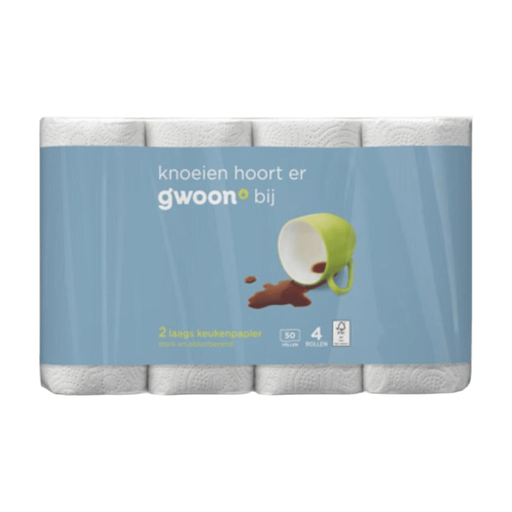
Why it suits this profile: A straightforward pack with four 2-ply rolls for everyday tasks such as dealing with spills, cooking and wiping surfaces.
The number of rolls and the 2-ply construction are clearly stated. Also compare the number of sheets per roll and the price per sheet.
Four rolls; 2-ply paper; suitable for general household use according to the product description.
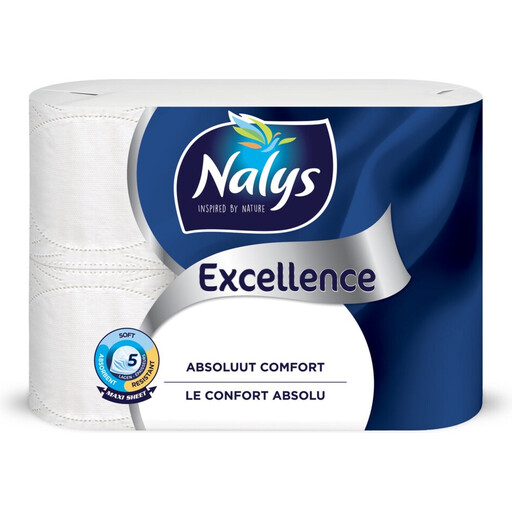
Why it suits this profile: The product description states that it has five layers, larger sheets and paper packaging for those looking for greater thickness and comfort.
The number of layers and larger sheet size are more specific than a claim such as “extra strong”. However, check the price per sheet.
5-ply construction; larger sheets according to the product information; paper packaging.
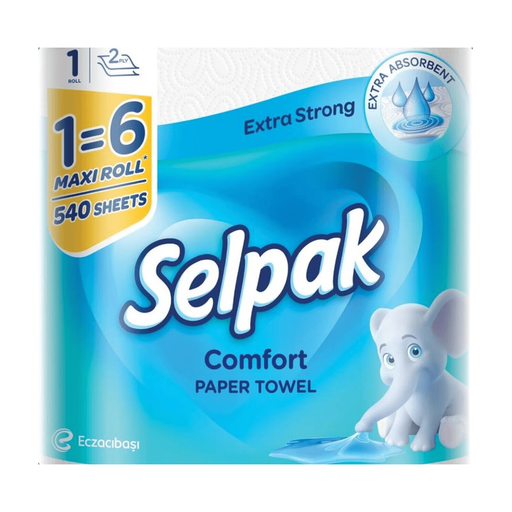
Why it suits this profile: A large roll with approximately 300 perforated sheets for households that often cook, deal with grease or clean large surfaces.
The comparison with standard rolls, the number of sheets and sheet size are provided in the product details. This lets you compare capacity rather than just the size of the roll.
Approximately 300 sheets; around 260 × 228 mm per sheet; perforated and suitable for food contact according to the product information.
We have put together a complete, up-to-date list of products that fully meet these strict selection criteria and the applicable European safety regulations.
Use this checklist before placing an order:
A kitchen towel or washable cloth may be suitable for tasks you carry out repeatedly. For soaking up raw meat juices, grease or one-off spills, many households prefer paper kitchen towels. Only use a reusable kitchen roll according to the manufacturer’s instructions; the name alone does not tell you how often or in what way the product can be reused.
Look for a product that is explicitly described as oil- or grease-absorbent. A thicker 3-ply version or one with extra-large sheets may be practical, but consumption depends on the amount of oil. Do not reuse kitchen roll that has already been used, and do not flush it down the toilet.
It can be, but compare the price per sheet rather than just the “1=6” claim. Also check the number of sheets, the size and the storage space required. A jumbo kitchen roll may need replacing less often, while individual standard rolls can sometimes be easier to distribute between several rooms.
Store kitchen roll somewhere dry and clean, away from damp areas. It generally does not have a short use-by period like fresh products, but always check the date and storage information on the packaging. It is best not to use rolls that have been damaged or become damp for food contact.
