
Vandaag of morgen in huis

Kwaliteit gegarandeerd

Welkomstaanbiedingen ontgrendelen: GRATIS bezorging | Tot 80% korting | Gratis 30 dagen JoyPlus-proefperiode
Download de app
A kitchen rack can make a small worktop more organised, create extra space inside a kitchen cupboard or help your crockery dry more quickly. However, many models look similar even though they are designed for very different situations. A rack for spice jars, for example, needs different features from a dish drying rack, pan rack or microwave rack.
Before buying, pay particular attention to these three common pitfalls:
Do not just measure the width; also measure the depth and available height. Take cupboard doors, sockets, the tap and the space you need to remove plates or pans from the rack into account.
For a small worktop, a narrow kitchen organiser with two tiers may be sufficient. A dish drying rack is usually placed next to or above the sink and must provide space for plates, bowls and cutlery without blocking the drain. A microwave rack must also match the width of the appliance. An adjustable model measuring from 39 to 62 cm gives you more flexibility, but it must still stand securely on the worktop.
Materials affect how you use and maintain a rack:
A description such as “rust-resistant” does not guarantee that a product will remain rust-free in all conditions. Follow the care instructions, avoid prolonged exposure to moisture and dry a dish drying rack regularly.
A pan rack or kitchen cupboard rack must be able to safely support heavy items. If the load capacity is not listed in the specifications, do not treat it as suitable for heavy cast-iron pans. Some models do state the weight per tier, making them easier to compare.
Also consider the assembly method:
For products that come into contact with food or crockery, the instructions for use are important. A product that is not dishwasher-safe must be washed by hand. The statutory guarantee in the EU for the products mentioned is at least two years; additional rights may apply under Dutch legislation.
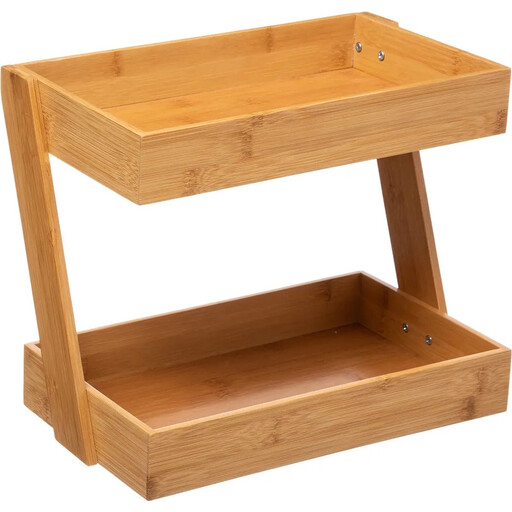
Why it suits this profile: This two-tier rack is suitable for dry storage of spice jars, storage containers or small decorative items on a limited worktop.
The dimensions are clearly specified: 31.5 × 22.5 × 26 cm. The maximum load capacity is not specified, so use it for lightweight items.
Bamboo and MDF construction, two tiers and FSC certification according to the product information. Assembly by the user is required.

Why it suits this profile: A practical choice for households that wash crockery every day and want a permanent place next to the sink.
The water collection tray is removable and the rack has a drainage outlet. This helps prevent water from building up on the worktop, provided the tray is emptied regularly.
Stainless steel, PP water collection tray, sections for plates, bowls, cups and cutlery. Dimensions: approx. 42 × 29 × 12.7 cm.
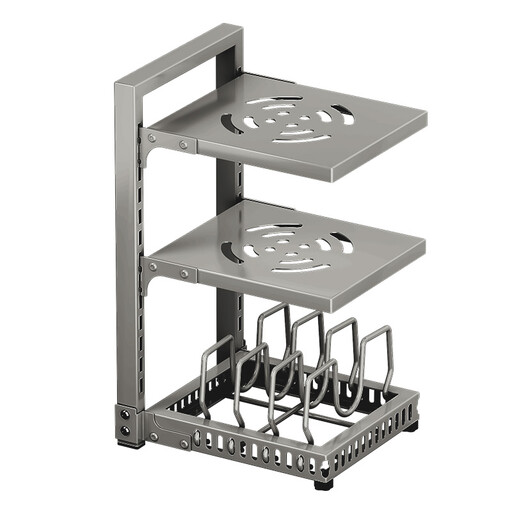
Why it suits this profile: This pan rack is designed for anyone who wants to organise pots, lids and frying pans vertically in a cupboard or deep drawer.
The three tiers and adjustable components allow you to organise different pan and lid sizes. Assembly or secure placement is still essential.
Powder-coated carbon steel, three tiers and adjustable hooks or bars. Dimensions: approx. 23 × 28 × 43 cm. The exact load capacity is not specified.

Why it suits this profile: Handy when you want to use the space above a microwave or on a narrow worktop without changing a fixed cupboard layout.
The width is adjustable from 39 to 62 cm. Measure the microwave, depth and available height beforehand; the rack is not part of the appliance.
Powder-coated carbon steel, two tiers, five hooks and adjustable width. Assembly is carried out by the user.
We have compiled a complete, up-to-date list of products that fully meet these strict selection criteria and the applicable European safety regulations.
First choose a model with a shallow depth, then make use of the available height. A two-tier kitchen storage rack, a narrow spice rack or an extendable microwave rack can provide extra space without taking up more floor area. Measure the worktop and check that cupboard doors and sockets remain accessible.
A dish drying rack is usually placed next to the sink or partly over it. Check that the water collection tray can be emptied easily and that the rack does not get in the way of the tap. A model with drainage into the sink can be practical, but only if the outlet is properly aligned.
Wipe metal and plastic with a damp cloth and mild cleaning product. Dry the parts thoroughly afterwards. Bamboo and MDF should not be left wet for long periods. With a pan rack or kitchen organiser, regularly check the connections, non-slip feet and any coating damage. Never load a rack beyond its specified capacity.
